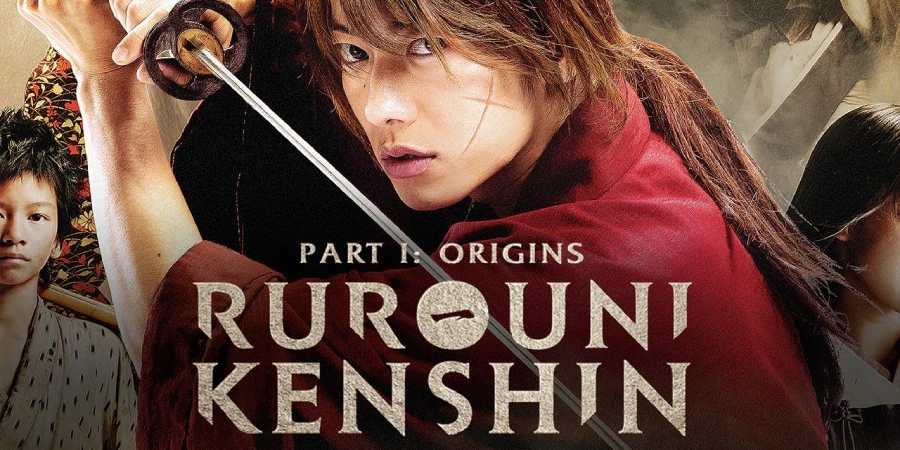

Rurouni Kenshin Part I: Origins is a live-action adaptation that did what many thought was impossible: it successfully translated a beloved anime/manga into a grounded, emotional, and kinetic samurai film. Directed by Keishi Ōtomo, the movie balances historical drama, intense swordplay, and character-driven storytelling.
Detailed Summary
The Legend of Hitokiri Battōsai
The film opens with the violent final days of the Bakumatsu era. Kenshin Himura is introduced as Hitokiri Battōsai, an assassin who kills without mercy to bring about political change. His sword carves a path toward the Meiji Restoration, but his expression already hints at deep inner conflict.
After the war ends, Kenshin disappears, leaving behind his fearsome reputation and countless enemies.
A Wandering Swordsman in a New Era
Ten years later, Japan has entered the Meiji era. Kenshin reappears as a wandering rurouni, carrying a sakabatō (reverse-blade sword) and swearing never to kill again. His vow is not symbolic—it defines every decision he makes.
He meets Kaoru Kamiya, a passionate dojo owner whose family school is being framed for murders committed by someone claiming to be Battōsai. Kenshin helps her, revealing fragments of his true identity without fully embracing it.
Justice vs. Vengeance
Kenshin becomes entangled with the new government’s underbelly and a powerful crime lord, Kanryū Takeda, who uses modern weapons to control the city. Kanryū represents the dark side of modernization: wealth without morality.
Along the way, Kenshin meets Yahiko, a street orphan, and Megumi Takani, a doctor forced into producing opium. These characters embody the people Kenshin now protects instead of killing.
The Rise of Jin-E Udo
The film’s emotional core arrives with Jin-E Udo, a former assassin who idolizes Battōsai’s violent past. Jin-E can paralyze opponents through fear and sees Kenshin’s vow as hypocrisy.
Jin-E abducts Kaoru, forcing Kenshin into a moral corner: Can he protect what he loves without becoming a killer again?
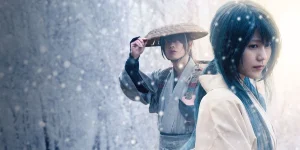
Movie Ending
The final confrontation takes place in a forest clearing, heavy with symbolism. Jin-E manipulates Kenshin psychologically, forcing him to relive his assassin instincts. Kenshin momentarily loses control and strikes Jin-E with lethal intent, terrifying himself in the process.
Before Kenshin can kill him, Jin-E commits suicide, satisfied that he has awakened the Battōsai within Kenshin once more. However, the key difference is clear: Kenshin stops himself. He does not kill. He chooses his vow, not out of weakness, but strength.
After rescuing Kaoru, Kenshin admits his past fully and acknowledges that his sins can never be erased. Kaoru accepts him not as a legend, but as a man seeking redemption.
The film ends with Kenshin continuing his journey as a wanderer, fully committed to protecting life, knowing his past will always chase him. The ending is quiet, reflective, and intentionally unresolved, setting the emotional foundation for the sequels.
Are There Post-Credits Scenes?
There is no post-credits scene. The film ends definitively, allowing the emotional weight of Kenshin’s vow and inner struggle to settle without teasing future installments.
Type of Movie
Rurouni Kenshin: Origins is a samurai action drama that blends historical fiction with martial arts choreography and strong emotional themes. It prioritizes character development as much as sword combat.
Cast
- Takeru Satoh as Kenshin Himura
- Emi Takei as Kaoru Kamiya
- Munetaka Aoki as Sanosuke Sagara
- Yu Aoi as Megumi Takani
- Kōji Kikkawa as Jin-E Udo
- Teruyuki Kagawa as Kanryū Takeda
Film Music and Composer
The score was composed by Naoki Satō, whose music blends traditional Japanese instrumentation with modern orchestration. The soundtrack emphasizes melancholy and restrained heroism, reinforcing Kenshin’s internal conflict rather than glorifying violence.
Filming Locations
The movie was filmed across various locations in Japan, including Kyoto, Shiga, and Ibaraki. These locations were crucial in grounding the story in real historical environments, giving the film a tactile, lived-in feel that contrasts with the anime’s stylization.
Awards and Nominations
- Won Japan Academy Prize for Best Cinematography
- Won Best New Actor (Emi Takei)
- Nominated for Best Picture at multiple Japanese film awards
The film was widely praised for redefining anime adaptations in live-action cinema.
Behind the Scenes Insights
- Takeru Satoh performed most of his own sword stunts after extensive training.
- Fight choreography was designed to feel brutal and efficient, not flashy.
- The sakabatō was custom-built to allow realistic combat without lethal imagery.
- Director Keishi Ōtomo insisted on minimal CGI to preserve realism.
Inspirations and References
- Based on the manga Rurouni Kenshin by Nobuhiro Watsuki
- Influenced by classic chanbara (samurai) films
- Themes echo Japanese post-war identity and pacifism
Alternate Endings and Deleted Scenes
Several extended character moments, particularly involving Megumi and Yahiko, were cut to improve pacing. No alternate ending was filmed, as the director wanted a clear moral conclusion focused on Kenshin’s vow.
Book Adaptations and Differences
Compared to the manga:
- The story is more grounded and less comedic.
- Jin-E’s role is expanded to serve as a philosophical antagonist.
- Kenshin’s violence is portrayed as traumatic rather than heroic.
Memorable Scenes and Quotes
Key Scenes
- Kenshin stopping a sword with his bare hand
- The forest duel with Jin-E
- Kaoru confronting Kenshin about his past
Iconic Quotes
- “I will never kill again. That is my atonement.”
- “A sword is a tool for killing. But mine exists to protect.”
Easter Eggs and Hidden Details
- Kenshin’s cross-shaped scar is shown forming subtly through flashbacks.
- Sanosuke’s fighting style mirrors historical street brawlers.
- Several background characters resemble manga cameos.
Trivia
- The film revived interest in samurai cinema among younger audiences.
- It set a new standard for anime-to-live-action adaptations.
- The choreography team studied real Meiji-era combat manuals.
Why Watch?
If you enjoy emotionally grounded action, morally complex heroes, and sword fights that actually mean something, this film is essential. It’s not just about battles—it’s about choosing mercy in a violent world.
Director’s Other Works
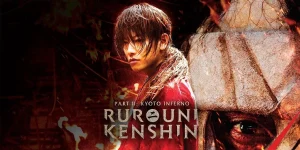
- Rurouni Kenshin: Kyoto Inferno (2014)
- Rurouni Kenshin: The Legend Ends (2014)
- Rurouni Kenshin: The Final (2021)
- Rurouni Kenshin: The Beginning (2021)
Recommended Films for Fans
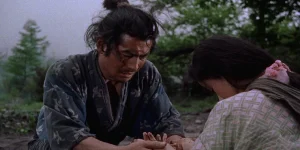
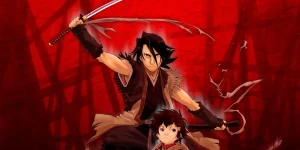
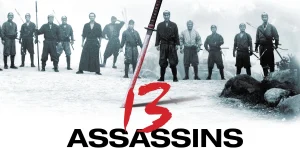
- 13 Assassins (2010)
- The Twilight Samurai (2002)
- Blade of the Immortal (2017)
- Zatoichi (2003)