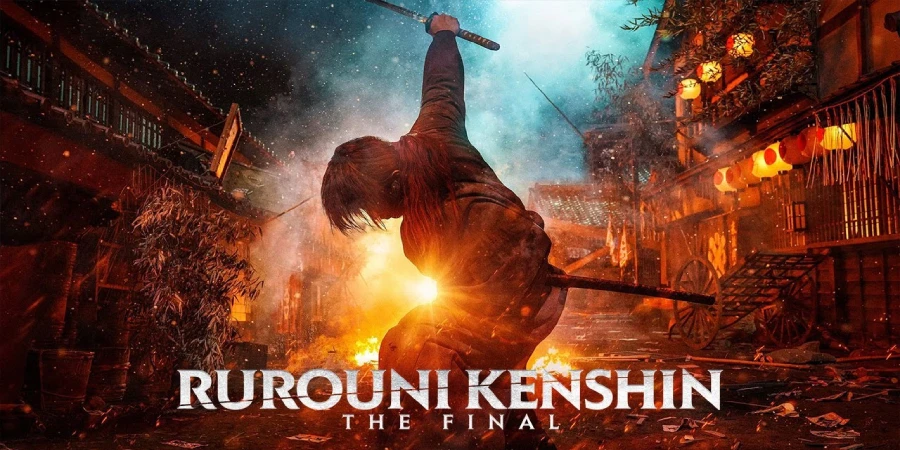

Rurouni Kenshin: Final Chapter Part I – The Final is the penultimate film in the Rurouni Kenshin live-action saga and serves as the emotional and narrative climax of Kenshin Himura’s long journey toward atonement. Darker, more personal, and far more brutal than previous entries, this film focuses on consequences, unresolved guilt, and the impossibility of outrunning one’s past.
Detailed Summary
A City Under Siege and a Ghost From the Past
Tokyo is suddenly thrown into chaos when mysterious attacks target government buildings and civilians, leaving destruction in their wake. At the center of these attacks is a masked man calling himself Enishi Yukishiro, who declares war on Kenshin Himura. From the start, it becomes clear this is not a political uprising or random terrorism, but a deeply personal vendetta.
Enishi is calm, calculating, and emotionally detached, presenting himself as the perfect opposite of Kenshin’s path of redemption.
Kenshin’s Peace Shattered
Kenshin, now living peacefully with Kaoru Kamiya, Yahiko, and his allies, tries to maintain his vow of not killing. However, Enishi’s attacks are specifically designed to lure Kenshin back into violence. Unlike previous villains, Enishi does not seek ideological victory—he seeks emotional annihilation.
The tone of the film immediately establishes that this enemy cannot be reasoned with.
The Truth of Enishi and Tomoe
As the story unfolds, the film reveals Enishi’s connection to Tomoe Yukishiro, Kenshin’s late wife whom he accidentally killed during the Bakumatsu era. Enishi is Tomoe’s younger brother and has spent his entire life consumed by hatred toward Kenshin.
This revelation reframes Kenshin’s greatest trauma:
Tomoe’s death was not only a personal tragedy, but the origin of another life destroyed by vengeance.
Enishi believes Kenshin’s suffering is insufficient and that death would be mercy, not punishment.
The Fall of Kaoru
In the film’s most devastating turn, Enishi abducts Kaoru and stages her public execution, leaving Kenshin and his allies to believe she has been brutally murdered. Kenshin completely collapses emotionally, blaming himself for bringing death to those around him once again.
This moment represents Kenshin’s lowest point in the entire franchise, surpassing even his darkest memories as Battōsai.
Kenshin’s Psychological Defeat
Rather than killing Kenshin outright, Enishi chooses to break him. Kenshin is captured and tortured, forced to relive his sins through psychological manipulation. Unlike previous villains who challenged Kenshin physically, Enishi destroys him emotionally, proving that non-lethal strength alone cannot erase past crimes.
Kenshin begins to question whether his vow truly holds meaning.
Allies Rise and Truth Revealed
Kenshin’s allies—including Saito, Sanosuke, Misao, and Aoshi—discover that Kaoru may still be alive. Her execution was an illusion designed to completely crush Kenshin’s spirit. This revelation reignites Kenshin’s will to fight—not for redemption, but to protect what still remains.

Movie Ending
In the final confrontation, Kenshin faces Enishi aboard a burning ship in Yokohama. Their fight is brutal, relentless, and emotionally charged. Unlike previous battles, this duel lacks grandeur—it feels raw and desperate. Kenshin fights without anger, while Enishi fights with nothing but anger.
Kenshin ultimately defeats Enishi without killing him, despite being pushed beyond his physical limits. When Kaoru is revealed to be alive, Enishi finally breaks down. His entire purpose—revenge for Tomoe—loses meaning when he realizes Tomoe never wanted vengeance.
Enishi is arrested, not killed, and for the first time, Kenshin’s vow is not portrayed as idealism but as moral responsibility.
The film ends quietly. Kenshin reunites with Kaoru, deeply scarred but alive, knowing that forgiveness does not erase pain—but allows life to continue. The past is not undone, but it no longer controls the future.
Are There Post-Credits Scenes?
No, there are no post-credits or mid-credits scenes. The film ends definitively, but its unresolved emotional threads lead directly into Final Chapter Part II – The Beginning.
Type of Movie
Rurouni Kenshin: The Final is a samurai action drama that blends historical fiction with intense martial arts choreography and psychological character study. It is far more grounded and tragic than a typical action film.
Cast
- Takeru Satoh as Kenshin Himura
- Mackenyu as Enishi Yukishiro
- Emi Takei as Kaoru Kamiya
- Munetaka Aoki as Sanosuke Sagara
- Yosuke Eguchi as Hajime Saito
- Tao Tsuchiya as Makimachi Misao
- Masanobu Ando as Aoshi Shinomori
Film Music and Composer
The score was composed by Naoki Satō, whose music emphasizes emotional weight over heroic triumph. The soundtrack relies heavily on somber strings and restrained percussion, reinforcing the film’s themes of loss and consequence.

Filming Locations
The movie was filmed across Kyoto, Yokohama, and studio sets in Japan. Kyoto’s traditional architecture grounds the story in historical realism, while Yokohama’s port scenes emphasize Japan’s transition into a modern era—a key thematic backdrop for Kenshin’s internal struggle.
Awards and Nominations
While not heavily featured in international awards, the film received strong critical acclaim in Japan, particularly for:
- Best Action Choreography
- Best Cinematography
- Best Actor nominations for Takeru Satoh
Behind the Scenes Insights
- Takeru Satoh performed the majority of his own stunts, suffering multiple minor injuries.
- Mackenyu trained extensively in kenjutsu to differentiate Enishi’s aggressive fighting style.
- Director Keishi Ōtomo intentionally reduced CGI to make combat feel more painful and realistic.
- Many emotional scenes were filmed in single takes to preserve raw performances.
Inspirations and References
The film is based on Nobuhiro Watsuki’s Rurouni Kenshin manga, specifically the Jinchū Arc. Themes are heavily inspired by Japanese concepts of atonement, guilt, and enduring suffering rather than escaping it.
Alternate Endings and Deleted Scenes
Some deleted scenes reportedly explored Enishi’s childhood in greater depth, but were cut to maintain pacing. No alternate ending was filmed; the director intended a firm emotional resolution leading into the prequel.
Book Adaptations and Differences
Compared to the manga:
- Kaoru’s “death” is portrayed more ambiguously.
- Enishi is more emotionally restrained in the film.
- The film emphasizes psychological trauma more than ideological conflict.

Memorable Scenes and Quotes
Key Scenes
- The staged execution of Kaoru
- Kenshin’s mental breakdown after believing Kaoru is dead
- The final duel aboard the burning ship
Iconic Quotes
- “Living is the punishment you deserve.” – Enishi
- “I will bear my sins… and still choose to live.” – Kenshin
Easter Eggs and Hidden Details
- Kenshin’s scars are shown slightly faded, symbolizing healing without erasure.
- Enishi’s fighting stance mirrors Tomoe’s movements from earlier films.
- Background posters reference events from Rurouni Kenshin: Origins (2012).
Trivia
- This film and The Beginning (2021) were shot back-to-back.
- Mackenyu is the son of legendary actor Sonny Chiba.
- The final fight took over two weeks to film.
Why Watch?
If you want a mature, emotionally devastating conclusion to a long-running character arc, this film delivers. It asks whether redemption is something you earn—or something you endure.
Director’s Other Works (Movies)
- Rurouni Kenshin (2012)
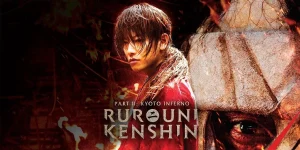
- Rurouni Kenshin: Kyoto Inferno (2014)
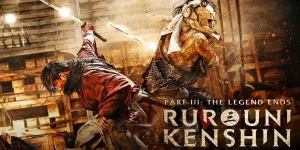
- Rurouni Kenshin: The Legend Ends (2014)
- Platinum Data (2013)
Recommended Films for Fans
- Rurouni Kenshin: The Beginning (2021)
- 13 Assassins (2010)
- Blade of the Immortal (2017)
- Samurai Marathon (2019)
- The Last Samurai (2003)