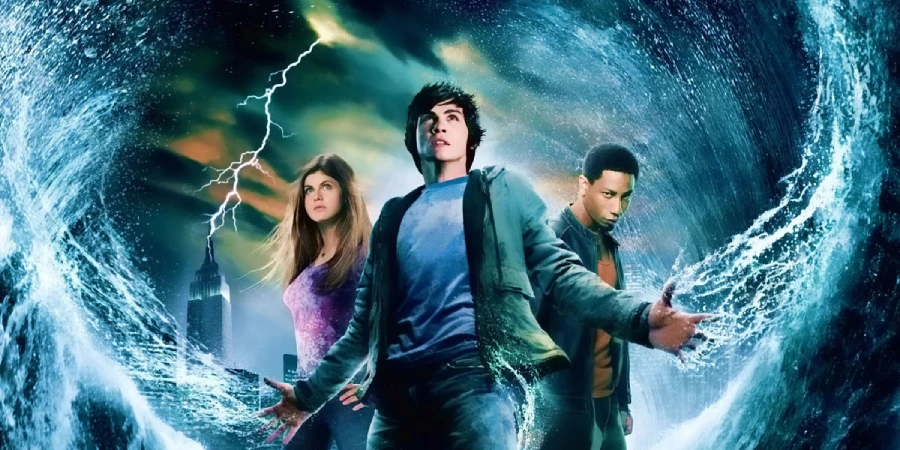

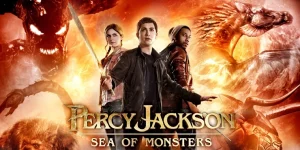
Percy Jackson & the Olympians: The Lightning Thief is a fantasy-adventure film directed by Chris Columbus, loosely adapted from Rick Riordan’s bestselling novel. It mixes Greek mythology with modern America, teenage identity struggles, and a classic “chosen one” narrative—sometimes faithfully, sometimes very freely.
Detailed Summary
A Troubled Teen and a Hidden World
Percy Jackson is a dyslexic, ADHD-affected teenager who constantly gets into trouble at school. After a strange incident during a museum trip—where his teacher turns into a Fury and attacks him—Percy’s life begins to unravel. He learns that his difficulties are not weaknesses but signs that he is something else entirely.
Camp Half-Blood and the Shocking Revelation
Percy is taken to Camp Half-Blood, a safe haven for demigods. Here, he discovers the truth: he is the son of Poseidon, god of the sea. This revelation instantly makes him a target, as Zeus accuses Poseidon of stealing his master weapon, the lightning bolt. Percy is framed as the thief.
The Quest Begins
To prevent an all-out war between the gods, Percy sets out on a quest to retrieve the lightning bolt. He is joined by Annabeth Chase, daughter of Athena, and Grover, his satyr protector. Their journey takes them across the United States, reimagined as a land filled with mythological dangers hiding in plain sight.
Monsters, Gods, and Betrayals
The trio face Medusa, Hydra, Persephone, and Hades himself. Along the way, Percy learns about loyalty, sacrifice, and the burden of divine heritage. The underworld sequence reveals that Hades is not the true villain, shifting suspicion elsewhere and deepening the mystery.
The True Enemy Revealed
Percy eventually discovers that Luke, son of Hermes and one of his mentors, is the real thief. Luke is being manipulated by the Titan Kronos, who seeks revenge against the Olympian gods and wants Percy as either an ally or a pawn.

Movie Ending
In the final act, Percy confronts Luke after returning Zeus’s lightning bolt and Poseidon’s stolen helm, successfully preventing war among the gods. Zeus restores balance to Olympus, and Percy is offered immortality as a reward. Percy refuses godhood, choosing to remain human and continue discovering who he truly is—a defining character moment that emphasizes free will over power.
Luke escapes after their duel, revealing his allegiance to Kronos and hinting at a much larger war to come. Kronos himself is shown regenerating within Tartarus, making it clear that this conflict is far from over.
Back at Camp Half-Blood, Percy accepts his identity as a demigod and chooses to stay for the summer. Annabeth begins to see Percy not just as a quest partner but as something more, while Grover earns his searcher’s license. The ending sets up future adventures, gods-versus-Titans conflict, and Percy’s growing importance in the mythological world.
Are There Post-Credits Scenes?
Yes. There is a post-credits scene showing Luke reporting back to Kronos in Tartarus. Kronos speaks through fire and shadow, confirming that Percy is dangerous and that their plans are only beginning. This scene directly sets up the sequel and the overarching Titan War storyline.
Type of Movie
The film is a fantasy-adventure aimed at young adults, blending mythological epic elements with a modern coming-of-age story and light action-comedy tones.
Cast
- Logan Lerman as Percy Jackson
- Alexandra Daddario as Annabeth Chase
- Brandon T. Jackson as Grover Underwood
- Jake Abel as Luke Castellan
- Pierce Brosnan as Chiron
- Sean Bean as Zeus
- Rosario Dawson as Persephone
- Steve Coogan as Hades
Film Music and Composer
The score was composed by Christophe Beck, blending orchestral fantasy themes with modern pacing. The music supports the adventurous tone but avoids heavy mythological grandeur, reflecting the film’s contemporary setting.


Filming Locations
- Vancouver, Canada – Primary filming location for Camp Half-Blood and urban scenes
- Montreal, Canada – Used for interior and action-heavy sequences
- Nashville Parthenon – A real-world replica of the Parthenon, cleverly used as Olympus
These locations help ground the mythological story in recognizable modern spaces, reinforcing the idea that the gods still exist among us.
Awards and Nominations
The film received few major award nominations but was recognized mainly for its visual effects and family entertainment value, including nominations at teen-focused award shows.
Behind the Scenes Insights
- Chris Columbus was chosen for his experience with youth fantasy franchises like Harry Potter
- Rick Riordan publicly criticized the film for straying too far from the book
- The actors were aged up to appeal to a broader teen audience
- Many mythological elements were simplified to fit a standalone film structure
Inspirations and References
- Based on The Lightning Thief (2005) by Rick Riordan
- Inspired by classic Greek mythology
- Structurally influenced by modern fantasy franchises like Harry Potter and The Lord of the Rings
Alternate Endings and Deleted Scenes
- Extended Camp Half-Blood scenes were cut to speed up pacing
- Deleted dialogue expanded Luke’s motivations and resentment toward the gods
- No fully alternate ending was filmed, but Kronos’ role was reportedly reduced to avoid overwhelming new audiences
Book Adaptation and Differences
The movie significantly differs from the book:
- Characters are older than their book counterparts
- The quest deadline is changed
- Kronos appears much earlier than in the novel
- Percy’s personality is more confident and less confused than in the book
These changes were made to make the story more cinematic but were controversial among fans.
Memorable Scenes and Quotes
Key Scenes
- Percy discovering his powers in the pool
- Medusa fight inside a roadside shop
- The duel between Percy and Luke
Iconic Quotes
- “This is a pen. This is a sword.”
- “Being a hero doesn’t mean you’re invincible.”
Easter Eggs and Hidden Details
- The Nashville Parthenon mirrors ancient Greece almost perfectly
- Camp Half-Blood cabins reflect each god’s personality through design
- Percy’s sword “Riptide” uses the same mythological rules as in the book
Trivia
- Logan Lerman performed many of his own stunts
- Over 90% of mythological creatures were CGI
- This was intended as the start of a long franchise
Why Watch?
If you enjoy mythology blended with modern adventure, this movie offers an accessible, fast-paced introduction to Greek myths. While imperfect, it’s entertaining and sets up a universe full of gods, monsters, and moral choices.
Director’s Other Movies
- Harry Potter and the Sorcerer’s Stone (2001)
- Harry Potter and the Chamber of Secrets (2002)
- Home Alone (1990)
- Mrs. Doubtfire (1993)