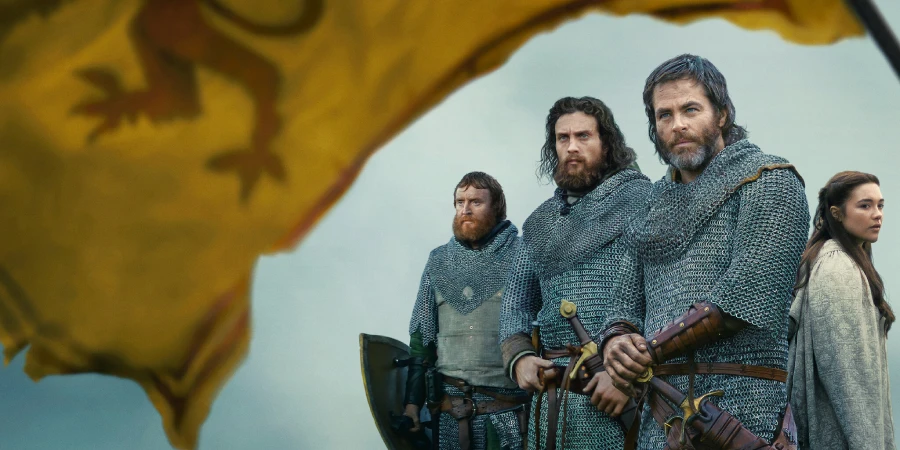
Outlaw King is a gritty, grounded historical epic that tells the story of Robert the Bruce, one of Scotland’s most important national heroes. Directed by David Mackenzie, the film strips away romanticized legend and replaces it with mud, blood, political desperation, and raw survival. This is not a glossy medieval fantasy; it’s history with its teeth bared.
Detailed Summary
Scotland Under English Rule
The film opens in early 14th-century Scotland, a land crushed under King Edward I of England. Scottish nobles, exhausted by war, are forced to swear allegiance to the English crown. Robert the Bruce, a nobleman with a legitimate claim to the Scottish throne, submits as well—not out of loyalty, but necessity.
Robert the Bruce’s Impossible Choice
Robert is caught between personal ambition and survival. When rival claimant John Comyn is murdered (a pivotal historical incident), Robert’s path becomes irreversible. Declared an outlaw by England, he is crowned King of Scots in a rushed, fragile ceremony that underscores how precarious his position truly is.
From King to Fugitive
Almost immediately, Robert’s rebellion collapses. English forces defeat him, his allies abandon him, and his family is captured and punished. Robert is reduced from king to fugitive, hiding in forests and marshes with a handful of loyal followers. These sections emphasize the film’s central theme: leadership is forged through failure, not glory.
Guerrilla Warfare and Regrouping
Instead of fighting England head-on, Robert adapts. He begins using guerrilla tactics, ambushes, and psychological warfare. Slowly, his legend grows. The Scottish people, inspired by his resilience, begin to rally. The film focuses heavily on strategy, terrain, and morale rather than heroic speeches.
The Rise of James Douglas
A major highlight is James Douglas, whose brutal but calculated methods contrast with Robert’s more measured leadership. Douglas’s actions demonstrate how rebellion often requires morally uncomfortable decisions. The film never fully sanitizes these choices.

Movie Ending
The film culminates in the Battle of Loudoun Hill, where Robert the Bruce faces a vastly superior English army led by Aymer de Valence. Instead of meeting them on open ground, Robert chooses the battlefield carefully. His forces dig trenches and narrow the terrain, forcing English cavalry into chaos.
As the battle unfolds, English numbers become irrelevant. Horses fall, soldiers panic, and the Scottish forces exploit every weakness. The fight is brutal, close, and personal. De Valence retreats, marking Robert’s first true victory as king.
The ending does not depict Scottish independence outright. Instead, it closes on a note of earned momentum. Robert has proven he can win, inspire loyalty, and outthink England. The final title cards explain that this victory eventually leads to Scotland’s independence, but only after years of continued struggle.
This is crucial: the film ends not with triumph, but with hope grounded in hardship, reinforcing its realistic tone.
Are There Post-Credits Scenes?
No. Outlaw King does not include any post-credits or mid-credits scenes. The story ends definitively with its historical conclusion.
Type of Movie
Outlaw King is a historical war drama with strong elements of political thriller and survival cinema. It prioritizes realism, strategy, and character psychology over spectacle.
Cast
- Chris Pine as Robert the Bruce
- Florence Pugh as Elizabeth de Burgh
- Aaron Taylor-Johnson as James Douglas
- Billy Howle as Edward, Prince of Wales
- Stephen Dillane as King Edward I
- Tony Curran as Angus Macdonald
Film Music and Composer
The score is composed by Grey Dogs (Dan Jones). The music is deliberately restrained, using low drones, percussion, and traditional instruments to emphasize tension rather than heroism. Silence is often used as effectively as sound.
Filming Locations
The movie was filmed extensively in Scotland, including:
- Isle of Skye
- Glencoe
- Craigmillar Castle
- Linlithgow Palace
These locations are not just backdrops; they reinforce the film’s themes. The harsh landscapes mirror Robert’s isolation and the physical toll of rebellion. The environment feels like an active participant in the story, not a passive setting.
Awards and Nominations
While Outlaw King did not dominate major award circuits, it received:
- Nominations for British Independent Film Awards
- Strong recognition for cinematography and production design
- Critical praise for its historical authenticity and performances
Behind the Scenes Insights
- Chris Pine insisted on portraying Robert as physically and emotionally exhausted, avoiding traditional heroic polish.
- Florence Pugh filmed emotionally intense scenes while pregnant, unknown to the production at the time.
- Many battle scenes used practical effects and real mud rather than CGI.
- Director David Mackenzie wanted combat to feel confusing and claustrophobic, reflecting real medieval warfare.
Inspirations and References
- Medieval Scottish chronicles
- Academic historical research on Robert the Bruce
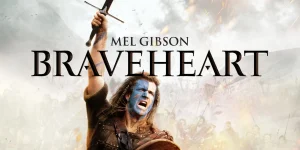
- Films like Braveheart were deliberately avoided in tone and style
- The director aimed for realism similar to modern war films rather than classic epics
Alternate Endings and Deleted Scenes
No alternate ending has been released. However:
- Several extended political scenes involving Scottish nobles were cut
- A longer depiction of Robert’s exile was trimmed for pacing
- Some English court scenes were reduced to keep the focus on Scotland
Book Adaptations and Differences
The film is not a direct adaptation of a single book, but rather a synthesis of historical sources. Unlike popular legends:
- Robert is portrayed as hesitant and flawed
- James Douglas is far more ruthless
- Patriotism is shown as something that develops, not something innate
Memorable Scenes and Quotes
Key Scenes
- Robert’s rushed coronation in near secrecy
- The brutal ambush of English forces in the forest
- Elizabeth de Burgh openly defying English authority
- The trench strategy at Loudoun Hill
Iconic Quotes
- “You have no idea how much courage it takes to choose hope.”
- “A king does not lead from safety.”
Easter Eggs and Hidden Details
- Robert’s armor gradually deteriorates, symbolizing his descent into outlaw life
- English banners remain pristine, contrasting Scottish wear and decay
- The film subtly mirrors Robert’s journey with changing weather patterns
- Several minor characters are named after real historical figures rarely depicted in film
Trivia
- The opening tracking shot is over nine minutes long
- Many extras were local Scots with ancestral ties to the conflict
- The film was released on Netflix shortly after premiering at TIFF
- Real medieval tactics were consulted by historians during production
Why Watch?
If you want a serious, unsentimental take on medieval rebellion, this film delivers. It’s about leadership earned through loss, not destiny. Outlaw King respects its audience’s intelligence and rewards patience with emotional and historical depth.
Director’s Other Works
- Hell or High Water (2016)
- Starred Up (2013)
- Perfect Sense (2011)
- Young Adam (2003)
Recommended Films for Fans
- The King (2019)
- Braveheart (1995)
- Macbeth (2015)
- Kingdom of Heaven (2005)
- Ironclad (2011)