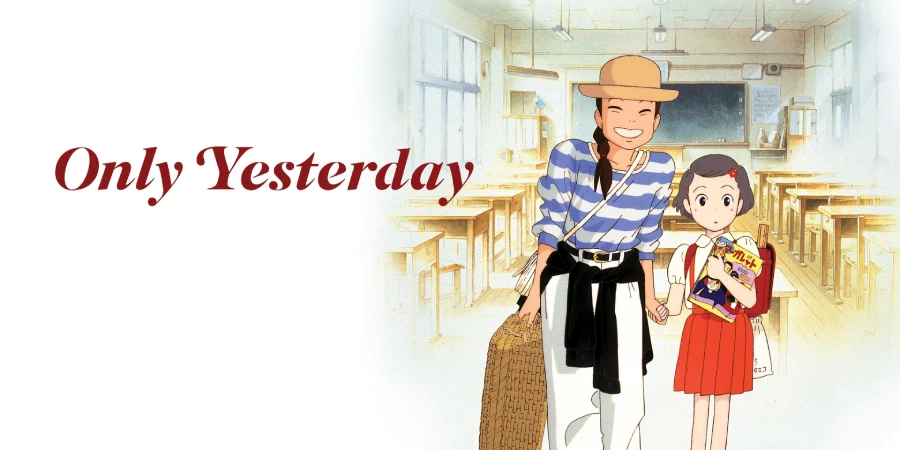

Only Yesterday (1991) is a deeply introspective animated drama directed by Isao Takahata and produced by Studio Ghibli. Unlike many of Ghibli’s fantasy-filled works, this film adopts a realistic and reflective tone, exploring memory, adulthood, and existential longing through the quietly emotional life of a 27-year-old woman named Taeko.
Detailed Summary
Taeko’s Restlessness and Decision to Travel
The film begins in 1982, where Taeko, a 27-year-old office worker in Tokyo, feels trapped in the routine of city life. She decides to take a break from her urban routine and travel to the countryside to help with a relative’s safflower harvest. As she heads to rural Yamagata, she begins to recall scenes from her past. These memories appear not as nostalgic fragments, but as living moments, blending seamlessly with the present.
Throughout the film, her inner dialogue reveals a subtle frustration with expectations placed on women regarding career, marriage, and femininity.
Flashbacks to Childhood and Family Dynamics
In the flashbacks, Taeko is a 10-year-old girl navigating complicated family relationships. These sequences show her struggles with math, awkward puberty discussions, and a memorable experience involving pineapple—a delicacy at the time, symbolizing the gap between longing and reality.
The family scenes are presented with raw authenticity, emphasizing how quietly painful childhood can feel when one’s voice is unheard.
Life in Yamagata and Meeting Toshio
In Yamagata, Taeko meets Toshio, a thoughtful young farmer whose passion for organic agriculture reflects a different, slower lifestyle. His perspective on work, happiness, and connection to nature challenges Taeko’s idea of what adulthood should look like.
As they spend time together, Taeko’s childhood memories become more frequent and intense, exposing her suppressed desires, insecurities, and dreams. Toshio treats her with genuine respect, prompting her to reevaluate the direction of her life.

Movie Ending
As Taeko prepares to leave Yamagata and return to Tokyo, she feels conflicted. On the train, she begins to once again see the “ghosts” of her childhood self and friends, watching her silently. These visions are not literal ghosts, but symbolic representations of her past urging her forward.
In a pivotal moment, Taeko realizes that returning to Tokyo means repeating a life that doesn’t fulfill her. She decides to get off the train and stay in Yamagata. She runs back, and in the film’s emotional climax, she and Toshio stand before each other, overwhelmed and silent.
The ending implies their romantic connection, but more importantly, it confirms Taeko’s choice to choose her own path rather than follow societal expectations. The past self fades away, satisfied that her adult self finally listened.
The film closes by showing Taeko surrounded by new companionship and purpose, making a life-changing decision without regret. It is a conclusion about reconciliation between childhood dreams and adult choices, rather than romance alone.
Are There Post-Credits Scenes?
No. There are no post-credits scenes in Only Yesterday. The film concludes with its final emotional scene and then ends with credits accompanied by music.
Type of Movie
This is a coming-of-age drama focused not on childhood, but on the emotional growth of adulthood. The film blends realistic storytelling with reflective memory to explore identity and personal freedom.
Cast (Japanese Voice Actors)
- Miki Imai as Adult Taeko
- Youko Honna as Young Taeko
- Toshiro Yanagiba as Toshio
- Masako Yamaguchi as Taeko’s Mother
- Ichirou Nagai as Taeko’s Father
Film Music and Composer
The score is composed by Katz Hoshi, featuring traditional melodies that mirror the countryside’s calm atmosphere. The soundtrack enhances the film’s reflective tone, with a notable use of Bulgarian folk music, giving the film a unique emotional texture.

Filming Locations
Although animated, the film meticulously depicts Yamagata Prefecture, known for its rural landscapes and agriculture. Background artists visited actual farms, focusing on safflower fields, local houses, and village roads to ensure authenticity. These settings are crucial because they represent the life Taeko has longed for without realizing it: a grounded, honest way of living that reconnects her with herself.
Awards and Nominations
- The film was widely praised by critics but did not receive the same level of international award recognition as other Ghibli films at the time, largely due to limited overseas releases before the 2010s.
- Today, it is considered one of Studio Ghibli’s most mature and emotionally resonant works and is regularly listed in top animation rankings by film critics.
Behind the Scenes Insights
- Director Isao Takahata insisted on using realistic animated facial expressions, which was rare for Japanese animation at the time.
- The adult portions were animated using recorded dialogue first, allowing animators to match natural speech patterns.
- Many scenes were inspired by real childhood memories shared by staff members.
- Initially, Studio Ghibli doubted commercial interest since the movie targeted adult women, a demographic rarely focused on in animation in 1991.
Inspirations and References
- Based on the 1982 manga Only Yesterday by Hotaru Okamoto and Yuko Tone.
- The manga only covers Taeko’s childhood. Takahata created the entire adult storyline, including Toshio and the agricultural themes, giving the film a far deeper purpose.
Alternate Endings and Deleted Scenes
- Early drafts considered Taeko returning to Tokyo and gradually returning to the countryside later.
- Toshio’s role was originally smaller, but Takahata expanded it after interviewing real organic farmers.
Book Adaptations and Differences
- The original manga contains no adult Taeko storyline.
- The film’s core message about adulthood, independence, and life choices was entirely created for the movie.
- The manga is more humorous, while the film is more reflective and psychological.


Memorable Scenes and Quotes
Key Scenes
- Taeko tasting pineapple with her family.
- The schoolyard crush scene with Hirota and the awkward, silent embarrassment.
- Taeko staring out the train window as her childhood self watches her leave.
- The final scene where she runs back to Toshio.
Iconic Quotes
- “You’re not a child anymore, but you’re not a grown-up yet.”
- “I don’t want to be carried along by life; I want to choose it.”
- “Dreams aren’t only for children.”
Easter Eggs and Hidden Details
- The train scene mirrors a sequence from Takahata’s Grave of the Fireflies in its introspective style.
- The adult Taeko’s hairstyle resembles traditional Yamagata farming women.
- Background extras have highly detailed, realistic faces, unusual for animation at the time.
Trivia
- It became a box office hit in Japan despite hesitation about its tone.
- It was not released in U.S. theaters until 2016, 25 years after its debut.
- Toshio’s voice actor was chosen for his natural, rural accent rather than acting fame.
Why Watch?
This film speaks quietly but powerfully to anyone who has ever wondered: Am I living a life I chose, or just following what’s expected? It offers a beautiful, sincere reflection on identity, childhood dreams, and adult independence. For viewers wanting something mature, meaningful, and deeply human, this is one of Ghibli’s most unforgettable stories.
Director’s Other Works
- Grave of the Fireflies (1988)
- Pom Poko (1994)
- My Neighbors the Yamadas (1999)
- The Tale of the Princess Kaguya (2013)