Once Upon a Time in China II is widely considered one of the strongest entries in the legendary Wong Fei-hung film series. Directed by Tsui Hark, this sequel deepens the political themes of the first film while delivering more refined action, sharper drama, and one of the most iconic martial arts villains of the 1990s.
Detailed Summary
A China in Turmoil
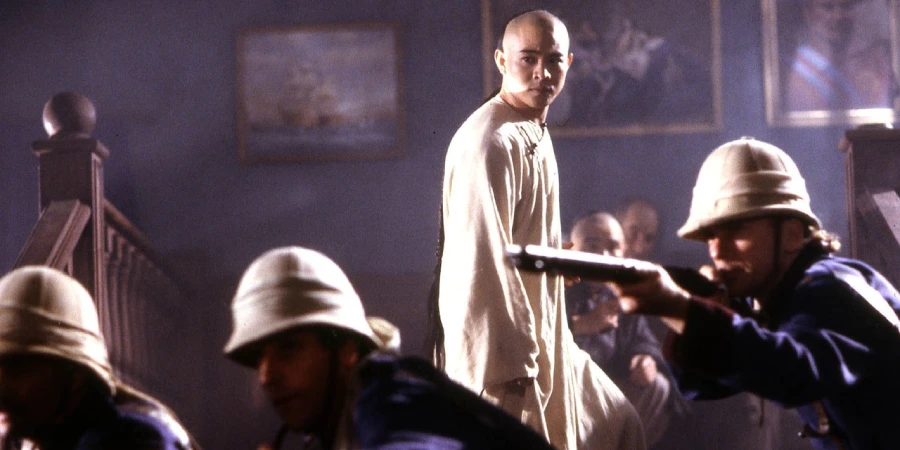
The story is set in late 19th-century China, a period marked by political instability, foreign influence, and internal rebellion. The Qing Dynasty is under pressure, Western powers are encroaching, and revolutionary movements are growing. Wong Fei-hung arrives in Canton, where tensions are already high between reformists, conservatives, and foreign interests.
Introduction of the White Lotus Sect
One of the film’s central antagonistic forces is the White Lotus Sect, a fanatical anti-foreign organization that claims to possess mystical powers making them immune to bullets. Their public demonstrations and violent acts stir chaos, manipulate public sentiment, and place civilians in danger.
Wong Fei-hung vs. Ideological Extremism
Wong Fei-hung finds himself caught between extremes. On one side are foreign powers abusing their influence; on the other are radical nationalists using blind violence. His struggle is not only physical but moral: how to protect Chinese dignity without embracing fanaticism.
The Arrival of Dr. Sun Yat-sen
A key narrative thread involves Wong Fei-hung protecting Dr. Sun Yat-sen, a reformist revolutionary figure advocating modernization and political reform. This subplot grounds the film in historical reality and raises the stakes, as multiple factions want Sun either silenced or exploited.
Jet Li vs. Donnie Yen: A Legendary Rivalry
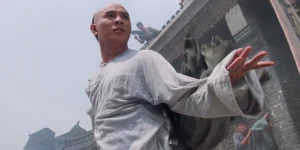
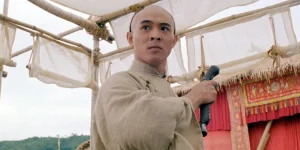
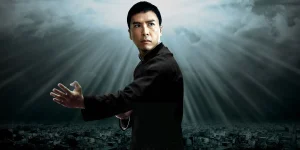
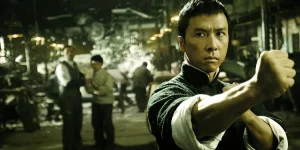
The film builds steadily toward the confrontation between Wong Fei-hung and Commander Lan, the ruthless and hyper-disciplined leader of the White Lotus Sect, played by Donnie Yen. Their philosophical clash mirrors their fighting styles: Wong’s adaptability and restraint versus Lan’s rigid extremism.
Movie Ending
In the final act, chaos erupts as the White Lotus Sect launches a large-scale assault, believing divine protection will shield them from modern weapons. Wong Fei-hung confronts Commander Lan in a brutal and symbolic final battle. Unlike earlier fights based on pure martial artistry, this duel emphasizes strategy, environment, and evolution.
Commander Lan’s supposed invincibility is exposed as a lie; his bulletproof claims are revealed to be tricks relying on angles, armor, and misdirection. Wong Fei-hung ultimately defeats him not through brute force, but through intelligence and adaptability, symbolizing the triumph of reason over blind fanaticism.
Dr. Sun Yat-sen escapes safely, ensuring the survival of reformist ideas. The White Lotus Sect collapses, discredited and leaderless. The ending reinforces the film’s central message: China’s future cannot be built on superstition or hatred, but on thoughtful reform and balance between tradition and progress.
Wong Fei-hung walks away not as a conqueror, but as a guardian—aware that the struggle for China’s soul is far from over.
Are There Post-Credits Scenes?
No. Once Upon a Time in China II does not include any post-credits or mid-credits scenes. The story concludes definitively before the credits roll.
Type of Movie
This film is a historical martial arts action drama that blends political commentary with traditional kung fu cinema, elevating the genre beyond simple hero-versus-villain storytelling.
Cast
- Jet Li as Wong Fei-hung
- Rosamund Kwan as Aunt Yee
- Donnie Yen as Commander Lan
- Zhang Tielin as Dr. Sun Yat-sen
- Siu Chung Mok as Clubfoot Seven
Film Music and Composer
The score was composed by James Wong, incorporating traditional Chinese melodies with dramatic orchestral elements. The recurring theme reinforces Wong Fei-hung’s role as a cultural symbol rather than just an action hero.
Filming Locations
The film was shot primarily in Hong Kong and mainland China, using large-scale sets to recreate late Qing Dynasty urban environments. These locations were crucial in grounding the story in historical authenticity, especially during public rallies, street conflicts, and political gatherings.
Awards and Nominations
- Hong Kong Film Awards (1993)
- Best Action Choreography (Winner)
- Best Supporting Actor – Donnie Yen (Nominated)
- Best Film (Nominated)
The film was particularly praised for its fight choreography and Donnie Yen’s performance.
Behind the Scenes Insights
- Tsui Hark deliberately cast Donnie Yen to contrast Jet Li’s fluid style with a more rigid, militaristic fighting approach
- Many crowd scenes involved hundreds of extras to reflect mass political unrest
- Jet Li performed most of his own stunts despite a tight shooting schedule
- The ideological themes were heavily debated by the production team due to their political sensitivity
Inspirations and References
- Based on the historical figure Wong Fei-hung
- Influenced by real events surrounding Sun Yat-sen’s revolutionary activities
- Draws thematic inspiration from classic Chinese literature about moral leadership and reform
Alternate Endings and Deleted Scenes
Some deleted scenes reportedly expanded on Commander Lan’s background, emphasizing how his fanaticism was shaped by humiliation and nationalism. These were removed to maintain pacing and keep the villain more symbolic than sympathetic.
Book Adaptations and Differences
The film is not directly adapted from a single book, but from Chinese folklore and historical accounts of Wong Fei-hung. Unlike traditional stories that portray him as nearly mythic, the film presents a more grounded and politically aware version of the character.
Memorable Scenes and Quotes
Key Scenes
- The public White Lotus demonstration claiming immunity to bullets
- Wong Fei-hung protecting Dr. Sun during an ambush
- The final duel between Wong Fei-hung and Commander Lan
Iconic Quotes
- “Superstition cannot save a nation.”
- “Tradition must move forward, or it becomes a cage.”
Easter Eggs and Hidden Details
- Commander Lan’s movements subtly reference Northern Shaolin forms
- Newspaper headlines in the background reference real historical events
- The White Lotus chants are adapted from actual sect rituals
Trivia
- Donnie Yen choreographed parts of his own fight scenes
- The film was shot back-to-back with parts of the third installment
- Jet Li considered this one of his most physically demanding roles
Why Watch?
If you care about martial arts cinema with depth, this is essential viewing. It delivers stunning action while asking meaningful questions about nationalism, reform, and identity. It’s not just kung fu—it’s history in motion.
Director’s Other Works
- Once Upon a Time in China (1991)
- Once Upon a Time in China III (1993)
- The Blade (1995)
- Zu: Warriors from the Magic Mountain (1983)