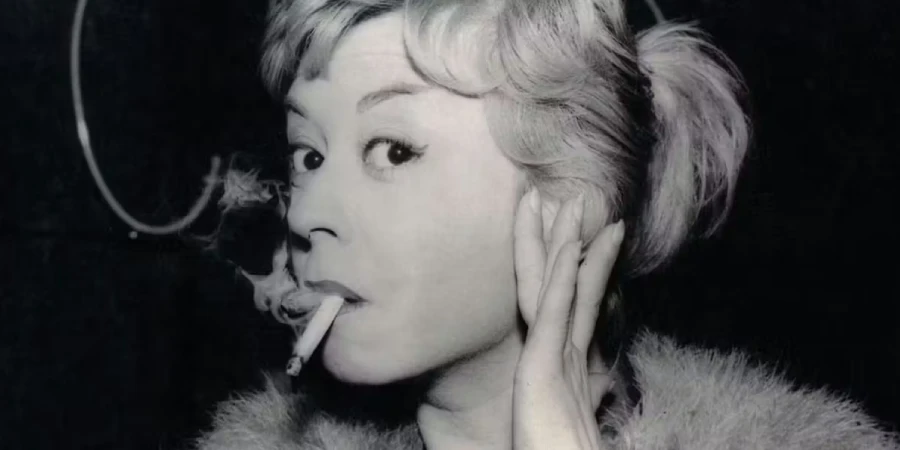

Federico Fellini’s Nights of Cabiria (1957) is one of the great masterpieces of Italian cinema—emotionally rich, visually poetic, and anchored by a performance from Giulietta Masina that is often described as one of the best in film history.
Detailed Summary
Cabiria’s Life in the Roman Nights
Cabiria (Giulietta Masina) is a lively, stubborn, and heartbreakingly hopeful sex worker living on the outskirts of Rome. Despite her tough exterior, she remains vulnerable, searching relentlessly for love and dignity in a world that often denies her both. Early in the film, her boyfriend pushes her into a river and steals her purse—a shocking moment that reveals how easily her compassion can be exploited.
A Famous Movie Star and a Sudden Disillusionment
Cabiria’s life briefly changes when she is swept into the glamorous world of Alberto Lazzari, a movie star who takes her out after a fight with his girlfriend. Cabiria enjoys a fleeting taste of luxury and affection, only to be coldly displaced when Lazzari reconciles with his partner. This moment marks a pattern: Cabiria pursues emotional warmth but repeatedly ends up humiliated.
Pilgrimage for Redemption
Desperate for spiritual renewal, Cabiria joins a religious procession, begging for a sign that she can be loved without deception. But while others seem moved, she finds no divine answer. It’s a moment of quiet existential crisis, where her hope collides with the emptiness of her world.
Cabiria Meets Oscar
After returning to her usual routines, Cabiria encounters Oscar, a seemingly gentle, awkward man who appears genuinely interested in her. He asks her many personal questions, listens to her stories, and treats her with a tenderness she has rarely known. Cabiria begins to imagine a future with him—her longing for a normal life now within reach.

Movie Ending
Cabiria agrees to marry Oscar, convinced that she has finally found someone who sees her worth. She sells her small house, gives him the money she has saved, and walks with him to a beautiful clifftop area. As the wind rustles around them and Cabiria grows increasingly emotional, Oscar becomes visibly uneasy.
Cabiria realizes the truth too late: Oscar was never sincere. He lured her here to steal her money and possibly kill her. When she pleads with him, asking why he is doing this after she gave him everything, he cannot even look at her. She collapses in despair as he grabs her bag and runs away.
Cabiria is shattered. She has lost not only her money but her final illusion of safety and love.
Then comes the unforgettable finale: Cabiria, walking alone in the woods, encounters a group of young people playing music and laughing. Their kindness warms her spirit, and in the final shot, her face breaks into a tear-streaked but unmistakable smile.
It is a moment of resilience, the suggestion that humanity—even bruised—can still stand up after heartbreak.
Are There Post-Credits Scenes?
No. Nights of Cabiria does not have any post-credits scenes.
Type of Movie
The film is a drama with strong neorealist influences, exploring human resilience, emotional vulnerability, and the search for dignity in harsh social conditions.
Cast
- Giulietta Masina as Cabiria
- François Périer as Oscar
- Amedeo Nazzari as Alberto Lazzari
- Franca Marzi as Wanda
- Dorian Gray as Jessie
- Aldo Silvani as the magician
Film Music and Composer
The score is composed by Nino Rota, Fellini’s longtime collaborator. His music blends tenderness with melancholy, perfectly accompanying Cabiria’s emotional journey. Some of Rota’s soft yet haunting melodies subtly underscore the contrast between Cabiria’s optimistic spirit and the cruel world around her.
Filming Locations
Filming took place in and around Rome, Italy, particularly outskirts and lesser-seen districts to emphasize Cabiria’s marginal social position. Many scenes showcase the tension between Rome’s glamorous nightlife and its rougher backstreets—highlighting the film’s theme of duality between surface-level beauty and underlying hardship.
Awards and Nominations
- Academy Award for Best Foreign Language Film (Winner, 1958)
- Nominated for various Italian awards including the Nastro d’Argento
Its Oscar win helped introduce Fellini more widely to American audiences.
Behind the Scenes Insights
- Giulietta Masina modeled much of Cabiria’s mannerisms after silent-era clowns, combining vulnerability with comedic physicality.
- Fellini originally based Cabiria on a real woman he met while researching The White Sheik.
- The original ending was even darker, but Fellini reworked it to include Cabiria’s final smile, believing audiences needed a glimmer of hope.
- Masina reportedly had difficulty recovering emotionally after filming the cliff scene due to its intensity.
Inspirations and References
- Inspired by a chapter in Fellini’s earlier film The White Sheik (1952).
- Influenced by Italian neorealism, with its focus on working-class struggles and on-location shooting.
- Reflects classical themes of personal redemption and suffering found in Italian literature and Catholic imagery.
Alternate Endings and Deleted Scenes
- Several small scenes involving Cabiria’s interactions with other sex workers were cut for pacing.
- The original ending was supposedly more tragic, offering no smile, but Fellini re-shot the final moment to give Cabiria a resilient, almost transcendental recovery.
Book Adaptations and Differences
The film is not based on a novel, but it inspired later literary works and analyses. Fellini drew from real interviews and personal observations rather than fiction.

Memorable Scenes and Quotes
Key Scenes
- Cabiria being pushed into the river in the opening scene
- The glamorous night with movie star Alberto
- Cabiria crying in the church during the pilgrimage
- The hypnotism show, where her inner longing is exposed
- The cliff confrontation with Oscar
- The final smile as musicians surround her
Iconic Quotes
- “What do you gain from lying?”
- “I’m alive! I’m alive!”
- “I just want to live like other people do.”
Easter Eggs and Hidden Details
- Cabiria’s movements echo Chaplin’s Tramp—a deliberate choice by Masina.
- Fellini uses recurring circular imagery (the hypnotism stage, the dancing street musicians, loops of city streets) to represent Cabiria’s life repeating its hardships.
- Cabiria’s final costume subtly mirrors her very first one—suggesting she’s come full circle but spiritually evolved.
Trivia
- The film was nearly banned in Italy because of its depiction of prostitution.
- It was later adapted into the Broadway musical Sweet Charity.
- Fellini and Masina were married; many consider Cabiria one of their greatest artistic collaborations.
- The film is partly responsible for solidifying Fellini’s move away from strict neorealism toward more poetic, dreamlike cinema.
Why Watch?
Because Nights of Cabiria offers an unforgettable blend of heartbreak, beauty, and emotional truth. Cabiria is one of cinema’s most compelling characters—fragile yet indomitable. The film asks: How many times can a heart break before it stops hoping? And then it answers: At least once more.
It’s a masterclass in acting, storytelling, and human empathy.
Director’s Other Movies
- La Strada (1954)
- 8½ (1963)
- La Dolce Vita (1960)
- Juliet of the Spirits (1965)
- Amarcord (1973)
- The White Sheik (1952)
Recommended Films for Fans
- La Strada (1954)
- Anora (2024)
- Sweet Charity (1969)
- Bicycle Thieves (1948)
- Umberto D. (1952)
- The Nights of Zayandeh-Rood (1990)