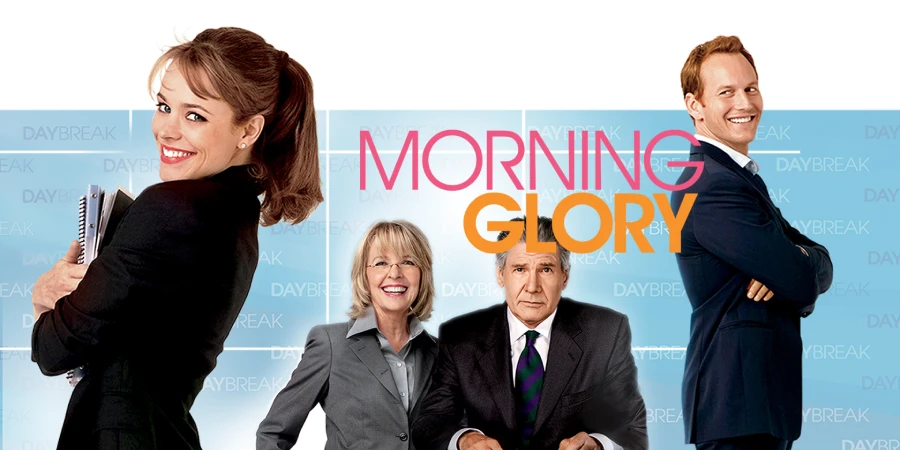

Morning Glory is a lively, character-driven workplace comedy that blends behind-the-scenes newsroom chaos with personal growth, ambition, and a splash of romance.
Detailed Summary
Becky’s New Beginning at Daybreak
Becky Fuller (Rachel McAdams) is an energetic, borderline unstoppable morning show producer who’s fired from her job at Good Morning New Jersey. Desperate to stay in the industry she loves, she lands a position at the struggling national morning show Daybreak, a ratings disaster that no one believes can be saved.
Hiring the Impossible: Mike Pomeroy
Becky decides the show needs a heavyweight journalist to boost credibility. She recruits veteran, award-winning, notoriously difficult news anchor Mike Pomeroy (Harrison Ford). There’s just one problem: he refuses to cover anything he considers beneath him, including cooking segments, fashion pieces, or anything remotely cheerful. His contract forces him to appear but doesn’t define how cooperative he must be.
War in the Studio
Mike’s coldness clashes with co-host Colleen Peck (Diane Keaton), who’s been happily doing soft news for years. Becky struggles to control Mike while keeping the show alive. Each episode becomes a battlefield of egos, last-minute disasters, and segments that either flop or go viral for the wrong reasons.
Becky’s Career vs. Personal Life
While Becky gains confidence as a producer, her budding romance with Adam (Patrick Wilson) is strained by her nonstop work habits. She begins questioning whether she’s sacrificing too much for a job that constantly threatens to fall apart.

Movie Ending
In the final third of the film, Becky’s relentless efforts finally start paying off. When ratings inch upward, network executives dangle her dream job at a different (and more prestigious) show. It’s the career opportunity she has always wanted, and she’s one signature away from leaving Daybreak.
But during her final planned Daybreak show, Mike unexpectedly steps up. In a gesture that is both subtle and character-defining, he covers a lighthearted cooking segment with genuine effort—something he had sworn he would never do. This isn’t played for a cheap laugh; it’s a turning point that shows he respects Becky and wants the show to succeed.
Becky watches from the control room, stunned. This is the breakthrough she spent months fighting for, and seeing Mike finally embrace teamwork makes her realize the show is hers—chaos, stress, breakthroughs, disasters and all. She returns to the studio, abandons the fancy job offer, and recommits to Daybreak with a newfound sense of belonging.
The film ends on an optimistic note, showing Becky walking to work early the next morning—rejuvenated, confident, and exactly where she wants to be.
Are There Post-Credits Scenes?
No, Morning Glory does not include a mid-credits or post-credits scene.
Type of Movie
The film is a lighthearted workplace comedy-drama with strong romantic and inspirational elements, centered around personal ambition and the chaotic world of live television.
Cast
- Rachel McAdams as Becky Fuller
- Harrison Ford as Mike Pomeroy
- Diane Keaton as Colleen Peck
- Patrick Wilson as Adam Bennett
- Jeff Goldblum as Jerry Barnes
Film Music and Composer
The score was composed by David Arnold, known for his bright, upbeat music that complements comedy and character-focused storytelling. The soundtrack also includes well-chosen contemporary tracks that match the film’s energetic newsroom atmosphere.
Filming Locations
- New York City, USA — The entire film is grounded in real NYC locations, including the CBS Broadcast Center and multiple Manhattan studios.
These settings heighten the film’s authenticity, supporting its behind-the-curtain depiction of morning TV production. - Additional scenes were filmed in various NYC streets and office buildings, reinforcing the fast-paced, professional urgency characteristic of media life.
Awards and Nominations
Morning Glory did not receive major award nominations, but Rachel McAdams earned praise from critics for her charming, high-energy performance, and the film was recognized informally for its screenplay and casting chemistry.
Behind the Scenes Insights
- Harrison Ford intentionally played Mike as grumpier and more monotone than scripted, leaning into “grumpy journalist energy” for comedic effect.
- Diane Keaton improvised parts of the more chaotic morning-show segments.
- Rachel McAdams shadowed real morning-show producers to capture their cadence, stamina, and nonstop multitasking.
- Lucerne, the fictional set’s kitchen segment, was shot live-to-tape to recreate real TV unpredictability.
- Ford’s deadpan reactions came from him staying in character between takes, often making the crew laugh off-camera.
Inspirations and References
- Heavily inspired by real American morning shows such as Good Morning America, The Today Show, and CBS This Morning.
- The script was influenced by memoirs from broadcast journalists and producers, particularly experiences related to newsroom politics and on-air disasters.
- The dynamic between Mike and Colleen reflects classic TV pairings of serious journalists vs. personality-driven hosts.
Alternate Endings and Deleted Scenes
While the film didn’t have publicly known alternate endings, a few deleted scenes include:
- Extended banter between Mike and Colleen during off-air moments.
- A longer version of Becky interviewing for her potential new job, emphasizing the internal conflict she faces.
- Additional comedic disaster segments from Daybreak that were trimmed for pacing.
Book Adaptations and Differences
Morning Glory is not based on a book. It is an original screenplay by Aline Brosh McKenna, though it borrows thematic elements from journalism memoirs and TV industry anecdotes.
Memorable Scenes and Quotes
Key Scenes
- Becky’s frantic first day at Daybreak, complete with malfunctioning equipment.
- Mike refusing to say the word “fluffy” while introducing a cooking segment.
- Colleen’s over-the-top field segment involving theme-park stunts.
- The heartfelt moment when Mike unexpectedly performs the cooking segment correctly.
- Becky running through the city to get back to the studio in time—symbolizing her full commitment.
Iconic Quotes
- “You don’t understand how news works, do you?” — Mike
- “I do. I just don’t think you understand how morning shows work.” — Becky
- “I’m not going to say ‘fluffy.’” — Mike
- “We are not getting beat by a segment about ferrets.” — Becky
Easter Eggs and Hidden Details
- Jeff Goldblum’s character is loosely modeled after several real network executives.
- Several real TV producers appear as extras.
- The Daybreak set was designed with deliberate imperfections (scuffs, mismatched props) to mirror real studios.
- Becky’s wardrobe subtly shifts from chaotic colors to more controlled, professional tones as her confidence grows.
Trivia
- Harrison Ford accepted the role specifically because he’d never done a comedic film like this before.
- Rachel McAdams improvised many “rapid-fire producer” lines.
- The newsroom clocks were kept running during shooting to add realism.
- The film was shot in only 46 days, a fast schedule for a studio comedy.
Why Watch?
Because Morning Glory is a warm, witty, character-driven comedy that blends ambition, romance, newsroom chaos, and uplifting energy. If you enjoy stories about driven underdogs who pull their worlds together through passion and grit, this film delivers exactly that—plus a wonderfully grouchy Harrison Ford.
Director’s Other Movies
- Notting Hill (1999)
- Changing Lanes (2002)
- Venus (2006)
- Hyde Park on Hudson (2012)
- My Cousin Rachel (2017)
Recommended Films for Fans
- The Devil Wears Prada (2006)
- The Intern (2015)
- Broadcast News (1987)
- The Proposal (2009)
- Anchorman: The Legend of Ron Burgundy (2004)