
Miller’s Crossing is one of the Coen Brothers’ most layered and intellectually demanding films. Released in 1990, it blends gangster cinema, literary dialogue, and moral ambiguity into a cold, rainy world where loyalty is always for sale and truth is never spoken directly.
Detailed Summary
The Prohibition-Era Power Game
Set in an unnamed American city during Prohibition, the story revolves around two rival Irish and Italian gangs battling for control of the criminal underworld. At the center stands Leo O’Bannon, an Irish mob boss who rules not with brutality but with political influence and calculated restraint.
Tom Reagan: The Man Behind the Throne
Tom Reagan, Leo’s right-hand man, is the film’s true protagonist. He’s a cool-headed, perpetually hat-wearing fixer whose greatest weapon is his ability to stay emotionally unreadable. Tom advises Leo on strategy, but his personal life complicates things: he’s secretly involved with Leo’s lover, Verna Bernbaum, sister of a known gambler and liability.
Betrayal as a Strategy
When Leo refuses to hand over Verna’s brother Bernie to the rival Italian boss Johnny Caspar, a gang war erupts. Tom appears to betray Leo by aligning himself with Caspar, but nothing in Miller’s Crossing is ever that simple. The film thrives on misdirection, half-truths, and deliberate silences, forcing the audience to constantly question Tom’s true loyalties.
Miller’s Crossing: A Place of No Return
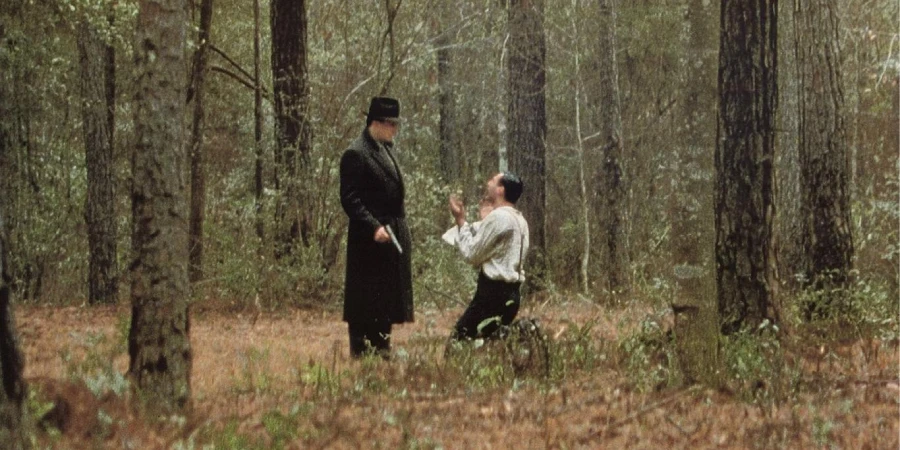
The forest known as Miller’s Crossing becomes a symbolic execution ground. It’s here that the film’s most famous and emotionally charged scene takes place, involving Bernie begging for his life. This moment strips away the film’s cool detachment and exposes the raw human cost behind criminal pragmatism.
The Long Con Revealed
As alliances shift and bodies fall, it slowly becomes clear that Tom may be orchestrating events not for power, but to settle scores and restore a twisted sense of order. The film invites viewers to actively piece together motivations rather than spelling them out.

Movie Ending
In the final act, Tom’s elaborate deception is fully revealed. He has been playing both sides, allowing the Italian gang to weaken Leo while simultaneously eliminating threats on both ends. Bernie, spared earlier at Miller’s Crossing, returns to blackmail Tom, forcing Tom to confront the consequences of mercy in a ruthless world.
Tom ultimately kills Bernie, recognizing that sentimentality has no place in this system. Leo regains control of the city after Johnny Caspar is killed by his own men, exposed as weak and manipulated. Order is restored, but it’s a hollow victory.
In the closing scenes, Leo offers Tom his old position back. Tom declines, choosing instead to walk away from the world he helped stabilize. The final exchange between Tom and Verna makes it clear that Tom has sacrificed personal happiness for control, and possibly for a private moral code only he understands. He stands alone, alive but emotionally exiled, having won the game yet lost any claim to peace.
Are There Post-Credits Scenes?
No. Miller’s Crossing does not include any post-credits or mid-credits scenes. The film ends definitively, consistent with its classical noir structure.
Type of Movie
Miller’s Crossing is a neo-noir gangster drama that blends crime fiction with political allegory, emphasizing psychological tension over action and dialogue over spectacle.
Cast
- Gabriel Byrne as Tom Reagan
- Albert Finney as Leo O’Bannon
- John Turturro as Bernie Bernbaum
- Marcia Gay Harden as Verna Bernbaum
- Jon Polito as Johnny Caspar
- J.E. Freeman as Eddie Dane
Film Music and Composer
The score was composed by Carter Burwell, whose music is essential to the film’s identity. The main theme, melancholic and restrained, reinforces the film’s sense of tragic inevitability and emotional distance.

Filming Locations
Although set in an American city, the film was shot primarily in New Orleans and surrounding Louisiana areas. The choice allowed the filmmakers to recreate a 1930s urban environment with minimal modern intrusion. The damp streets and wooded areas enhance the film’s oppressive, morally murky atmosphere.
Awards and Nominations
Miller’s Crossing did not receive major awards upon release, but it has since gained critical reappraisal and is now widely regarded as one of the Coen Brothers’ finest works. It frequently appears on retrospective lists of the best gangster and noir films of all time.
Behind the Scenes Insights
- The Coen Brothers intentionally made the dialogue dense and literary to reward repeat viewings.
- John Turturro improvised parts of Bernie’s pleading scene, intensifying its emotional impact.
- The film was influenced heavily by Dashiell Hammett novels, especially Red Harvest.
- The Coens later stated the film was partly a reaction against the simplicity of typical gangster tropes.
Inspirations and References
- Dashiell Hammett’s crime novels, particularly Red Harvest and The Glass Key
- Classic Hollywood gangster films like The Roaring Twenties
- Film noir traditions emphasizing moral ambiguity and flawed protagonists
Alternate Endings and Deleted Scenes
No alternate ending has been publicly confirmed. However, several character-driven scenes were trimmed during editing to maintain narrative momentum, particularly involving Tom and Verna’s relationship, which was originally more explicit.
Book Adaptations and Differences
Miller’s Crossing is not a direct adaptation of a single book. Instead, it is a hybrid homage to multiple Hammett works. Unlike Hammett’s novels, the film withholds internal monologue, forcing viewers to infer motivation entirely through action and dialogue.



Memorable Scenes and Quotes
Key Scenes
- The execution scene at Miller’s Crossing
- Tom confronting Bernie after sparing his life
- Leo’s cane-assisted shootout in his mansion
- Eddie Dane’s silent, methodical intimidation tactics
Iconic Quotes
- “What heart?”
- “Nobody knows anybody. Not that well.”
- “Ethics is a luxury you can’t afford.”
Easter Eggs and Hidden Details
- Tom’s hat subtly changes condition as his moral standing deteriorates.
- Miller’s Crossing is deliberately vague in location, reinforcing its mythic quality.
- Eddie Dane’s silence mirrors classic noir enforcers like those in 1940s crime films.
Trivia
- The film initially divided critics due to its complexity.
- Gabriel Byrne described Tom Reagan as “a man who survives by never explaining himself.”
- The movie gained cult status years after its release rather than immediate acclaim.
Why Watch?
If you enjoy films that respect your intelligence, reward careful attention, and offer no easy moral answers, Miller’s Crossing is essential viewing. It’s a gangster film where the real violence happens in conversations, not gunfights.
Director’s Other Works
- Blood Simple (1984)
- Raising Arizona (1987)
- Barton Fink (1991)
- Fargo (1996)
- No Country for Old Men (2007)