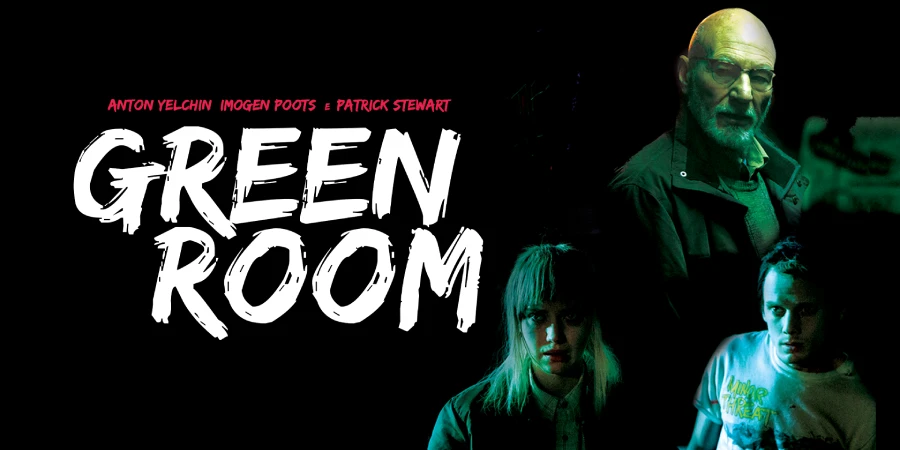

Green Room is a raw, nerve-shredding thriller directed by Jeremy Saulnier that strips violence of glamour and replaces it with panic, realism, and consequences. This is not a movie about heroes; it’s about survival under horrifyingly bad circumstances.
Detailed Summary
A Struggling Punk Band on the Road
The film follows The Ain’t Rights, a broke punk band touring the Pacific Northwest. They scrape by on gas money, bad gigs, and stubborn pride. After a show goes wrong, they accept a last-minute booking at a remote venue run by white supremacists. From the start, the atmosphere is tense, hostile, and deeply uncomfortable.
The Green Room Incident
After their performance, the band retreats to the green room and accidentally witnesses a murder. This single moment transforms a rough night into a nightmare. The club is controlled by an organized neo-Nazi group, and the band instantly becomes a liability that must be “handled.”
Siege and Psychological Warfare
The band is locked inside the green room while the venue’s owner, Darcy (Patrick Stewart), calmly orchestrates a cover-up. What follows is not constant action but slow, suffocating dread, punctuated by shocking bursts of violence. Every attempt to escape carries severe consequences, and each character’s fear feels painfully real.
Escalation and Brutality
As time passes, the situation worsens. Trust erodes, injuries pile up, and hope becomes increasingly fragile. The violence is sudden, ugly, and final—no dramatic slow motion, no heroic speeches. Saulnier makes it clear: mistakes here are fatal.
Movie Ending
The final act reveals the full scope of Darcy’s plan. He intends to kill everyone involved and frame the incident as an internal gang dispute. As the remaining band members attempt a desperate escape, they are hunted by attack dogs and armed extremists.
One by one, characters fall—often unexpectedly—reinforcing the film’s message that good intentions do not protect you from brutal systems. Eventually, the last survivors manage to turn the chaos against Darcy’s own men. Darcy himself is killed not in a dramatic showdown, but in a quiet, abrupt moment that reflects the film’s grounded tone.
The movie ends with the surviving band member(s) sitting in shock as daylight arrives. There is no triumphant music, no sense of victory—only exhaustion, trauma, and survival. The closing shot lingers on the band’s unfinished song list, underlining the tragedy of everything that will now never happen.
Are There Post-Credits Scenes?
No. Green Room ends definitively with no post-credits or mid-credits scenes.
Type of Movie
Green Room is a tightly contained survival thriller with strong horror elements, grounded in realism rather than spectacle. It leans heavily on tension, moral dread, and visceral violence rather than traditional action pacing.
Cast
- Anton Yelchin as Pat
- Imogen Poots as Amber
- Alia Shawkat as Sam
- Joe Cole as Reece
- Callum Turner as Tiger
- Patrick Stewart as Darcy
- Mark Webber as Daniel
Patrick Stewart’s casting is especially effective, as his calm authority makes the character far more frightening than a stereotypical villain.
Film Music and Composer
The score was composed by Brooke Blair and Will Blair, known for minimalist, unsettling soundscapes. Music is used sparingly, allowing silence and ambient noise to amplify tension rather than relieve it.

Filming Locations
The film was shot primarily in Oregon, USA, using real forests, warehouses, and small venues.
These locations matter because they:
- Enhance the sense of isolation
- Remove any feeling of outside rescue
- Ground the story in a believable, lived-in environment
The forest setting turns nature itself into a silent accomplice to the violence.
Awards and Nominations
- Cannes Film Festival 2015 – Directors’ Fortnight (Official Selection)
- Independent Spirit Awards – Best Supporting Female (Imogen Poots, nominated)
- Various critics’ lists for Best Indie and Horror Films of the Year
While not a major awards darling, the film gained significant critical acclaim for its direction and performances.
Behind the Scenes Insights
- Anton Yelchin performed many scenes despite severe discomfort from prosthetics and injuries
- Patrick Stewart deliberately avoided rehearsing with the cast to maintain emotional distance
- Jeremy Saulnier insisted on realistic injuries that worsened over time instead of resetting
- The attack dogs were real, highly trained animals with careful safety protocols
Inspirations and References
- Real-world punk subculture and underground venues
- Saulnier cited an interest in systems of violence, not individual evil
- Influences include Assault on Precinct 13 (1976) and Deliverance (1972)
Alternate Endings and Deleted Scenes
No alternate ending has been officially released. Some deleted scenes reportedly extended character backstories, but Saulnier cut them to preserve relentless pacing and realism.
Book Adaptations and Differences
Green Room is an original screenplay and not based on a book. Its realism comes from research and lived subcultural knowledge rather than adaptation.
Memorable Scenes and Quotes
Key Scenes
- The band’s final song choice that angers the crowd
- The first attempt to open the green room door
- The sudden, shocking arm injury scene
- The silent aftermath at dawn
Iconic Quotes
- “Nazis don’t have the monopoly on violence.”
- “This is how it is now.”
- “We’re not keeping you here. You’re just staying.”
Easter Eggs and Hidden Details
- The band’s name references real punk anti-fascist ideology
- The venue décor mirrors actual neo-Nazi symbolism without exaggeration
- Song lyrics subtly foreshadow the film’s fatalism
Trivia
- The film was shot in under six weeks
- Anton Yelchin was praised posthumously for this role as one of his best performances
- Many extras were real punk musicians
- The film avoids traditional “villain monologues” entirely
Why Watch?
If you want a thriller that respects your intelligence, doesn’t soften violence, and treats fear as psychological rather than theatrical, Green Room is essential viewing. It’s uncomfortable by design—and unforgettable because of it.
Director’s Other Works (Movies)
- Murder Party (2007)
- Blue Ruin (2013)
- Hold the Dark (2018)