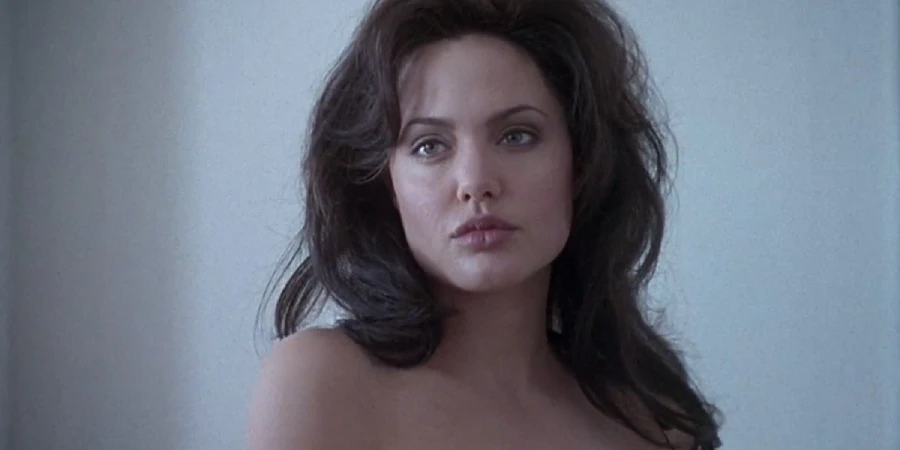

Gia (1998) is a powerful and emotionally heavy biographical drama that tells the tragic true story of Gia Carangi, one of the world’s first supermodels. Directed by Michael Cristofer and starring Angelina Jolie in one of her most acclaimed performances, the film explores fame, addiction, love, loss, and the cost of sudden success in the fashion industry of the late 1970s and early 1980s.
This is not a glamorous fashion movie. It is raw, painful, and deliberately uncomfortable.
Detailed Summary
Early Life and Rebellion
Gia Carangi grows up in Philadelphia feeling abandoned by her mother and emotionally disconnected from her family. Her troubled home life shapes her rebellious personality, emotional insecurity, and intense need for affection.
From an early age, Gia is charismatic, wild, and unpredictable. She is beautiful, but more importantly, she has presence. This combination becomes her ticket out of an unhappy home.
Arrival in New York and Sudden Fame
At just 17, Gia moves to New York City hoping to become a model. She is quickly noticed by Wilhelmina Cooper, a powerful modeling agent who sees something extraordinary in her.
Gia’s rise is meteoric. She becomes the face of major magazines, dominating Vogue covers and redefining what a supermodel looks like. Her raw sexuality and defiant attitude stand in sharp contrast to the polished models of the time.
She earns enormous money, attention, and influence almost overnight.
Love and Emotional Dependency
Gia begins a romantic relationship with Linda, a makeup artist. This relationship becomes the emotional center of her life. For the first time, Gia feels loved and understood.
When Linda eventually leaves her, Gia spirals emotionally. Her fear of abandonment resurfaces, and she turns increasingly to drugs to numb the pain.
This emotional fracture marks the beginning of her downfall.
Addiction Takes Control
As Gia’s heroin addiction worsens, her professional reliability collapses. She misses shoots, becomes erratic, and alienates photographers and agencies.
After the death of Wilhelmina Cooper, who had been her protector and stabilizing force, Gia loses the last person capable of keeping her grounded.
The fashion industry, which once adored her, turns its back on her quickly.
Decline and Isolation
Gia attempts rehabilitation multiple times but fails to remain sober. Her relationships deteriorate, and her modeling career effectively ends.
She returns briefly to her family but feels unable to reconnect. The fame that once defined her now haunts her.
Eventually, she becomes homeless, engaging in sex work to support her addiction.
Final Years
In the mid-1980s, Gia is diagnosed with AIDS, at a time when the disease was poorly understood and heavily stigmatized. She becomes isolated even within hospitals, often left alone by fearful staff.
The once-celebrated supermodel is now forgotten by the industry that created her.

Movie Ending
Gia’s health rapidly deteriorates as AIDS progresses. She becomes physically weak, emotionally withdrawn, and increasingly aware that her life is ending. The film shows her final hospitalization in painful detail, emphasizing the loneliness she experiences. Nurses are hesitant to touch her. Visitors are rare.
In one of the film’s most heartbreaking moments, Gia imagines a glamorous photo shoot while lying in her hospital bed, symbolizing her desperate longing for the life she lost.
She dies at the age of 26, alone.
The film closes with text explaining the impact of AIDS in the 1980s and how Gia became one of the first public figures whose death helped raise awareness of the epidemic.
There is no redemption arc. No recovery. No romanticized ending.
The story ends exactly as her life did: quietly, tragically, and far too soon.
Are There Post-Credits Scenes?
No. Gia does not include any post-credits or mid-credits scenes. The film ends definitively, followed only by informational text and credits.
Type of Movie
Gia is a biographical drama centered on real-life tragedy. It combines elements of psychological character study, LGBTQ+ cinema, and social commentary on fame, addiction, and exploitation.
Cast
- Angelina Jolie as Gia Carangi
- Faye Dunaway as Wilhelmina Cooper
- Elizabeth Mitchell as Linda
- Mercedes Ruehl as Kathleen Carangi
- Eric Michael Cole as Bobby
Angelina Jolie’s performance is widely considered career-defining.
Film Music and Composer
The score was composed by Terence Blanchard, whose jazz-infused and emotional compositions enhance the film’s melancholy tone.
The soundtrack also features period-appropriate music from the late 1970s and early 1980s, reinforcing the realism of Gia’s world.
Filming Locations
The movie was primarily filmed in:
- New York City, USA
- Los Angeles, USA
New York was essential in portraying the fashion industry’s authenticity. The gritty streets, loft apartments, studios, and clubs emphasize the contrast between glamour and decay that defines Gia’s life.
Awards and Nominations
- Golden Globe Award – Best Actress (Angelina Jolie) – Winner
- Screen Actors Guild Award – Outstanding Female Actor – Winner
- Emmy Awards – Multiple nominations
- HBO Films Awards recognition
Angelina Jolie’s performance is frequently listed among the greatest TV-film performances of all time.
Behind the Scenes Insights
- Angelina Jolie struggled emotionally during filming due to the character’s darkness.
- Many scenes were shot in long, handheld takes to increase realism.
- Real photographs of Gia Carangi were used to replicate her poses accurately.
- Jolie later stated this was the role that changed her life and career direction.
- The film was produced by HBO, allowing it to address addiction and sexuality without censorship.
Inspirations and References
- Based on the real life of Gia Carangi
- Inspired by fashion photography of the 1970s
- Influenced by documentary-style filmmaking
- Drew heavily from interviews with people who knew Gia personally
Alternate Endings and Deleted Scenes
There are no known alternate endings.
Some extended scenes depicting Gia’s rehabilitation attempts were trimmed to maintain pacing and emotional focus. The filmmakers intentionally avoided offering false hope or a softened conclusion.
Book Adaptations and Differences
The film is loosely based on biographies and real-life documentation rather than a single book.
Differences include:
- Timeline compression for dramatic structure
- Simplified romantic relationships
- Certain characters are composites of real individuals
Despite this, the emotional truth of Gia’s life remains largely accurate.


Memorable Scenes and Quotes
Key Scenes
- Gia’s first Vogue shoot
- Her emotional breakdown after Linda leaves
- Wilhelmina’s death and its immediate impact
- The hospital fantasy photoshoot
- Gia walking alone through New York at night
Iconic Quotes
- “I’m not a normal person.”
- “I don’t want to be alone.”
- “They love the image. Not me.”
Easter Eggs and Hidden Details
- Many fashion poses replicate Gia’s real magazine covers.
- Background dialogue includes actual modeling industry slang from the era.
- Some photographers in the film were played by real fashion professionals.
- Hospital scenes mirror documented AIDS ward conditions from the 1980s.
Trivia
- Angelina Jolie was only 23 during filming.
- The role earned her first major acting awards.
- The film helped reignite public discussion about AIDS victims.
- Many real models from the era later praised the film’s accuracy.
- HBO initially doubted the film’s audience appeal due to its darkness.
Why Watch?
You should watch Gia if you want:
- A brutally honest portrayal of fame’s cost
- One of the strongest performances in modern cinema
- A powerful LGBTQ+ love story
- A true story that refuses to romanticize addiction
- A film that stays with you long after it ends
This is not an easy watch, but it is an important one.
Director’s Other Works (Movies)
- The Witches of Eastwick (1987) – screenwriter
- Falling in Love (1984) – screenwriter
- Casanova Brown (1994)
- Shadowboxer (2005)