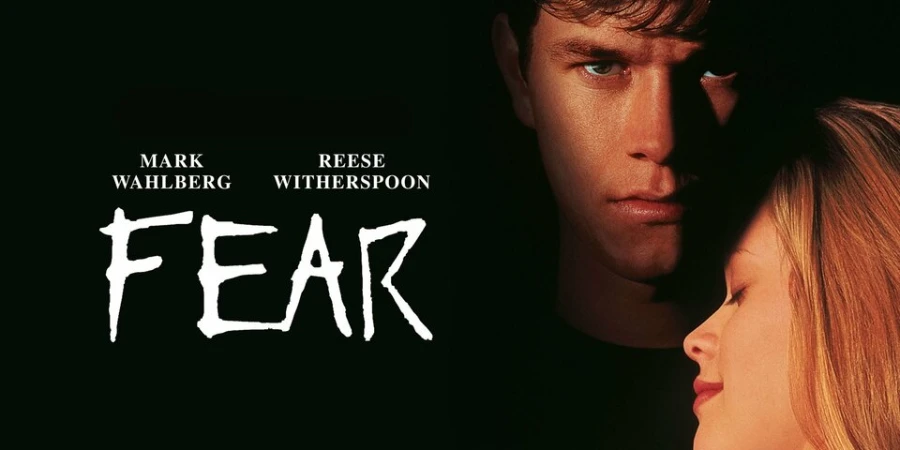

Fear (1996) is a dark psychological thriller that taps directly into a very real anxiety: what if the person you fall for is not who they pretend to be? Directed by James Foley, the film became a cult favorite thanks to its unsettling villain, intense performances, and a chilling escalation that still resonates today.
Detailed Summary
The First Encounter: A Perfect Stranger
Teenager Nicole Walker meets David McCall at a nightclub. He’s charming, attentive, and seems emotionally mature beyond his years. To Nicole, he feels like an escape from her strict but loving father, Steven Walker. Early on, the movie subtly plants red flags—David’s intensity, his controlling tendencies, and his habit of isolating Nicole from others—without fully revealing the danger.
Romance Turns Into Possession
As the relationship progresses, David’s behavior shifts from passionate to obsessive. He demands constant attention, reacts violently to rejection, and begins manipulating Nicole emotionally. The film smartly shows how control can masquerade as love, making Nicole’s slow realization feel painfully realistic.
The Family Conflict Escalates
Steven Walker, a protective father and former detective, senses something deeply wrong. When he confronts David and forces him away from Nicole, David’s carefully constructed persona collapses. What follows is a disturbing spiral of stalking, intimidation, and revenge. David’s obsession intensifies, and his actions become increasingly violent.
The Breaking Point
David orchestrates a series of terrifying events to punish Nicole and her family for rejecting him. His behavior reveals deep psychological instability, culminating in an all-out assault that turns the film from psychological thriller into full-blown home-invasion horror.
Movie Ending
The final act takes place at the Walker family home during a violent storm, heightening the sense of chaos and inevitability. David and his accomplices break into the house, terrorizing the family in a carefully planned attack. One of the most shocking moments involves David murdering Nicole’s best friend, Margo, by throwing her down the stairs, confirming that there is no redemption or hesitation left in him.
Nicole is forced to confront David directly. In a tense and emotionally charged sequence, she pretends to reciprocate his feelings, buying time while searching for a way to survive. When David realizes she is deceiving him, the confrontation turns brutal.
Ultimately, Nicole kills David, stabbing him during a final struggle. The act is not triumphant but tragic—a young woman forced to destroy someone she once loved to save herself and her family. The film ends with the family traumatized but alive, emphasizing the emotional cost of surviving abuse and obsession rather than offering a neat or comforting resolution.
Are There Post-Credits Scenes?
No. Fear does not include any post-credits or mid-credits scenes. The story ends definitively with the final confrontation.
Type of Movie
Fear is a psychological thriller with strong elements of domestic horror and romantic suspense, focusing on obsession, emotional manipulation, and escalating violence grounded in realism.
Cast
- Mark Wahlberg as David McCall
- Reese Witherspoon as Nicole Walker
- William Petersen as Steven Walker
- Alyssa Milano as Margo Masse
- Amy Brenneman as Laura Walker
Film Music and Composer
The score was composed by James Newton Howard, whose music subtly reinforces tension rather than overwhelming the scenes. The soundtrack also features 1990s alternative and rock tracks that ground the film firmly in its era.

Filming Locations
The film was shot primarily in Seattle, Washington. The gloomy weather, overcast skies, and suburban neighborhoods contribute heavily to the film’s oppressive mood. The Walker family home becomes a crucial setting, symbolizing safety that is gradually violated and transformed into a battleground.
Awards and Nominations
Fear did not receive major award nominations, but Mark Wahlberg’s performance was widely discussed and later cited as a breakthrough role that reshaped his public image.
Behind the Scenes Insights
- Mark Wahlberg intentionally played David with subtle menace, avoiding obvious villain tropes early on.
- Reese Witherspoon has said the role helped her understand how psychological abuse works in real relationships.
- Several scenes were rewritten during production to intensify David’s unpredictability.
- The infamous roller coaster scene was heavily discussed by test audiences for its disturbing intimacy.
Inspirations and References
The film draws inspiration from real-life stalking cases, particularly those involving teenage relationships and possessive behavior. It also echoes themes from earlier thrillers like Fatal Attraction (1987) but places them within a suburban, teenage context.
Alternate Endings and Deleted Scenes
Early drafts reportedly explored a more ambiguous ending where David’s fate was less explicit. These ideas were abandoned in favor of a clear, cathartic conclusion that emphasized Nicole’s survival and agency. Some deleted scenes further explored David’s family background but were cut to preserve mystery.
Book Adaptations and Differences
Fear is not based on a book. It is an original screenplay, which allowed the filmmakers to tailor the pacing and escalation specifically for cinematic tension.


Memorable Scenes and Quotes
Key Scenes
- Nicole and David’s first date, where charm subtly turns into control
- The roller coaster scene, unsettling due to its intimacy and public setting
- The stairway murder during the home invasion
- Nicole’s final confrontation with David
Iconic Quotes
- David: “I love you. What do you mean you don’t want to see me anymore?”
- Steven Walker: “Sometimes the wrong choices bring us to the right places.”
Easter Eggs and Hidden Details
- David’s constant physical closeness subtly increases throughout the film, visually representing control.
- Mirrors are frequently used when David is on screen, reinforcing his dual nature.
- The storm in the final act mirrors the emotional chaos David brings into the family.
Trivia
- Mark Wahlberg received death threats after the film due to how convincing his performance was.
- Reese Witherspoon was only 19 during filming.
- The film became significantly more popular on home video than during its theatrical run.
Why Watch?
Fear remains disturbingly relevant. It’s a cautionary tale about toxic relationships, emotional manipulation, and how quickly charm can become control. If you appreciate thrillers that feel uncomfortably real, this one still hits hard.
Director’s Other Movies
- Glengarry Glen Ross (1992)
- The Corruptor (1999)
- Confidence (2003)
- Perfect Stranger (2007)
Recommended Films for Fans
- Fatal Attraction (1987)
- Sleeping with the Enemy (1991)
- Single White Female (1992)
- The Hand That Rocks the Cradle (1992)
- Cape Fear (1991)