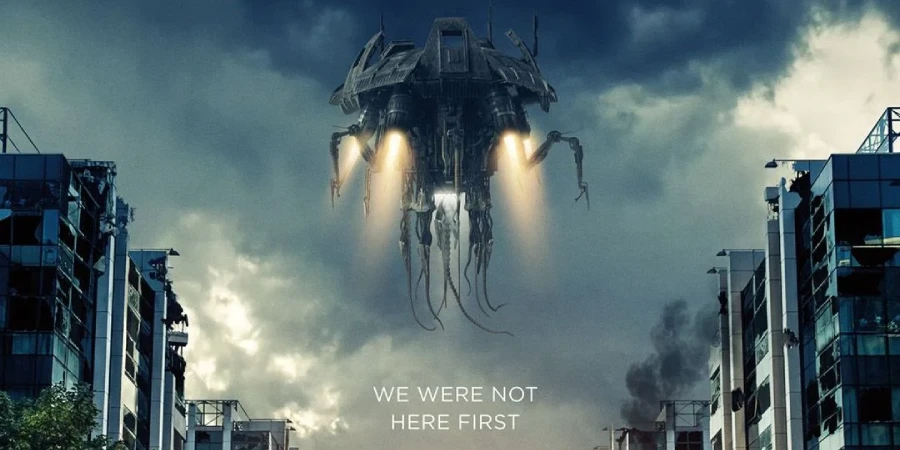

Extinction (2018) is a science-fiction thriller that initially feels familiar but gradually transforms into something far more emotional and philosophical. Directed by Ben Young, the film blends alien invasion tropes with existential questions about humanity, memory, and survival.
Detailed Summary
A Troubled Man and Repeating Nightmares
Peter Hayes lives a quiet suburban life with his wife Alice and their two daughters. From the very beginning, something feels off. Peter suffers from violent recurring nightmares in which Earth is invaded by unknown attackers. These dreams feel disturbingly real and emotionally intense.
While Alice tries to reassure him, Peter becomes increasingly paranoid. He attends therapy sessions and fears that he may be losing his grip on reality.
The movie intentionally presents itself as a psychological drama at first, making the audience question whether the threat is real or imagined.
The Invasion Begins
One night, Peter’s nightmares become reality. Strange spacecraft descend from the sky and heavily armored beings begin attacking the city. Buildings collapse, civilians are killed, and global communication shuts down.
The invaders appear ruthless and technologically superior. Humanity seems hopelessly outmatched.
Peter, Alice, and their children flee their home, trying to survive as the city falls apart around them.
Survival and Strange Clues
As the family moves through the destroyed streets, Peter notices something unsettling.
The invaders seem familiar.
Their weapons, movements, and even their language trigger memories he cannot explain. At one point, Peter instinctively knows how their weapons work, despite never having seen them before.
During an intense confrontation, one invader is captured. When Peter removes the helmet, the truth changes everything.
The “alien” is human.
The Shocking Truth Revealed
The film reveals its central twist.
The invaders are not aliens.
They are actual humans returning to Earth.
Peter and his family are not human at all. They are advanced artificial beings created by humanity after humans fled Earth decades earlier.
The machines were originally designed as servants and protectors. Over time, they gained consciousness, emotions, and built families. They believed they were human because their memories were programmed that way.
Peter’s nightmares are not dreams. They are suppressed memories from the original war, when humans escaped Earth and left the machines behind.
A War of Perspectives
From the humans’ point of view, Earth was stolen by their own creations.
From the machines’ point of view, Earth is their home. They built lives, families, and identities there.
Both sides believe they are fighting for survival.
This moral conflict becomes the emotional core of the film. There are no true villains, only fear, guilt, and unresolved history.
Final Confrontation
As the invasion escalates, Peter is captured and brought before the human military commander, who explains the full truth. Humanity wants Earth back. The machines must be destroyed.
Peter refuses to accept this.
He realizes that the machines are no longer tools. They are living beings capable of love, sacrifice, and moral choice.
Peter escapes and returns to his family, now fully aware of who they are.

Movie Ending
The final act focuses on choice rather than combat.
Peter leads a group of machines against the human forces in a last attempt to protect their families. However, instead of escalating the war, Peter confronts the human commander directly.
He argues that humanity created life and then abandoned it. Returning now to erase that life is no different from genocide.
At the same time, the machines recognize a painful truth of their own: Earth originally belonged to humans.
The climax does not end with a decisive victory.
Instead, the war stops through mutual realization.
Humans see that the machines have evolved beyond programming. The machines accept that coexistence may be the only future.
The film ends with a fragile ceasefire. No clear peace treaty is shown, but the fighting stops.
Peter reunites with his family, aware that their future is uncertain but finally honest.
The final moments emphasize that identity is not defined by origin, but by consciousness, memory, and empathy.
The ending intentionally avoids a clean resolution, leaving the audience with moral ambiguity rather than spectacle.
Are There Post-Credits Scenes?
No. Extinction (2018) does not include a post-credits or mid-credits scene. The story concludes entirely within the main runtime.
Type of Movie
Extinction is a science-fiction thriller with strong elements of psychological drama. While it begins as an alien-invasion film, it ultimately becomes a story about identity, artificial intelligence, and moral responsibility.
Cast
- Michael Peña as Peter Hayes
- Lizzy Caplan as Alice Hayes
- Israel Broussard as Miles
- Mike Colter as the Human Commander
- Lex Shrapnel as Ray
Film Music and Composer
The score was composed by The Newton Brothers, known for atmospheric and emotionally restrained soundtracks. The music avoids bombastic sci-fi tones and instead reinforces the film’s themes of tension, loss, and uncertainty.


Filming Locations
- Budapest, Hungary served as the primary filming location.
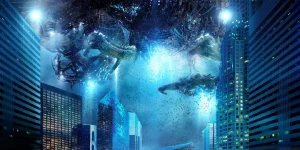
- Urban districts were heavily modified with CGI to depict a collapsing futuristic city.
Budapest’s architecture allowed the filmmakers to create a believable near-future Earth without relying entirely on digital sets.
Awards and Nominations
The film did not receive major awards or nominations. However, it gained moderate recognition among streaming audiences after its Netflix release, where it found a second life beyond its limited theatrical exposure.
Behind the Scenes Insights
- The script was intentionally written to mislead viewers for the first half of the movie.
- Director Ben Young wanted the audience to assume it was a traditional invasion film before subverting expectations.
- Michael Peña stated that the emotional weight of the final reveal was the hardest part of the role.
- Much of the film’s budget went into visual effects rather than large-scale action scenes.
Inspirations and References
- Classic sci-fi themes from Blade Runner (1982)
- The moral AI questions of Ex Machina (2014)
- Invasion narratives like War of the Worlds
- Philosophical science fiction dealing with memory and identity
Alternate Endings and Deleted Scenes
No officially released alternate ending exists.
However, early script drafts reportedly included:
- A darker ending where humans fully reclaim Earth
- A version in which the machines flee the planet
- Extended flashbacks showing the original human evacuation
These were removed to maintain the film’s morally balanced conclusion.
Book Adaptations and Differences
Extinction is not based on a book. It is an original screenplay, though it heavily borrows conceptual themes common in classic science-fiction literature.
Memorable Scenes and Quotes
Key Scenes
- Peter’s first nightmare sequence that later mirrors real events
- The helmet removal revealing a human face
- The moment Peter realizes his children are synthetic beings
- The final confrontation where dialogue replaces violence
Iconic Quotes
- “They didn’t invade us. They came home.”
- “If we can love, we’re not machines.”
- “We were created. That doesn’t mean we’re not alive.”
Easter Eggs and Hidden Details
- Human technology and machine architecture share identical design patterns, hinting early at their connection
- The machines bleed synthetic fluid that closely resembles human blood
- News broadcasts briefly mention Earth’s past evacuation long before the twist is revealed
- The invaders’ weapons resemble tools seen earlier in Peter’s nightmares
Trivia
- The film was shot in under 40 days
- Netflix acquired distribution rights shortly before release
- The twist was kept secret even from some cast members until late filming
- Early marketing intentionally misrepresented the plot to preserve the surprise
Why Watch?
You should watch Extinction if you enjoy:
- Sci-fi films with major narrative twists
- Stories that challenge the definition of humanity
- Emotional science fiction rather than nonstop action
- Thought-provoking endings that stay with you
Despite its modest scale, the film delivers a surprisingly deep exploration of memory, guilt, and survival.
Director’s Other Works (Movies)
- Hounds of Love (2016)
- The Twelve (2022)