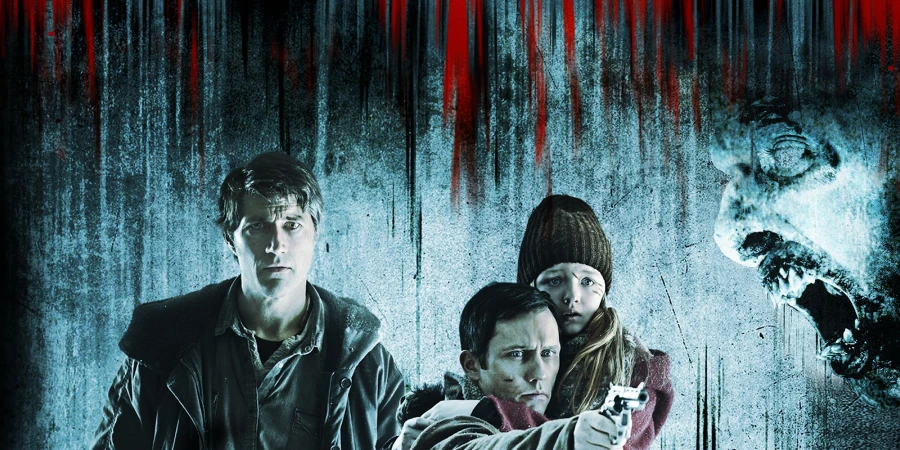

Extinction (2015) is a low-budget but emotionally heavy post-apocalyptic science fiction drama directed by Miguel Ángel Vivas. Unlike action-driven extinction stories, this film focuses on survival, isolation, and the slow decay of humanity. It is quiet, bleak, and intentionally uncomfortable, offering a more intimate take on the end of the world.
Detailed Summary
The World After Collapse
Nine years after a mysterious pandemic wipes out most of humanity, the world is frozen both figuratively and literally. Civilization has collapsed, cities are abandoned, and nature has reclaimed everything.
The story takes place almost entirely in a snow-covered, isolated town, reinforcing the feeling that the world has stopped moving forward.
Two former best friends, Patrick and Jack, are among the last known survivors.
They live separated by fear, resentment, and an unresolved past conflict.
Patrick and Lu: Life in Isolation
Patrick lives with his young daughter Lu, who has grown up knowing nothing about the world before the outbreak.
He teaches her strict survival rules:
- Never go outside alone
- Always stay silent
- Trust no one
Lu believes they are the only humans left alive.
Their daily routine is repetitive but safe, built entirely around avoiding danger and preserving warmth, food, and hope.
Jack: The Broken Survivor
Not far away lives Jack, Patrick’s former closest friend.
Jack is emotionally shattered and physically deteriorating. He lives alone, armed, and paranoid. Years earlier, a violent disagreement caused Patrick and Jack to completely cut ties.
Neither man has crossed the invisible boundary between their homes for nearly a decade.
This emotional separation mirrors the extinction of society itself.
The Creatures in the Snow
The pandemic did not simply kill humanity.
Some infected survivors mutated into violent, animal-like creatures known as the infected.
They are not zombies in the traditional sense and they are:
- Fast
- Intelligent
- Sensitive to sound
- Capable of hunting
They hide beneath the snow and attack without warning.
For years, Patrick and Jack believed the infected had died out due to the extreme cold.
They were wrong.
The Attack
One night, the creatures return.
Jack is the first to be attacked, barely surviving a brutal encounter. Realizing the infected are evolving and adapting, he attempts to warn Patrick.
This forces the two men into an uneasy reunion.
Old wounds resurface, anger boils over, and trust is nearly impossible, but survival demands cooperation.
Survival Turns Into Desperation
As the infected multiply and grow more aggressive, the town becomes a trap.
The creatures are no longer mindless monsters. They demonstrate:
- Coordinated attacks
- Strategic movement
- The ability to learn human behavior
This evolution raises a disturbing question:
Are humans truly the dominant species anymore?
Lu becomes increasingly exposed to danger, and Patrick must confront the truth that isolation alone cannot protect her.
Movie Ending
As the infected overrun the town, Patrick, Jack, and Lu attempt to escape using an old snowcat vehicle. During the escape, they are ambushed.
Jack sacrifices himself to protect Lu and Patrick, finally redeeming himself for the mistakes of the past. His death is violent and unavoidable, emphasizing the film’s refusal to offer heroic fantasy.
Patrick and Lu manage to flee the town, but safety remains uncertain.
In the final moments, they encounter something far more disturbing.
They discover children infected with the virus who appear partially human and partially mutated. These children are not violent. They observe, communicate, and show intelligence.
This revelation changes everything.
The infection did not simply destroy humanity.
It created something new.
The film ends with the realization that humans are becoming extinct not because of death, but because evolution has moved on without them.
Patrick and Lu drive into the frozen wilderness knowing that:
- There is no cure
- There is no return to the old world
- Humanity may already be obsolete
The ending deliberately avoids hope, replacing it with acceptance and existential dread.
Are There Post-Credits Scenes?
No. Extinction (2015) does not include any mid-credits or post-credits scenes. The film ends definitively with its final image and offers no sequel setup or additional material after the credits.
Type of Movie
Extinction is a post-apocalyptic science fiction drama with strong horror elements. It prioritizes atmosphere, emotional tension, and psychological conflict over action or spectacle.
Cast
- Matthew Fox as Patrick
- Jeffrey Donovan as Jack
- Quinn McColgan as Lu
- Clara Lago as Emma (flashbacks)
Film Music and Composer
The score was composed by Sergio Moure de Oteyza.
The music is minimalistic and somber, often disappearing entirely to emphasize silence, wind, and isolation. Rather than guiding emotion, the soundtrack reinforces emptiness and dread.
Filming Locations
The film was shot primarily in:
- Budapest, Hungary
- Surrounding rural and forested areas
The constant snow-covered environments are essential to the story, symbolizing:
- Emotional coldness
- Stagnation of civilization
- The suffocation of hope
The frozen setting also acts as a narrative device, slowing everything down and intensifying survival stress.
Awards and Nominations
Due to its limited release, Extinction (2015) did not receive major international awards. However, it gained recognition at several genre festivals for:
- Best Sci-Fi Feature nominations
- Best Makeup and Creature Design
The film later developed a cult following among post-apocalyptic cinema fans.
Behind the Scenes Insights
- Matthew Fox described the shoot as physically exhausting due to constant exposure to freezing conditions.
- Most creature effects were done with practical makeup combined with CGI, not fully digital models.
- The director wanted the infected to feel “evolved,” not undead.
- Much of the dialogue was intentionally minimal to emphasize isolation.
- Several scenes were filmed in real sub-zero temperatures to enhance realism.
Inspirations and References
The film draws inspiration from:
- Children of Men (2006)
- The Road by Cormac McCarthy
- 28 Days Later (2002)
- Survivalist literature and evolutionary science theories
Rather than focusing on apocalypse itself, the film explores what comes after survival stops being enough.
Alternate Endings and Deleted Scenes
An alternate ending was discussed but never filmed.
The unused concept showed Lu eventually joining the infected children, suggesting humanity’s next stage would be born through her. This idea was removed to maintain ambiguity.
Several deleted scenes expanded Patrick and Jack’s past friendship but were cut to preserve pacing.
Book Adaptations and Differences
The movie is not based on a book. However, its themes closely resemble dystopian novels focused on extinction through evolution rather than catastrophe.
Memorable Scenes and Quotes
Key Scenes
- The first infected attack beneath the snow
- Jack’s solo survival sequence in the abandoned house
- The silent dinner scene showing emotional distance
- The final reveal of infected children
Iconic Quotes
- “The cold doesn’t kill you. The silence does.”
- “We survived… but maybe we weren’t supposed to.”
- “The world didn’t end. It changed.”
Easter Eggs and Hidden Details
- Children’s drawings in Lu’s house foreshadow the mutated children at the end.
- Radio broadcasts early in the film hint at mutation rather than death.
- The infected avoid attacking Lu early on, suggesting recognition.
- Animal life slowly disappears throughout the movie, symbolizing total ecological collapse.
Trivia
- The movie was shot almost entirely in chronological order.
- Matthew Fox accepted the role due to the script’s emotional focus rather than action.
- The film was released in some regions under the title Welcome to Harmony.
- Less than 500 spoken lines exist in the entire film.
Why Watch?
You should watch Extinction (2015) if you want:
- A serious, atmospheric apocalypse film
- Minimal action and maximum tension
- A story about human extinction through evolution, not invasion
- A bleak but thought-provoking ending
This is not entertainment-driven sci-fi. It is reflective, uncomfortable, and haunting.
Director’s Other Works (Movies)
- Kidnapped (2010)
- Inside (2016)
- Your Son (2018)
Miguel Ángel Vivas is known for psychological intensity and moral darkness rather than spectacle.
Recommended Films for Fans
- Children of Men (2006)
- The Road (2009)
- It Comes at Night (2017)
- Cargo (2017)
- Light of My Life (2019)
- 28 Days Later (2002)