
Dead Man’s Shoes is a low-budget British film that quietly became one of the most disturbing and respected revenge movies of the 2000s. Directed by Shane Meadows, the film is raw, intimate, and emotionally devastating. This is not a stylish action revenge fantasy; it is a deeply personal descent into guilt, trauma, and moral ambiguity.
Detailed Summary
Return to a Broken Hometown
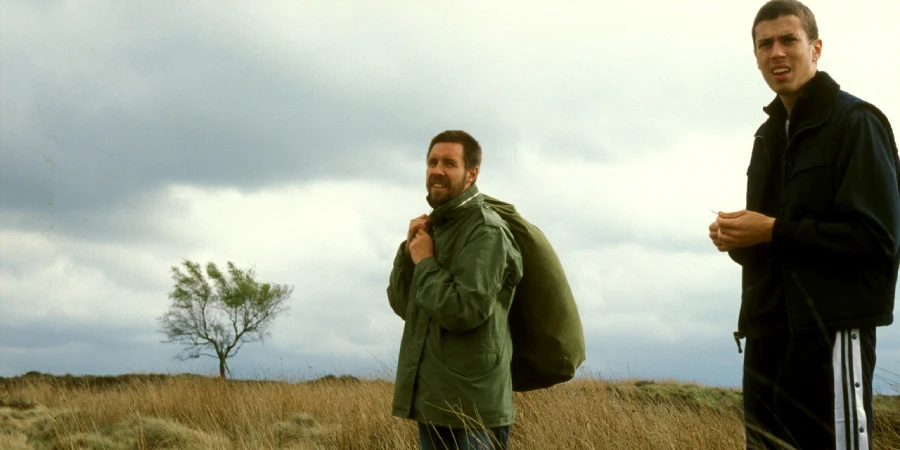
Richard, a former British soldier, returns to his small, bleak hometown in rural England after years away. He is accompanied by his younger brother Anthony, who is clearly vulnerable and intellectually disabled. From the beginning, something feels off. Richard is tense, watchful, and deeply resentful toward a local group of petty criminals.
The Gang and the Unspoken Past
The local gang, led loosely by Sonny, is made up of small-time bullies who live reckless, drug-fueled lives. As Richard begins confronting them one by one, it becomes clear that they share a dark history involving Anthony. The gang members react with confusion, denial, and fear, suggesting that they buried something shameful long ago.
Psychological Warfare Begins
Richard does not rush into violence. Instead, he stalks, intimidates, and mentally breaks the gang members. His military background becomes evident as he uses fear as a weapon. He forces them to confront their past actions, often giving them the illusion of mercy before delivering brutal consequences.
Fractured Reality and Guilt
As the story progresses, subtle clues reveal that Anthony may not be physically present in the way the audience initially believes. Conversations and reactions begin to feel one-sided. The film slowly shifts from a straightforward revenge plot into something far more psychological and tragic.
Escalation Toward Inevitable Violence
Each confrontation peels back more of the truth. The gang members are not cartoon villains; they are cowardly, damaged people haunted by guilt. Richard’s actions grow increasingly violent, but the film never frames them as heroic. Instead, it forces the audience to sit with the discomfort of vengeance.
Movie Ending
In the final act, the truth is fully revealed: Anthony is dead. He died years earlier after being systematically abused, humiliated, and tortured by the gang while Richard was away in the army. The Anthony we see throughout the film is a manifestation of Richard’s guilt, grief, and fractured psyche. Richard could not protect his brother, and that failure has consumed him.
Richard gathers the remaining gang members and confronts them with what they did. Some beg, some deny, some break down completely. He kills them, not in a moment of rage, but with a cold, almost ritualistic calm. Each death feels less like justice and more like an emotional autopsy.
After completing his revenge, Richard releases Anthony’s ashes into the wind, finally accepting his brother’s death. He walks into a field and ends his own life, unable to live with the weight of what happened and what he has become. The film closes not with triumph, but with silence and emptiness, reinforcing the idea that revenge offers no redemption.
Are There Post-Credits Scenes?
No. Dead Man’s Shoes does not include any post-credits or mid-credits scenes. The story ends definitively and deliberately, leaving the audience alone with its emotional aftermath.
Type of Movie
Dead Man’s Shoes is a psychological revenge thriller with strong elements of social realism and horror. It focuses less on action and more on emotional damage, guilt, and moral consequences.
Cast
- Paddy Considine as Richard
- Toby Kebbell as Anthony
- Gary Stretch as Sonny
- Stuart Wolfenden as Herbie
- Paul Sadot as Big Al
Paddy Considine’s performance is widely considered one of the most intense revenge performances in modern cinema.
Film Music and Composer
The score was composed by Chris Clark, featuring dark ambient tones that reinforce the film’s unsettling atmosphere. The music is used sparingly, allowing silence and natural sound to heighten tension.

Filming Locations
The film was shot primarily in Derbyshire and the East Midlands, England. The rural landscapes and decaying housing estates are crucial to the film’s tone. These locations emphasize isolation, stagnation, and the suffocating nature of small-town secrets.
Awards and Nominations
- Won Best British Independent Film at the British Independent Film Awards (2005)
- Paddy Considine received multiple acting nominations and critical acclaim
Despite its modest budget, the film became a cult classic and critical favorite.
Behind the Scenes Insights
- The script was written with Paddy Considine specifically in mind.
- Many scenes were partially improvised to enhance realism.
- Shane Meadows encouraged actors to live together during filming to build authentic relationships.
- The budget was extremely low, which led to a stripped-down, documentary-like style.
- Toby Kebbell’s performance was so convincing that many viewers initially believed he had a real disability.
Inspirations and References
- Inspired by Shane Meadows’ own experiences growing up in working-class England.
- Influenced by films like Taxi Driver and Get Carter.
- Themes echo real-world issues of bullying, abuse, and neglected communities.
Alternate Endings and Deleted Scenes
No official alternate ending exists. However, several scenes exploring Anthony’s abuse in greater detail were intentionally removed. Meadows felt that suggestion was more powerful than explicit depiction.
Book Adaptations and Differences
The film is not based on a book. It is an original screenplay, which contributes to its raw, unfiltered tone.

Memorable Scenes and Quotes
Key Scenes
- Richard’s first confrontation with Sonny in the pub.
- The reveal that Anthony exists only in Richard’s mind.
- The quiet final scene with Anthony’s ashes.
- Richard forcing gang members to confess their past actions.
Iconic Quotes
- Richard: “You did nothing while they did something.”
- Richard: “I’m not threatening you. I’m explaining to you.”
- Anthony: “It was only a joke.” (a line that becomes horrifying in context)
Easter Eggs and Hidden Details
- Anthony never physically interacts with objects or people.
- Several background conversations subtly reference the past abuse.
- The gang’s casual jokes mirror real-life bullying language.
- Richard’s military behavior contrasts sharply with the gang’s immaturity.
Trivia
- Paddy Considine later said this role emotionally drained him for months.
- The film was shot in just a few weeks.
- Many cast members went on to major careers in British cinema.
- The title refers to both literal footwear and the inevitability of death following violence.
Why Watch?
If you want a film that challenges your idea of revenge, this is essential viewing. It is uncomfortable, emotionally heavy, and unforgettable. This is not entertainment you forget when the credits roll.
Director’s Other Works (Movies)
- TwentyFourSeven (1997)
- A Room for Romeo Brass (1999)
- This Is England (2006)
- Somers Town (2008)
- The King of the Gypsies (2015)
Recommended Films for Fans
- This Is England (2006)
- Tyrannosaur (2011)
- Bull (2021)
- Nil by Mouth (1997)
- Blue Ruin (2013)