
Day the World Ended (1955) is a low-budget but influential post-apocalyptic science fiction film directed by Roger Corman. Despite its modest production values, the movie stands out for its heavy use of dialogue, moral conflict, and Cold War–era anxieties about nuclear annihilation.
Detailed Summary
Nuclear Destruction and Isolation
The film opens after a devastating nuclear war has seemingly wiped out most of humanity. Small groups of survivors begin to emerge from shelters, each uncertain whether the outside world is truly safe. Radiation levels remain dangerously high, and survival is as much psychological as it is physical.
The Canyon House and Uneasy Alliance
Several survivors converge on a remote canyon house owned by Rick (Richard Denning), a practical and calm engineer who has prepared for the apocalypse. Among those who arrive are:
- Louise, Rick’s love interest, who represents hope and emotional grounding
- Tony, a violent and cynical delinquent
- Ruby, Tony’s manipulative companion
- Dr. Stillman, a scientist burdened by guilt for his role in nuclear weapons development
- Mrs. Stillman, whose mental fragility hints at the trauma of the new world
- Pete, a mutated survivor suffering from radiation effects
Forced together by circumstance, the group must coexist despite clashing personalities, moral values, and fears.
Fear, Radiation, and Human Nature
As radiation sickness worsens and supplies dwindle, tensions escalate. Tony’s aggressive behavior becomes increasingly dangerous, while Dr. Stillman struggles with guilt and responsibility. Pete’s mutation, treated by some as monstrous, becomes a mirror for humanity’s own moral decay.
The film focuses less on action and more on ethical debates, particularly about science, violence, and whether humanity deserves to survive at all.
The Mutant Threat
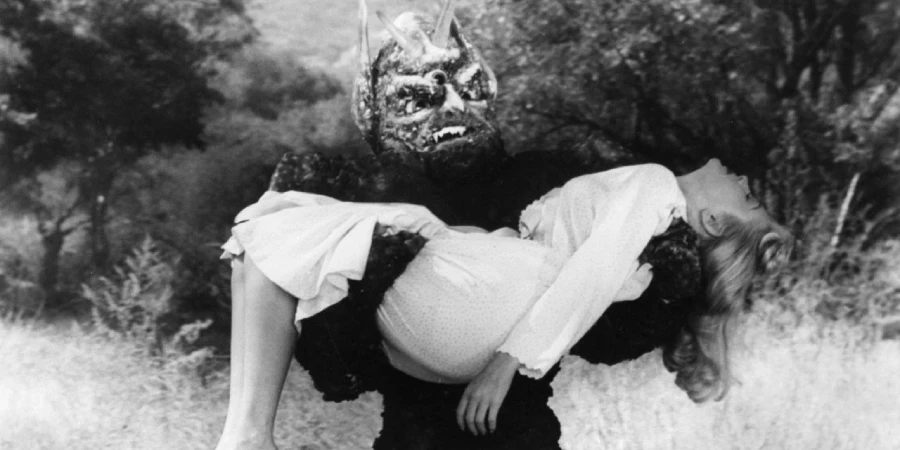
Outside the canyon, a large radiation-mutated creature lurks. Though briefly shown, it symbolizes the irreversible consequences of nuclear experimentation and human arrogance.

Movie Ending
In the final act, the group attempts to determine whether it is safe to leave the canyon and re-enter the world. Tony’s violence reaches its peak when he attempts to assault Louise, confirming him as the most dangerous “monster” in the film. He is ultimately killed during a struggle, reinforcing the theme that human cruelty is more lethal than radiation.
Pete, the mutated man, sacrifices himself by luring the giant mutant creature away from the house. His death is tragic but meaningful, showing that compassion and courage can still exist even in a broken body.
Dr. Stillman, overwhelmed by guilt over his scientific contributions to nuclear destruction, also dies—symbolizing the end of the old world’s destructive knowledge.
In the final moments, radiation levels drop enough for Rick and Louise to leave the canyon. The movie ends on a cautiously optimistic note as they walk toward an uncertain future, suggesting that humanity may continue—but only if it learns from its mistakes.
Are There Post-Credits Scenes?
No. Day the World Ended does not include any post-credits or mid-credits scenes, which was standard for films of the 1950s.
Type of Movie
Day the World Ended is a post-apocalyptic science fiction drama that blends survival storytelling with moral philosophy, reflecting Cold War fears of nuclear annihilation and scientific hubris.
Cast
- Richard Denning as Rick
- Lori Nelson as Louise
- Adele Jergens as Ruby
- Paul Birch as Dr. Charles Conway Stillman
- Mike Connors as Tony
- Paul Dubov as Pete
- Virginia Grey as Mrs. Stillman
Film Music and Composer
The score was composed by Ronald Stein, a frequent collaborator of Roger Corman. The music emphasizes tension and unease, compensating for the film’s limited visual effects and reinforcing the sense of dread.
Filming Locations
The movie was filmed primarily in Bronson Canyon, Los Angeles, a popular location for low-budget science fiction films of the era. The barren, rocky landscape effectively conveys a world scorched by nuclear fallout and reinforces the film’s sense of isolation and desolation.
Awards and Nominations
The film did not receive major awards or nominations. However, it has since gained cult status and is often cited in discussions of influential early post-apocalyptic cinema.
Behind the Scenes Insights
- Roger Corman shot the film in just a few days, keeping costs extremely low.
- The mutant creature costume was reused from earlier productions, a common Corman tactic.
- Much of the film relies on dialogue due to budget limitations, unintentionally giving it a stage-play feel.
- The censorship of the era limited how graphic the film could be about radiation effects.
Inspirations and References
- Cold War nuclear paranoia
- Early science fiction literature dealing with atomic fallout
- The moral philosophy of science and responsibility
- Influences from The Day the Earth Stood Still (1951)
Alternate Endings and Deleted Scenes
No officially documented alternate endings exist. Some dialogue-heavy scenes were reportedly trimmed for pacing, but no major plotlines were removed.
Book Adaptations and Differences
The film is not based on a book. It is an original screenplay, though it draws heavily from common sci-fi themes of the 1950s.
Memorable Scenes and Quotes
Key Scenes
- The first meeting of survivors at the canyon house
- Pete revealing his radiation-induced mutation
- Tony’s violent breakdown and final confrontation
- Pete’s sacrificial diversion of the mutant creature
Iconic Quotes
- “We were too busy seeing what we could do to stop and ask if we should.” – Dr. Stillman
- “The world didn’t end. We did.” – Rick
Easter Eggs and Hidden Details
- The mutant creature design resembles monsters from earlier Corman productions.
- Pete’s character subtly references fears of genetic mutation from radiation exposure.
- The canyon house appears in several other 1950s genre films.
Trivia
- The film was marketed as more action-packed than it actually is.
- Roger Corman later admitted the monster was included mainly for marketing reasons.
- It is one of Corman’s earliest films to focus heavily on moral themes.
- The film influenced later, more complex post-apocalyptic narratives.
Why Watch?
If you enjoy thought-provoking science fiction that prioritizes ideas over spectacle, Day the World Ended is worth your time. It’s a fascinating snapshot of 1950s fears and a reminder that the scariest threats often come from human behavior, not monsters.
Director’s Other Works (Movies)
- The Fast and the Furious (1954)
- Attack of the Crab Monsters (1957)
- A Bucket of Blood (1959)
- The Little Shop of Horrors (1960)
- X: The Man with the X-Ray Eyes (1963)
Recommended Films for Fans
- The Day the Earth Stood Still (1951)
- On the Beach (1959)
- Panic in Year Zero! (1962)
- Five (1951)
- The Last Man on Earth (1964)