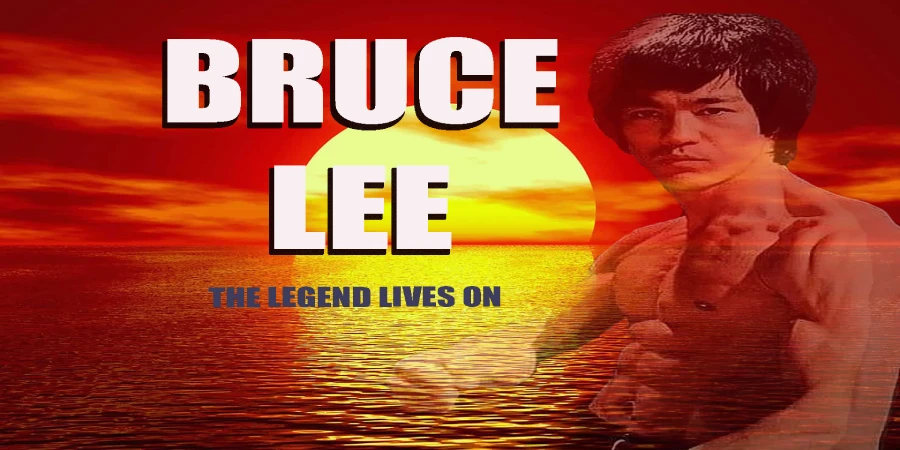
Bruce Lee: The Legend Lives On is a cult martial arts fantasy film that boldly mixes biography, mythology, and supernatural action. Released in 1999 and directed by Ernest Pintoff, the movie takes an unconventional approach to Bruce Lee’s legacy by imagining what happens after his death. This is not a traditional biopic; it is more of a “what if the legend never ended?” kind of experience.
Detailed Summary
Bruce Lee’s Death and the Birth of a Myth
The film begins by addressing Bruce Lee’s mysterious death in 1973, a moment that shocked the world. Rather than grounding itself in realism, the movie immediately leans into fantasy: Bruce’s soul is transported to the Netherworld, a limbo-like realm where warriors are judged.
Here, Bruce is mistaken for a troublemaker rather than a hero, setting up the central conflict of the film.
The Netherworld Tournament
Bruce soon learns that the Netherworld is ruled by sadistic demons and corrupt enforcers. Souls are forced to fight endlessly for entertainment. Refusing to submit, Bruce challenges the system, using his martial arts philosophy and unmatched skill.
This section of the movie functions almost like a dark, otherworldly martial arts tournament, with Bruce fighting increasingly powerful and grotesque opponents.
Allies in the Afterlife
Bruce encounters other legendary figures, including:
- A character inspired by James Dean
- A boxer reminiscent of Muhammad Ali
- A mysterious monk figure representing Eastern philosophy
These encounters reinforce the film’s theme: true legends transcend death. Bruce becomes a symbol of rebellion against injustice—even in the afterlife.
The Return to the Living World
As Bruce disrupts the Netherworld’s balance of power, he’s given a chance to return to Earth. However, this return is not permanent. His mission is to protect his family and legacy, particularly his son, Brandon Lee.
This section blends supernatural elements with emotional moments, especially as Bruce observes his loved ones from a distance, unable to fully interact with them.
Movie Ending
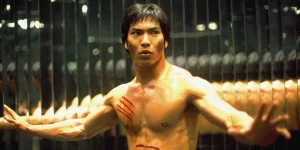
In the final act, Bruce Lee confronts the ultimate ruler of the Netherworld, a demonic entity that feeds on fear and submission. The climactic battle is symbolic rather than realistic: Bruce defeats the demon not just with physical skill, but with discipline, clarity, and philosophy.
Bruce is offered a choice:
- Stay in the Netherworld as a ruler
- Return to Earth permanently
- Or transcend both realms
He chooses transcendence.
Bruce sacrifices his chance to remain among the living in order to free the trapped souls of the Netherworld. The realm collapses, and balance is restored. His spirit fades into light, becoming something greater than human—a guardian symbol rather than a man.
The final scenes show Bruce watching over the world from afar, smiling peacefully. The message is clear: Bruce Lee may be gone, but his spirit, philosophy, and influence live forever.
Are There Post-Credits Scenes?
No. The film does not include a post-credits or mid-credits scene. Once the credits roll, the story is definitively over, reinforcing the idea of final transcendence rather than sequel setup.
Type of Movie
This film is a martial arts fantasy drama that blends supernatural action with myth-making. It is less concerned with historical accuracy and more focused on symbolism, legacy, and legend.
Cast
- Danny Chan Kwok-kwan as Bruce Lee
- Eric Chen as the Netherworld Enforcer
- Bolo Yeung as The Executioner
- Steve Tartalia as James Dean–inspired character
Danny Chan’s performance is particularly notable, as he would later portray Bruce Lee again in other productions.
Film Music and Composer
The score emphasizes traditional martial arts themes mixed with dramatic orchestration. While not widely celebrated, the music supports the mystical tone and reinforces Bruce Lee’s mythic status.
Filming Locations
The film was shot primarily in Hong Kong, using studio sets and practical locations.
- Hong Kong’s urban backdrops reinforce Bruce Lee’s cultural roots
- Stylized sets represent the Netherworld, emphasizing its theatrical, unreal nature
- Limited CGI was used, making the film feel closer to classic 1980s kung fu fantasy than modern effects-heavy cinema
Awards and Nominations
The film did not receive major international awards. However, it gained cult recognition among Bruce Lee fans for its bold and imaginative premise.
Behind the Scenes Insights
- The filmmakers intentionally avoided realism, treating Bruce Lee as a mythic hero rather than a historical figure
- Danny Chan studied Bruce Lee’s movement, breathing, and philosophy extensively
- The film was made with a low-to-mid budget, influencing its theatrical style
- Bruce Lee’s family was not directly involved in the production
Inspirations and References
- Bruce Lee’s own philosophy of Jeet Kune Do
- Traditional Chinese beliefs about the afterlife
- Mythological warrior tales
- Classic kung fu fantasy films from the 1970s and 1980s
Alternate Endings and Deleted Scenes
Some deleted scenes reportedly expanded on:
- Bruce Lee’s interactions with other legendary figures
- A longer farewell sequence to his family
No fully alternate ending was filmed, but early scripts reportedly had Bruce returning permanently to Earth, an idea later scrapped to preserve the legendary tone.
Book Adaptations and Differences
The film is not directly based on a book. Instead, it draws loosely from Bruce Lee’s writings, interviews, and public philosophy, transforming them into cinematic myth rather than biography.
Memorable Scenes and Quotes
Key Scenes
- Bruce’s first fight in the Netherworld prison
- The philosophical confrontation before the final battle
- Bruce silently watching over his family near the end
Iconic Quotes
- “A warrior does not fear death. He understands it.”
- “You can cage the body, but not the spirit.”
- “Legends are not born. They are remembered.”
Easter Eggs and Hidden Details
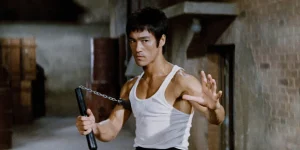
- Several fight poses mirror Bruce Lee’s real-life training footage
- Background graffiti references Enter the Dragon (1973)
- The Netherworld guards use weapons inspired by classic kung fu cinema
Trivia
- Danny Chan later played Bruce Lee again in The Legend of Bruce Lee (2008)
- Bolo Yeung previously appeared in multiple Bruce Lee–related films
- The movie gained popularity primarily through VHS and DVD cult circulation
Why Watch?
If you are interested in Bruce Lee as a symbol rather than a man, this film offers a unique perspective. It is imperfect, strange, and theatrical—but also sincere in its admiration. Think of it as martial arts mythology, not biography.
Director’s Other Movies
- The Cellar (1989)
- Deathstalker IV: Match of Titans (1991)
- Pinocchio and the Emperor of the Night (1987)
Recommended Films for Fans
- Enter the Dragon (1973)
- Game of Death (1978)
- Fist of Legend (1994)
- Dragon: The Bruce Lee Story (1993)
- The Legend of Bruce Lee (2008)