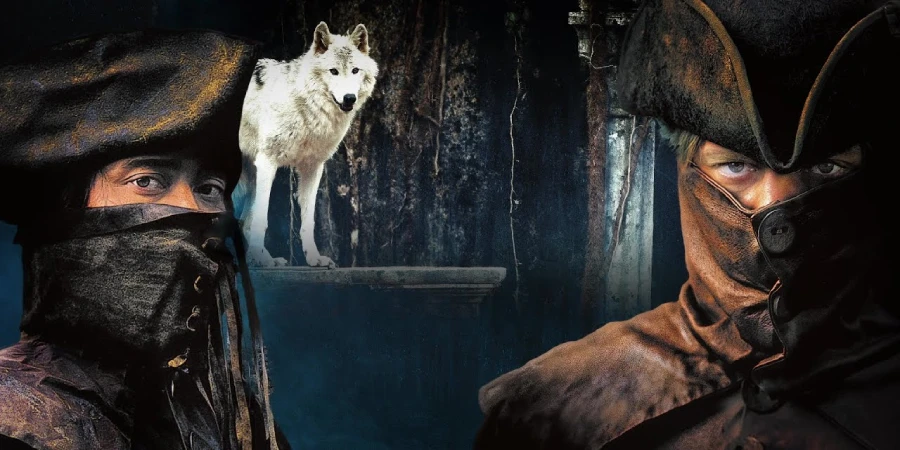

Brotherhood of the Wolf (original title: Le Pacte des Loups) is one of the most unusual and stylish European films of the early 2000s. Blending historical drama with martial arts, mystery, horror, and political conspiracy, the film stands out as a bold genre hybrid that feels both classical and modern.
Detailed Summary
The Historical Mystery Begins
The story is inspired by real events that occurred in 18th-century France, known as The Beast of Gévaudan. Between 1764 and 1767, a mysterious creature reportedly killed dozens of people in rural France.
The film opens with philosopher Grégoire de Fronsac, who is summoned by King Louis XV to investigate the killings. He travels to the remote province of Gévaudan with his companion Mani, a Native American warrior raised by Fronsac.
From the very beginning, the movie establishes a sense of dread. Villagers speak of a supernatural beast, religious hysteria spreads, and authorities appear powerless.
Arrival in Gévaudan and Rising Fear
As Fronsac investigates the murders, more victims are found brutally killed. Witnesses describe a massive wolf-like creature that seems intelligent and almost invincible.
Fronsac meets Marianne de Morangias, a noblewoman who becomes romantically involved with him, and her younger sister Sylvia, whose innocence contrasts sharply with the violence surrounding them.
The local aristocracy behaves suspiciously, particularly Jean-François de Morangias, Marianne’s father, whose secretive activities raise questions.
Despite multiple hunts involving soldiers and professional hunters, the beast continues to slaughter villagers, humiliating the Crown and deepening public fear.
The Royal Hunt and a False Victory
Eventually, the King sends his official hunter, who kills an enormous wolf. The court declares the beast dead, and Fronsac is ordered to leave.
However, murders resume shortly after, revealing that the royal victory was a lie designed to calm the population.
Fronsac realizes that the creature may not be supernatural at all, but something far more disturbing.
Secret Societies and Conspiracy
As the investigation deepens, the film reveals the presence of a secret organization called the Brotherhood of the Wolf, a fanatical cult seeking to destabilize France.
Their goal is to weaken the monarchy by spreading terror among the population and blaming the government’s incompetence.
The “beast” is not a myth but a trained, armored predator, controlled by humans and used as a weapon of political chaos.
Betrayal, Loss, and Transformation
Fronsac uncovers the truth too late.
He is ambushed, publicly executed, and believed dead. Marianne is murdered for knowing too much, and Mani is hunted by the Brotherhood.
In one of the film’s most emotional turns, Mani sacrifices himself to save Fronsac, reaffirming the film’s central themes of loyalty and brotherhood.
Unknown to the villains, Fronsac survives and goes into hiding, preparing his revenge.
Movie Ending
In the final act, Fronsac returns secretly to Gévaudan to destroy the Brotherhood once and for all.
He discovers that Jean-François de Morangias, Marianne’s own father, was the mastermind behind the killings. Fanatically religious and politically extreme, he believed terror was necessary to cleanse France of moral corruption.
The beast itself is revealed to be:
- A massive exotic predator from Africa
- Protected by metal armor
- Trained to kill specific targets
- Fed human blood to increase aggression
During the climax, Fronsac confronts Jean-François, exposing his crimes. A brutal battle follows.
Jean-François is ultimately killed by his own daughter Sylvia, who shoots him after realizing the full extent of his madness.
The beast is finally slain, bringing an end to the massacres.
In the closing scenes, Fronsac returns to Paris and writes the official report of the events. However, the monarchy chooses to suppress the truth to avoid scandal.
The film ends on a powerful note: history remembers the beast, but not the men who created it, reinforcing the idea that political power often rewrites reality.
Are There Post-Credits Scenes?
No. Brotherhood of the Wolf does not include any mid-credits or post-credits scenes.
Type of Movie
The film is a historical action thriller that blends mystery, horror, martial arts, romance, and political drama into a single narrative, creating a genre-defying cinematic experience.
Cast
- Samuel Le Bihan – Grégoire de Fronsac
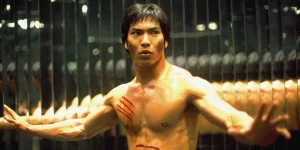
- Mark Dacascos – Mani
- Monica Bellucci – Sylvia
- Émilie Dequenne – Marianne de Morangias
- Vincent Cassel – Jean-François de Morangias
- Jérémie Renier – Thomas d’Apcher
Film Music and Composer
The score was composed by Joseph LoDuca, best known for his work on The Evil Dead series.
The music blends:
- Orchestral themes
- Tribal percussion
- Gothic choral elements
This mixture enhances both the horror atmosphere and the emotional weight of the story.
Filming Locations
The movie was filmed primarily in France, including:
- Lozère region – representing Gévaudan’s forests and mountains
- Château de Hautefort – aristocratic interiors
- Studio sets in Paris
These locations were crucial in grounding the story in historical realism while allowing the supernatural atmosphere to feel believable.
Awards and Nominations
- César Awards nominations for Best Cinematography and Best Costume Design
- Won Best Film at the Sitges Film Festival (Critics Award)
- Widely praised for production design and visual style
Behind the Scenes Insights
- The film was one of the most expensive French productions at the time.
- Mark Dacascos performed most of his own martial arts stunts.
- The beast combined practical effects with early CGI.
- Director Christophe Gans insisted on Hong Kong–style fight choreography.
- Vincent Cassel lost significant weight to portray his character’s fanaticism.
Inspirations and References
- The real Beast of Gévaudan historical
- French Enlightenment-era politics
- Classic Hammer horror films
- Hong Kong martial arts cinema
- Gothic literature and folklore
Alternate Endings and Deleted Scenes
Several deleted scenes expanded the Brotherhood’s rituals and political ideology but were removed to improve pacing.
An alternate ending reportedly included a stronger implication that the monarchy knowingly allowed the killings to continue, but this was softened in the final cut.
Book Adaptations and Differences
The film is not directly adapted from a single novel, but loosely inspired by historical documents and folklore accounts.
Unlike many books on the subject, the film emphasizes:
- Political conspiracy over superstition
- Human evil rather than supernatural explanations
- Personal tragedy and moral ambiguity
Memorable Scenes and Quotes
Key Scenes
- Mani fighting multiple attackers in the rain
- The royal wolf hunt and false celebration
- The first full appearance of the armored beast
- Fronsac’s public execution
- The final confrontation inside the mountain lair
Iconic Quotes
- “The beast is not what you think it is.”
- “Fear is more powerful than any weapon.”
- “Men create monsters to justify their own sins.”
Easter Eggs and Hidden Details
- The Brotherhood symbol resembles real 18th-century Masonic imagery
- Mani’s tattoos reference Native American spiritual beliefs
- Several background characters are named after real Gévaudan victims
- The beast’s armor includes religious inscriptions only visible briefly
Trivia
- The movie blends French cinema with Hong Kong action choreography.
- Monica Bellucci learned fencing specifically for the role.
- The theatrical cut differs notably from the director’s cut.
- The film gained cult status years after release rather than immediately.
Why Watch?
You should watch Brotherhood of the Wolf if you enjoy:
- Dark historical mysteries
- Stylish action choreography
- Conspiracy-driven storytelling
- Films that refuse to fit into one genre
It is ambitious, flawed at times, but undeniably unique.
Director’s Other Works (Christophe Gans)
- Crying Freeman (1995)
- Silent Hill (2006)
- Beauty and the Beast (2014)
Recommended Films for Fans
- Sleepy Hollow (1999)
- From Hell (2001)
- The Name of the Rose (1986)
- Solomon Kane (2009)
- The Witch (2015)