
Blow Out is one of the most fascinating political thrillers of the 1980s. Directed by Brian De Palma and starring John Travolta and Nancy Allen, the film mixes paranoia, conspiracy, and filmmaking itself into a suspenseful narrative. Inspired partly by earlier films like Blow-Up and The Conversation, it has become a cult classic for its technical brilliance and devastating ending.
Detailed Summary
Opening Scene: A Slasher Movie Within the Movie
The film begins with what appears to be a typical low-budget slasher movie sequence. We follow a killer stalking a group of girls in a college dormitory shower room. The camera movements are exaggerated and voyeuristic.
But suddenly the illusion breaks.
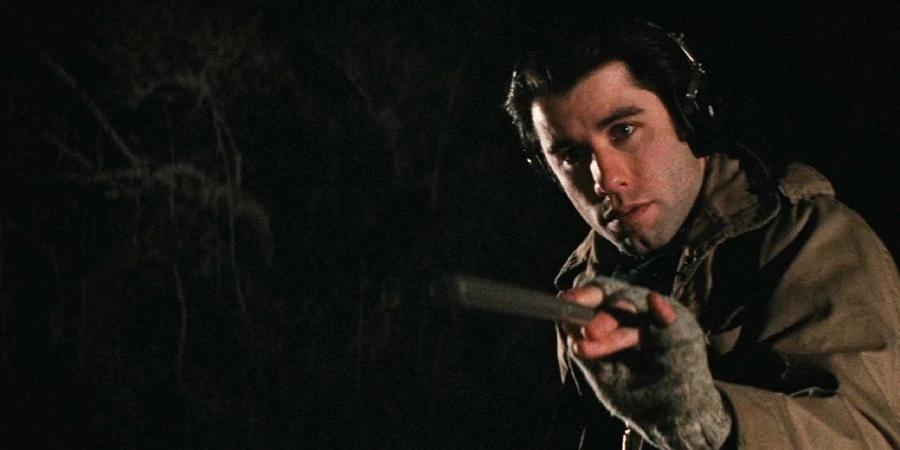
We learn the scene is actually footage being reviewed by sound technician Jack Terry (John Travolta), who works on B-movie horror films. The director complains that the scream in the scene is terrible, so Jack is sent out to record better sound effects.
This clever opening establishes one of the film’s core themes: the manipulation of reality through filmmaking techniques.
Recording the Accident
While recording ambient night sounds in a park, Jack captures something unexpected.
He hears:
- a car speeding by
- a loud gunshot-like sound
- a tire blowing out
- the car crashing into a river
Jack jumps into the water and rescues a young woman named Sally (Nancy Allen). The driver, however, dies. It turns out the victim was a presidential candidate.
Jack begins to suspect something is wrong. When he listens to the recording again, he realizes the noise before the tire burst might be a gunshot, meaning the crash may have been an assassination rather than an accident.
The Conspiracy Begins
Jack becomes obsessed with analyzing the recording. Using his professional skills, he begins reconstructing the event.
Meanwhile, mysterious people start interfering:
- Officials pressure Sally to stay quiet.
- Evidence disappears.
- Newspapers spin the story as a simple tire blowout.
A photographer named Manny Karp had taken pictures of the crash moment by moment. Jack acquires these photos and synchronizes them with his audio recording.
This creates a shocking discovery: the sequence proves a gunshot occurred before the tire exploded.
The Assassin on the Loose
The conspiracy deepens when we meet Burke, a professional killer involved in covering up the assassination attempt. Burke begins murdering women to frame Sally as part of a “sex scandal” linked to the politician.
This chilling subplot adds a serial killer dimension to the movie.
Jack slowly realizes that Sally is in extreme danger.
Jack Tries to Reveal the Truth
He attempts to expose the conspiracy by turning his audio recording and synchronized filmstrip into evidence.
He even creates a short film showing the assassination sequence frame-by-frame, proving the blowout was staged.
But powerful forces are determined to stop him.
The closer Jack gets to revealing the truth, the more isolated he becomes.

Movie Ending
The climax of Blow Out takes place during a large Fourth of July celebration in Philadelphia.
Burke kidnaps Sally and lures Jack into a deadly confrontation. Fireworks explode overhead while the chase unfolds through crowded streets and rooftops.
Jack desperately searches for Sally while the celebration continues around him, creating a disturbing contrast between public celebration and private horror.
Eventually, Jack finds Burke attacking Sally on a rooftop. Despite his efforts, Burke manages to kill her before Jack can stop him. Jack finally kills Burke, but it’s too late.
Sally dies in his arms.
The tragedy becomes even darker afterward.
Jack returns to work on the horror movie he was originally editing. Remember the terrible scream the director needed?
Jack now has the perfect scream.
Sally’s dying scream was recorded during the attack, and the film’s producers decide to use it in the movie.
The final scene shows Jack silently listening to the scream play in the horror film soundtrack.
The truth about the assassination is buried. Sally is dead. And her final moment has been turned into entertainment.
It’s one of the bleakest endings in thriller cinema.
Are There Post-Credits Scenes?
No. Blow Out does not contain a post-credits scene. The film ends immediately after the final chilling moment with Jack listening to Sally’s scream in the finished movie.
Type of Movie
Blow Out is primarily a political conspiracy thriller blended with neo-noir and psychological suspense. It also functions as a meta-cinema film about sound design, filmmaking, and how easily reality can be manipulated through media.
Cast
- John Travolta — Jack Terry
- Nancy Allen — Sally Bedina
- John Lithgow — Burke
- Dennis Franz — Manny Karp
- Peter Boyden — Sam
- Curt May — Reporter Donahue
John Lithgow’s performance as Burke is especially chilling and widely praised.
Film Music and Composer
The score was composed by Pino Donaggio, a frequent collaborator of Brian De Palma.
The music combines lush orchestral thriller scoring with emotionally heavy motifs that intensify the tragic tone of the story. Donaggio’s music plays a crucial role in building suspense during Jack’s audio analysis sequences.

Filming Locations and Their Importance
The film was shot mainly in Philadelphia, Pennsylvania, which plays an important role in the movie’s atmosphere.
Key locations include:
- Philadelphia parks and riverbanks – where the crash occurs
- Philadelphia train stations and city streets – adding realism and urban tension
- Fourth of July celebrations – crucial to the explosive finale
Philadelphia’s real locations give the film a grounded political realism that contrasts with the stylized cinematography.
Awards and Nominations
While not a major awards winner at the time of release, the film later gained critical recognition.
Notable recognition includes:
- National Society of Film Critics – Best Cinematography nomination
- Various retrospective awards lists for best thrillers of the 1980s
- Frequent inclusion in “greatest political thrillers” rankings
Over time, critics have reassessed the film as one of De Palma’s masterpieces.
Behind the Scenes Insights
- John Travolta reportedly learned professional sound editing techniques to make his role more authentic.
- Director Brian De Palma insisted on practical sound recording equipment for many scenes.
- The film’s audio-analysis sequences were painstakingly constructed to look realistic.
- The famous split-screen shots were designed to emphasize simultaneous realities and deception.
- Nancy Allen, who plays Sally, was married to Brian De Palma during production.
Inspirations and References
The film draws inspiration from several sources:
- Blow-Up – about discovering a murder through photography
- The Conversation – surveillance and sound recording themes
- The real-life political paranoia following the Watergate scandal
- Echoes of the Assassination of John F. Kennedy
De Palma essentially merged photographic evidence and audio evidence concepts into a single thriller.
Alternate Endings and Deleted Scenes
There is no widely documented alternate ending, but some scenes were trimmed:
- Extended investigative sequences showing Jack analyzing more recordings
- Additional scenes exploring the political campaign background
- Slightly longer interactions between Jack and Sally
These were cut mainly to tighten pacing.
Book Adaptations and Differences
Blow Out is not based on a novel. It is an original screenplay written by Brian De Palma.
However, it borrows narrative ideas from earlier films rather than literature.


Memorable Scenes and Quotes
Key Scenes
- The opening fake slasher film that suddenly reveals itself as a movie production
- Jack discovering the possible gunshot in his recording
- The photo-audio synchronization montage revealing the conspiracy
- The Fourth of July fireworks finale
The montage where Jack syncs sound with photographs is often cited as one of the best investigative scenes in thriller cinema.
Iconic Quotes
- “That’s a good scream.”
One of the most disturbing final lines in film history. - “You got the best scream in the business.”
The irony behind these lines reinforces the film’s dark commentary on media exploitation.
Easter Eggs and Hidden Details
- The fake horror movie at the beginning is a parody of real 1980s slasher films.
- The number of photo frames Jack assembles mirrors actual film editing techniques.
- De Palma references Alfred Hitchcock-style voyeurism throughout the film.
- The circular camera movements mirror the idea of being trapped in a conspiracy loop.
Trivia
- The film’s budget was around $18 million, which was large for a thriller at the time.
- John Travolta personally operated some of the recording equipment on screen.
- The film initially underperformed at the box office but later became a cult favorite.
- Many critics consider it one of the best films about sound design ever made.
Why Watch?
You should watch Blow Out if you enjoy:
- conspiracy thrillers
- technically brilliant filmmaking
- political paranoia stories
- unforgettable endings
What makes the film special is how it turns sound recording itself into a suspense engine. Few thrillers have ever used filmmaking tools as part of the narrative so cleverly.
Director’s Other Works (Brian De Palma)
Other notable films by Brian De Palma include:
- Carrie (1976)
- Scarface (1983)
- The Untouchables (1987)
- Carlito’s Way (1993)
- Mission: Impossible (1996)