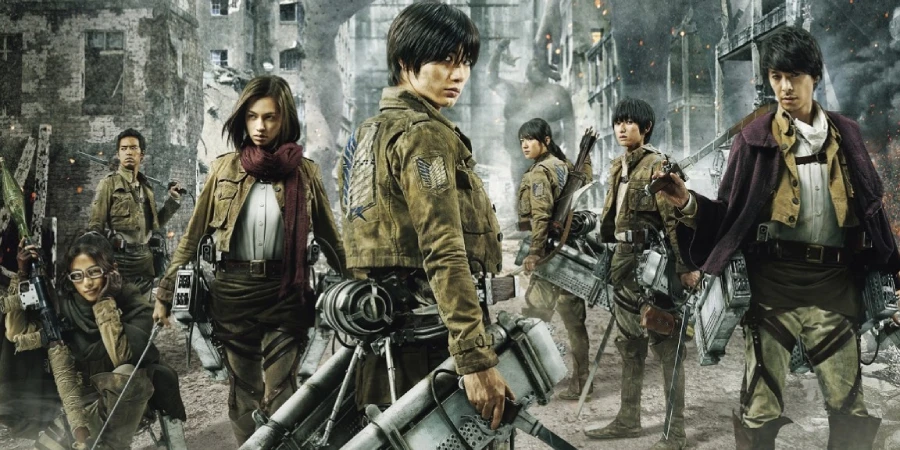

Attack on Titan (2015) is the live-action adaptation of Hajime Isayama’s globally popular manga and anime series. Directed by Shinji Higuchi, the film takes bold liberties with its source material, offering a darker, more grounded, and sometimes controversial reinterpretation of the story. This is not a faithful scene-by-scene adaptation; it is a reimagining aimed at a broader cinematic audience.
Detailed Summary
Humanity Behind the Walls
The film opens in a bleak, post-apocalyptic world where humanity lives behind massive walls to protect itself from gigantic humanoid creatures known as Titans. These monsters devour humans seemingly without reason. Society has stagnated, living in constant fear.
Eren Yeager, a hot-headed young man, dreams of seeing the world beyond the walls. His adoptive sister Mikasa is emotionally distant but fiercely protective of him, while their friend Armin represents intellect and caution. Early on, the movie establishes its central themes: freedom, fear, and the cost of survival.
The Titans Break Through
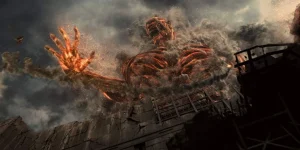
A sudden Titan attack devastates the city. The walls are breached, civilians are slaughtered, and chaos erupts. Eren witnesses horrifying deaths, including people close to him, which fuels his rage and desire for revenge. This sequence is intentionally brutal and grounded, emphasizing human fragility rather than heroic spectacle.
Military Training and Hopeless Warfare
Years later, Eren, Mikasa, and Armin join the military. Unlike the anime, the film portrays the military as underprepared and deeply flawed. Their anti-Titan weapons are unreliable, and many soldiers die almost immediately during missions.
During a disastrous operation, Eren is presumed dead after being swallowed by a Titan. Morale collapses, and humanity’s chances look grim.
The Appearance of the Rogue Titan
A mysterious humanoid Titan appears and begins attacking other Titans instead of humans. Eventually, it is revealed that this Titan is actually Eren himself, who has the ability to transform.
This revelation divides the remaining soldiers. Some see Eren as humanity’s final hope, while others view him as an uncontrollable monster. The government’s distrust becomes one of the film’s major conflicts.
Government Secrets and Human Betrayal
As the story unfolds, it becomes clear that Titans are not just external enemies. The ruling powers have hidden crucial information about the origin of the Titans and the walls. Human experimentation and past mistakes are strongly implied, shifting the narrative from simple survival horror to political tragedy.
Movie Ending
The final act fully embraces tragedy and ambiguity.
Eren loses control of his Titan powers during a climactic battle. Instead of becoming humanity’s savior, he becomes a dangerous force of destruction, symbolizing how hatred and unchecked power consume even good intentions.
Mikasa confronts Eren in his Titan form. In a devastating and emotional climax, she is forced to kill Eren herself to stop him from destroying what remains of humanity. This moment is deliberately uncomfortable and bleak, reinforcing the film’s message that there are no true heroes in war.
The Titans are temporarily halted, but humanity does not “win.” The walls remain, the truth is still incomplete, and survival continues without hope of peace. The ending clearly sets up the sequel (Attack on Titan: End of the World, 2015), leaving viewers with lingering questions about freedom, identity, and responsibility.
Are There Post-Credits Scenes?
Yes. The post-credits scene teases the continuation of the story, showing surviving characters preparing for another inevitable confrontation with the Titans. It confirms that Eren’s death does not end the Titan threat and directly leads into the second film.
Type of Movie
Attack on Titan (2015) is a dark sci-fi action film with strong horror and dystopian elements, blending monster cinema with war drama and political commentary.
Cast
- Haruma Miura as Eren Yeager
- Kiko Mizuhara as Mikasa Ackerman
- Kanata Hongō as Armin Arlert
- Hiroki Hasegawa as Shikishima
- Satomi Ishihara as Hange Zoe
- Takahiro Miura as Jean Kirstein
Film Music and Composer
The score was composed by Shiro Sagisu, known for Neon Genesis Evangelion. The music emphasizes despair and tension, using heavy orchestration and choral elements to heighten the apocalyptic atmosphere.
Filming Locations
The movie was shot primarily in Japan, using abandoned industrial zones, quarries, and rural landscapes. These real, decaying environments were crucial in grounding the Titans in reality, making the destruction feel tangible rather than purely CGI-driven.
Awards and Nominations
While divisive among fans, the film received recognition for:
- Best Visual Effects nominations in Japanese film awards
- Praise for practical effects and Titan design within tokusatsu circles
Behind the Scenes Insights
- Shinji Higuchi prioritized practical effects and suit-based Titans over full CGI.
- Hajime Isayama approved major story changes and encouraged experimentation.
- Many scenes were shot with handheld cameras to enhance realism.
- The cast underwent intense physical training for mobility gear scenes.
Inspirations and References
The film draws inspiration from:
- Hajime Isayama’s Attack on Titan manga
- Classic Japanese kaiju films
- World War II imagery and post-war Japanese trauma
- Western dystopian cinema such as Children of Men
Alternate Endings and Deleted Scenes
Early scripts reportedly featured a less fatal ending for Eren, but Higuchi opted for a more tragic conclusion to differentiate the film from the anime. Several military subplots were cut for pacing.
Book Adaptations and Differences
The film is based on the Attack on Titan manga but differs significantly:
- Characters’ personalities are darker and more cynical
- The mythology is simplified
- Shikishima plays a much larger role
- Themes focus more on human failure than destiny

Memorable Scenes and Quotes
Key Scenes
- The first Titan breach of the wall
- Eren’s first Titan transformation
- Mikasa’s final confrontation with Eren
- Soldiers dying mid-air due to equipment failure
Iconic Quotes
- “If we don’t fight, we die.”
- “Freedom isn’t given. It’s taken.”
- “Monsters aren’t born. They’re made.”
Easter Eggs and Hidden Details
- Titan designs resemble early manga drafts by Isayama
- Wall symbols hint at deeper lore explored in the sequel
- Military insignias differ intentionally from the anime
- Background radio chatter references lost expeditions
Trivia
- Over 100 extras were used for Titan panic scenes
- The film was shot back-to-back with its sequel
- Isayama has a cameo in the background of one scene
- Practical blood effects were used extensively
Why Watch?
If you’re curious about how far a live-action adaptation can diverge while still honoring core themes, this film is fascinating. It’s flawed, bold, and unapologetically dark. Love it or hate it, it leaves an impression.
Director’s Other Works (Movies)
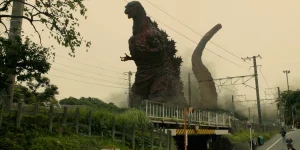
- Shin Godzilla (2016)
- Lorelei: The Witch of the Pacific Ocean (2005)
- Japan Sinks (2006) – special effects director
- Attack on Titan: End of the World (2015)