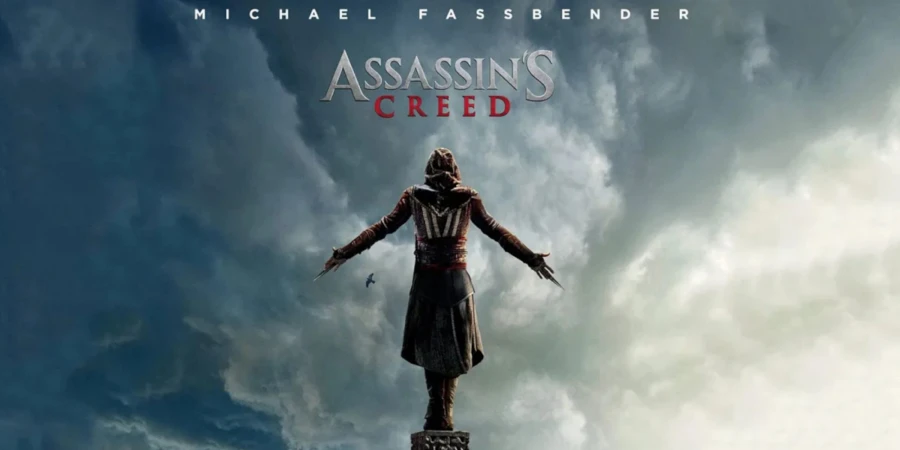

Assassin’s Creed (2016) is a dark, ambitious sci-fi action film inspired by Ubisoft’s hugely popular video game franchise. Directed by Justin Kurzel, the movie tries to balance historical spectacle, philosophical themes, and modern science fiction while introducing the franchise to non-gamers.
Detailed Summary
Callum Lynch and the Death Penalty
The film opens with Callum Lynch, a criminal sentenced to death by lethal injection. However, instead of dying, he wakes up in a mysterious facility run by Abstergo Industries. He learns that his execution was staged so Abstergo could use him for a secret experiment.
Callum is the last known descendant of Aguilar de Nerha, a member of the Assassin Brotherhood during the Spanish Inquisition.
The Animus and Genetic Memory
Abstergo uses a revolutionary device called the Animus, which allows Callum to relive the genetic memories of Aguilar. Unlike the games’ chair-based Animus, this version physically forces Callum to mimic Aguilar’s movements, causing both physical strain and psychological confusion.
Dr. Sophia Rikkin, a scientist with conflicted morals, explains that Abstergo is searching for an ancient artifact known as the Apple of Eden, believed to contain the genetic code for free will.
Aguilar and the Spanish Inquisition
In 15th-century Spain, Aguilar is an Assassin fighting against the Templars, who are working closely with the Spanish monarchy and the Inquisition. The Templars are attempting to locate the Apple of Eden to control humanity by eliminating free will.
Aguilar and his fellow Assassins protect the Apple, but betrayal and loss plague their mission. These sequences showcase parkour-heavy chases, brutal combat, and classic Assassin iconography like the hidden blade and Leap of Faith.
Abstergo’s True Agenda
Back in the present, Abstergo’s CEO Alan Rikkin reveals the real goal: to use the Apple’s genetic information to remove humanity’s tendency toward violence. While this sounds noble, it would also eliminate choice, turning humanity into obedient subjects.
Callum begins to realize that Abstergo is manipulating him and that the memories are awakening his Assassin instincts.
Awakening of the Assassin
As Callum synchronizes more deeply with Aguilar, he gains enhanced agility, combat reflexes, and awareness. He bonds with other Abstergo prisoners, who are also descendants of Assassins from different eras.
Eventually, Callum accepts his heritage and the Assassin Creed:
“We work in the dark to serve the light.”


Movie Ending
The final act takes place after Abstergo successfully retrieves the Apple of Eden using Callum’s memories. Alan Rikkin plans to publicly unveil it, positioning Abstergo as humanity’s savior.
However, Callum and the other Assassin descendants rebel.
In a dramatic sequence, Callum kills his own father Joseph Lynch, who sacrifices himself willingly, believing that Callum must fully embrace the Creed. This moment solidifies Callum’s transformation into an Assassin.
The Assassins infiltrate Abstergo’s headquarters during a lavish ceremony. In a direct parallel to the historical Assassin executions, Callum assassinates Alan Rikkin in front of the crowd, leaping from above and stabbing him with the hidden blade.
The Apple of Eden is reclaimed by the Assassins, preventing Abstergo from using it to control humanity.
The movie ends with Callum standing among the Assassins, now fully committed to the Brotherhood. His journey from condemned criminal to Assassin is complete, but the war between Assassins and Templars clearly continues.
Are There Post-Credits Scenes?
Yes. There is a mid-credits scene.
The scene shows Abstergo surveillance footage teasing other Assassin ancestors, including characters connected to Japan, ancient Egypt, and other historical periods. This was meant to set up potential sequels and expand the Assassin’s Creed cinematic universe.
There is no post-post-credits scene.
Type of Movie
Assassin’s Creed is a science fiction action film with historical fantasy elements, blending modern-day corporate dystopia with period-based assassin warfare and philosophical themes about free will.
Cast
- Michael Fassbender – Callum Lynch / Aguilar de Nerha
- Marion Cotillard – Dr. Sophia Rikkin
- Jeremy Irons – Alan Rikkin
- Brendan Gleeson – Joseph Lynch
- Charlotte Rampling – Ellen Kaye
Film Music and Composer
The score was composed by Jed Kurzel, known for his atmospheric and experimental soundscapes. The music leans heavily into tribal rhythms, low drones, and tension-building percussion, reinforcing the film’s serious tone.

Filming Locations
The movie was shot across several visually striking locations:
- Malta – Used extensively for Spanish Inquisition scenes
- Spain (Almería) – Desert landscapes and historical architecture
- London, England – Abstergo interiors and modern sequences
Real-world locations helped ground the historical sequences, giving them a gritty realism instead of relying entirely on CGI.
Awards and Nominations
While not a major awards contender, the film received:
- BAFTA nomination for Best Special Visual Effects
- Recognition for production design and stunt coordination at genre-focused award shows
Behind the Scenes Insights
- Michael Fassbender was also a producer, deeply involved in shaping the story.
- The Leap of Faith stunt was performed from a 125-foot free fall, one of the highest jumps ever filmed without CGI enhancement.
- Ubisoft worked closely with the filmmakers to maintain lore accuracy.
- The darker tone was a deliberate choice to separate the film from lighter game adaptations.
Inspirations and References
- Based on Ubisoft’s Assassin’s Creed video game series
- Inspired by historical secret societies and philosophical debates on free will vs. control
- Visual tone influenced by films like The Dark Knight and Blade Runner
Alternate Endings and Deleted Scenes
- A longer ending was planned showing more global Assassin activity.
- Several modern-day Assassin character backstories were cut for pacing.
- Extended Animus sequences were trimmed to reduce runtime.
Game Adaptation and Key Differences
- The film introduces new characters instead of using game protagonists like Ezio or Altair.
- The Animus is physical rather than passive.
- More focus on modern-day narrative, unlike the games where history dominates.


Memorable Scenes and Quotes
Key Scenes
- The first full Animus synchronization
- Aguilar’s Leap of Faith
- Callum assassinating Alan Rikkin
Iconic Quotes
- “We work in the dark to serve the light.”
- “Your genes carry the memories of your ancestors.”
- “Free will is the only thing worth fighting for.”
Easter Eggs and Hidden Details
- Assassin insignias from multiple game eras appear on Abstergo walls.
- Aguilar’s costume subtly mirrors Ezio’s color palette.
- Animus data screens reference known Assassin locations from the games.
Trivia
- Fassbender learned parkour for the role.
- The hidden blade was redesigned for realism.
- The film holds the record for the highest free-fall stunt in a feature film.
Why Watch?
If you enjoy serious sci-fi, morally complex stories, and grounded action, Assassin’s Creed offers a unique take on video game adaptations. It’s not perfect, but it’s bold, stylish, and surprisingly philosophical.
Director’s Other Works (Movies)
- Macbeth (2015)
- True History of the Kelly Gang (2019)
- Nitram (2021)