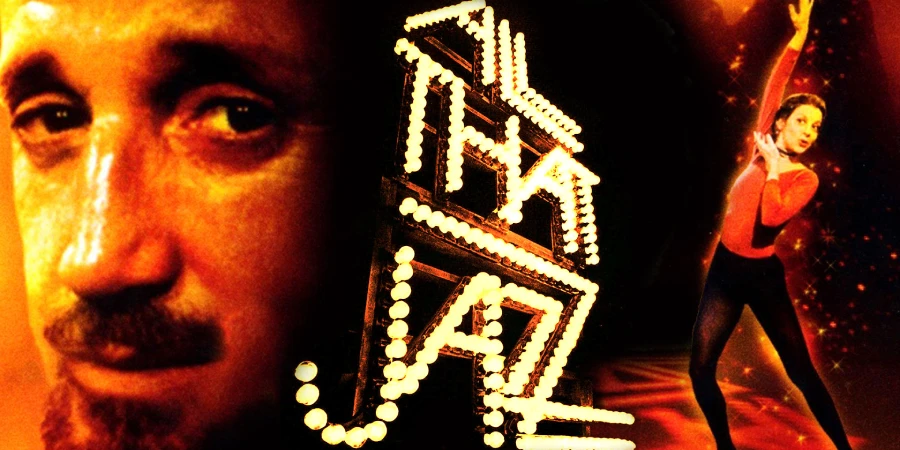

Bob Fosse’s All That Jazz (1979) is a psychologically intense musical drama that blurs the lines between performance and reality. It portrays the life of a driven choreographer whose relentless ambition slowly destroys him. The film is widely interpreted as Fosse’s semi-autobiographical confession, mixing brutal honesty with dazzling showmanship.
Detailed Summary
The Show Must Go On: Joe Gideon’s Daily Ritual
Joe Gideon (Roy Scheider) is a Broadway director and choreographer editing a film while simultaneously staging a new musical. His morning ritual is a drug-laced, cigarette-smoked cycle of self-destruction. He pops pills, showers, listens to Vivaldi, and rehearses non-stop. His charming, narcissistic brand of perfectionism pushes dancers beyond their limits while alienating those closest to him: his girlfriend Katie, ex-wife Audrey, and daughter Michelle.
The Rehearsal Hell
As the new show demands more sensual and daring choreography, Gideon obsesses over erotic details meant to impress critics and producers. His exhaustion grows, and he hides chest pains from everyone. Meanwhile, the show escalates in expense, and producers fear that Gideon’s obsessive rewrites will bankrupt the production.
Joe’s Family vs. His Ego
Joe sees himself as indispensable, yet the most meaningful relationships in his life are slipping away. His inability to say I love you except through work becomes the tragedy of his character. His daughter adores him, but he repeatedly chooses rehearsal over family. His ex-wife still loves him, yet he pushes her aside through lies, drugs, and infidelity.
Hallucinations with the Angel of Death
Throughout the film, Joe converses with a mysterious woman named Angelique (Jessica Lange), who becomes a seductive representation of death. Their flirtation symbolizes his attraction to his own destruction. These surreal scenes increasingly take over his perception as his health deteriorates.



Movie Ending
Joe is hospitalized after a heart attack. Even while dying, he treats his surgery and recovery as another rehearsal. The producers shockingly try to profit off his possible death, calculating that insurance money would be more lucrative than keeping him alive. Joe’s family visits, but their emotional pleas barely penetrate his artistic ego.
As his condition worsens, the film shifts fully into fantasy. Joe imagines a grand musical farewell, complete with costumes, dancers, and spotlight numbers. He performs Bye Bye Love in a dazzling, grotesquely joyful number titled “Bye Bye Life.” In this hallucination, he reconciles with past lovers, begs forgiveness, and mocks his fate. Roy Scheider performs as if death is the ultimate showstopper and the crowd cheers his demise.
The number reaches a shimmering crescendo. Joe reaches out to Angelique. She smiles. They kiss.
Cut to reality: a corpse bag zips shut over his face. No applause, no music. Just silence.
The message is cold, ironic, and painfully clear: even the greatest showman eventually closes.
Are There Post-Credits Scenes?
There are no post-credits scenes in All That Jazz. The film ends abruptly after Joe’s death, reinforcing its finality.
Type of Movie
The film is a musical psychological drama with satirical elements, blending choreographed fantasy with brutally realistic depictions of burnout, ego, and mortality.
Cast
- Roy Scheider – Joe Gideon
- Jessica Lange – Angelique
- Ann Reinking – Kate Jagger
- Leland Palmer – Audrey Paris
- Cliff Gorman – Davis Newman
- Ben Vereen – O’Connor Flood
Film Music and Composer
The soundtrack features a mixture of classical music (notably Vivaldi’s Concerto in G), iconic pop tracks, and original pieces. Musical supervision was led by Ralph Burns, whose arrangements lend the film its dreamy, surreal tension.



Filming Locations
- Primarily filmed in New York City, including actual Broadway rehearsal spaces.
- Many set pieces were built to resemble backstage areas and hospital corridors, underscoring the connection between performance and mortality.
- Real dancers and choreographers from Fosse’s world were used, giving the film an authentic theatrical intensity.
Awards and Nominations
- Won 4 Academy Awards: Best Costume Design, Best Film Editing, Best Art Direction, Best Music Adaptation.
- Nominated for Palme d’Or at Cannes and won the festival’s Palme d’Or (shared with Kagemusha).
- Nominated for Best Picture, Best Director, and Best Actor (Scheider) at the Oscars.
Behind the Scenes Insights
- Many scenes mirror Bob Fosse’s real life, including his heart surgery and womanizing habits.
- Fosse and Roy Scheider spent significant time together so Scheider could mimic Fosse’s mannerisms.
- Ann Reinking, who plays Joe’s girlfriend, was actually Fosse’s real-life romantic partner.
- Fosse filmed the hospital scenes with medical accuracy based on his own experience.
Inspirations and References
- Based heavily on Fosse’s life during the production of Chicago and the editing of Lenny.
- The character Joe Gideon is considered a direct alter-ego of Fosse.
- The film critiques the entertainment industry’s exploitation of artists and the glorification of burnout.
Alternate Endings and Deleted Scenes
- Earlier concept sketches show more graphic heart-surgery footage, later toned down to blend better with fantasy elements.
- Some extended musical sequences were cut to avoid overlength, though many remain available in archives and documentaries.
Book Adaptations and Differences
Not directly based on a book, but heavily inspired by Bob Fosse’s autobiographical experiences. There are analytical books about the film, but no original novel.
Memorable Scenes and Quotes
Key Scenes
- Joe’s morning ritual with drugs, shower, music, and the line “It’s showtime, folks.”
- Hospital fantasy performance “Bye Bye Life.”
- Angelique’s flirtatious death dialogues.
- Painfully emotional dance routine performed by Joe’s daughter.
Iconic Quotes
- “It’s showtime, folks.”
- “To be on the wire is life. The rest is waiting.”
- “I don’t have time to be sick.”
- “Bye bye life, bye bye happiness.”
Easter Eggs and Hidden Details
- Joe’s cigarette-filled morning routine mimics a real routine Fosse described to friends.
- The heart surgery mirrors Fosse’s exact medical chart.
- The character Audrey is based on Fosse’s ex-wife Gwen Verdon.
Trivia
- Roy Scheider was not the first choice; Richard Dreyfuss turned down the role.
- Fosse demanded real sweat on camera, often keeping the set hot and tense.
- The real Broadway community recognized most characters as real industry figures in disguise.
Why Watch?
This film is essential if you want to understand the dark side of artistic perfection. It’s a rare work that exposes how ambition can consume genius from the inside out. All That Jazz is not just a musical; it’s a confession, a satire, and a requiem.
Director’s Other Movies
- Sweet Charity (1969)
- Cabaret (1972)
- Lenny (1974)
- Star 80 (1983)