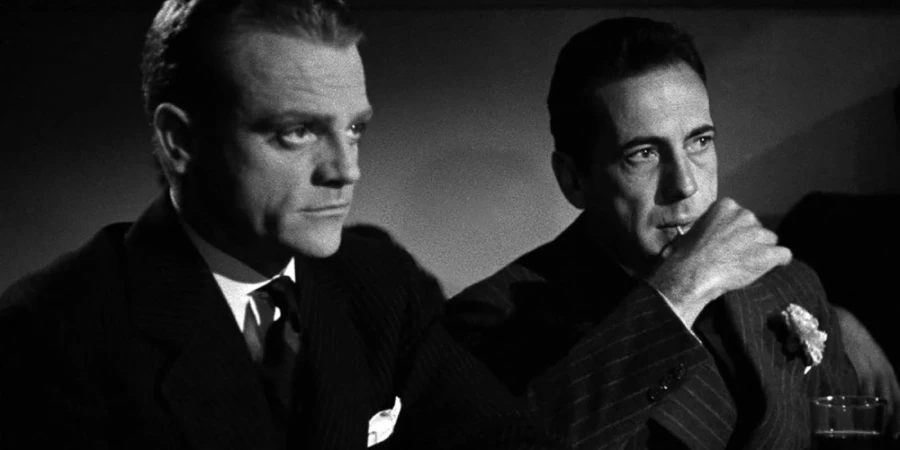

The Roaring Twenties is one of the definitive American gangster films, directed by Raoul Walsh and starring James Cagney at the height of his powers. Set against the backdrop of post–World War I America and the Prohibition era, the film is both a crime saga and a melancholic reflection on lost ideals, friendship, and the brutal cost of ambition.
Detailed Summary
World War I: Brotherhood Is Born
The film begins in the trenches of World War I, where Eddie Bartlett, George Hally, and Lloyd Hart form a bond under fire. This opening establishes the emotional core of the story: friendship forged in chaos. When the war ends, all three men return home hoping for prosperity and normal lives.
Post-War America: Dreams Meet Reality
Civilian life proves unforgiving. Eddie, despite being a decorated veteran, struggles to find steady work. Prohibition becomes the unexpected economic opportunity of the era. Eddie gradually drifts into bootlegging, not out of malice but survival, while Lloyd pursues a respectable legal career.
Rise of a Bootlegging Empire
Eddie teams up with the ruthless George Hally, and together they build a powerful criminal operation. Eddie becomes wealthy, influential, and feared, but the cost is steep. His moral compass erodes as violence and betrayal become routine. Meanwhile, Lloyd distances himself, representing the lawful path Eddie might have taken.
Love and Missed Chances
Eddie harbors deep feelings for Jean Sherman, but circumstances and misunderstandings keep them apart. Jean ultimately marries Lloyd, a development that quietly devastates Eddie and reinforces the idea that his criminal success cannot buy emotional fulfillment.
The Fall Begins
As Prohibition enforcement intensifies and rival gangs close in, Eddie’s empire starts to crumble. George’s recklessness draws unwanted attention, and loyalty within the gang begins to fracture. Eddie, increasingly isolated, realizes that everything he built rests on unstable ground.

Movie Ending
In the final act, Eddie Bartlett’s world collapses completely. George Hally is killed during a violent confrontation, leaving Eddie without his most dangerous ally. Eddie attempts to escape his criminal life, but the past refuses to let go.
The film’s climax takes place outside a church on a foggy street. Eddie, wounded and desperate, stumbles into the darkness after being shot by rival gangsters. Jean rushes to his side as he collapses on the steps. In his final moments, Eddie acknowledges the tragic arc of his life: war hero turned criminal, driven by circumstance and poor choices.
The final line, delivered by a policeman, is hauntingly definitive: “He used to be a big shot.” This line cements the film’s central theme—the fleeting nature of power and the emptiness of ill-gotten success. Eddie dies not as a kingpin, but as a forgotten casualty of the era that made him.
Are There Post-Credits Scenes?
No. The Roaring Twenties ends decisively with Eddie’s death and does not include any post-credits or epilogue scenes.
Type of Movie
The Roaring Twenties is a crime drama and gangster film that blends historical realism with tragic character study. It is less about glorifying crime and more about exposing its emotional and moral consequences.
Cast
- James Cagney as Eddie Bartlett
- Priscilla Lane as Jean Sherman
- Humphrey Bogart as George Hally
- Jeffrey Lynn as Lloyd Hart
- Gladys George as Panama Smith
Film Music and Composer
The score was composed by Leo F. Forbstein, using orchestral arrangements typical of late-1930s Hollywood. The music emphasizes mood rather than spectacle, supporting the film’s somber tone and emotional shifts.

Filming Locations
The film was shot primarily on Warner Bros. studio sets in California, recreating New York City streets, speakeasies, and urban interiors. These controlled environments allowed for detailed depiction of Prohibition-era nightlife and crime without relying on real locations. The stylized cityscape reinforces the film’s noir atmosphere and moral claustrophobia.
Awards and Nominations
While The Roaring Twenties did not receive major awards at the time, it has since been retrospectively recognized as one of the greatest gangster films ever made. It frequently appears on classic cinema lists and film school curricula for its narrative depth and performances.
Behind the Scenes Insights
- James Cagney personally considered Eddie Bartlett one of his most tragic roles.
- Humphrey Bogart was still often cast as villains at this stage of his career.
- The film was inspired by real-life bootleggers and postwar disillusionment.
- Warner Bros. marketed the film as a cautionary tale rather than a crime fantasy.
- The ending line was debated internally, but ultimately kept for its brutal honesty.
Inspirations and References
The film was inspired by the book The Roaring Twenties by Mark Hellinger, which chronicled real events and figures from the Prohibition era. It also draws heavily from true stories of returning WWI veterans who struggled to reintegrate into civilian life.
Alternate Endings and Deleted Scenes
No alternate endings are known to exist. However, some scenes depicting harsher violence were reportedly softened to comply with censorship standards of the late 1930s.
Book Adaptations and Differences
While the film borrows its title and general context from Hellinger’s book, it does not adapt a single storyline. Instead, it creates a fictional narrative inspired by real historical patterns, focusing more on emotional impact than factual biography.



Memorable Scenes and Quotes
Key Scenes
- Eddie and George reuniting after the war and realizing opportunity lies in crime.
- Eddie watching Jean and Lloyd together, knowing he has lost her forever.
- The foggy church steps finale, one of the most iconic endings in gangster cinema.
Iconic Quotes
- “This is Eddie Bartlett’s place!”
- “You can’t get away with it forever.”
- “He used to be a big shot.”
Easter Eggs and Hidden Details
- Newspaper headlines mirror real Prohibition-era crime reports.
- Eddie’s decline visually parallels George’s rise, then collapse.
- Church imagery subtly foreshadows Eddie’s final moments throughout the film.
Trivia
- This was one of the last major gangster films before World War II shifted Hollywood trends.
- James Cagney briefly left Warner Bros. shortly after this film due to contract disputes.
- The film helped redefine gangster stories as tragedies rather than power fantasies.
Why Watch?
If you want a smart, emotionally heavy crime film that explores how historical forces shape personal downfall, The Roaring Twenties is essential viewing. It’s not flashy—it’s devastating, reflective, and timeless.
Director’s Other Movies
- White Heat (1949)
- High Sierra (1941)
- They Died with Their Boots On (1941)
- Objective, Burma! (1945)
Recommended Films for Fans
- Little Caesar (1931)
- Scarface (1932)
- Angels with Dirty Faces (1938)
- White Heat (1949)
- The Public Enemy (1931)