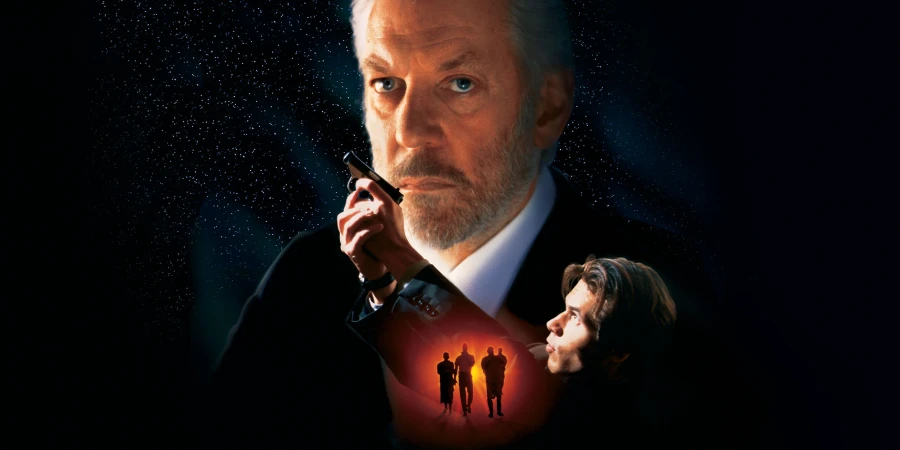

The Puppet Masters is a 1994 science-fiction thriller that blends Cold War paranoia with classic alien invasion themes. Based on a Robert A. Heinlein novel, the film explores loss of free will, hidden enemies, and the fear that anyone—even you—might not be in control anymore.
Detailed Summary
First Contact: Something Is Wrong
The story begins with strange reports coming from a small Iowa town. People are behaving oddly, emotionally flat, and suspiciously unified. The U.S. government sends a covert team led by Sam Neill’s character, Andrew Nivens, to investigate. Very quickly, the team discovers the terrifying truth: alien parasites known as “slugs” attach themselves to human backs and completely control their hosts.
The Nature of the Enemy
These alien creatures are intelligent, organized, and emotionless. Once attached, the host remains conscious but powerless, forced to watch their own body obey the invader. This concept is one of the film’s most disturbing elements and gives the story its psychological weight.
Infiltration and Paranoia
As the parasites spread, paranoia escalates. The slugs infiltrate government agencies, military bases, and political leadership. No one can be trusted, and even minor physical contact becomes dangerous. The film leans heavily into suspense rather than action, constantly asking the viewer who might already be compromised.
Personal Cost and Moral Dilemmas
Several characters are captured and controlled, forcing the protagonists to confront brutal choices. Saving someone often means killing the parasite—and sometimes the host. The movie emphasizes sacrifice, emotional trauma, and ethical ambiguity, making the invasion feel personal rather than purely global.

Movie Ending
In the final act, humanity launches a coordinated counterattack against the parasites using extreme cold, the only known method that kills them without harming the host. Military forces deploy freezing weapons and cooling suits, turning the tide of the invasion.
Andrew Nivens personally leads the final mission, confronting infected leaders and exposing the alien presence to the world. The parasites attempt to flee Earth, revealing that their invasion was only the beginning of a much larger plan. Many humans are saved, but countless others have already been lost.
The most unsettling moment comes after the apparent victory: a recovered character casually scratches their back, suggesting that some parasites may still be alive. The film closes not with relief, but with lingering unease—humanity may have won the battle, but not the war.
Are There Post-Credits Scenes?
No. The Puppet Masters does not include any post-credits or mid-credits scenes. The story ends definitively, leaving its final note of paranoia as the lasting impression.
Type of Movie
The Puppet Masters is a science-fiction thriller with strong elements of paranoia and body horror. It focuses more on suspense, psychological fear, and political infiltration than large-scale action.
Cast
- Sam Neill as Andrew Nivens
- Julie Warner as Mary Sefton
- Donald Sutherland as Director Sam Bennell
- Eric Thal as Michael Fitzpatrick
- Richard Belzer as Agent Collins
Film Music and Composer
The score was composed by Christopher Young, known for his work in horror and thriller cinema. The music emphasizes tension and unease, using low tones and restrained orchestration rather than grand sci-fi themes.


Filming Locations
The film was shot primarily in the United States, with locations chosen to reflect everyday normalcy—small towns, government buildings, and military facilities. This grounded setting reinforces the idea that the invasion isn’t flashy or obvious; it hides in plain sight, making it far more unsettling.
Awards and Nominations
The film did not receive major awards or nominations. However, it later gained a cult following for its mature tone and unsettling premise, especially among fans of classic sci-fi paranoia films.
Behind the Scenes Insights
- The original Heinlein novel was significantly altered to reduce Cold War political themes.
- Donald Sutherland previously starred in Invasion of the Body Snatchers (1978), making his casting a deliberate nod to classic paranoia sci-fi.
- Practical effects were used for the parasites instead of heavy CGI, enhancing realism.
- The film faced studio pressure to tone down darker elements from the novel.
Inspirations and References
- Based on “The Puppet Masters” (1951) by Robert A. Heinlein
- Strong thematic similarities to Invasion of the Body Snatchers
- Reflects Cold War fears of ideological control and infiltration
Alternate Endings and Deleted Scenes
Several darker scenes involving mass civilian control and more explicit psychological suffering were trimmed for pacing and rating concerns. No fully alternate ending was filmed, but early drafts ended on a much bleaker, openly hopeless note.
Book Adaptation and Differences
The original novel is more political, more violent, and more explicit about sexuality and control. The film removes many of Heinlein’s ideological elements and focuses instead on universal fear and suspense. Fans of the book often consider the movie a simplified but accessible adaptation.


Memorable Scenes and Quotes
Key Scenes
- The first parasite discovery and reveal of human control
- The cold-weapon testing sequence
- Government leaders secretly revealed as hosts
- The final freeze assault
Iconic Quotes
- “You don’t feel it. That’s the worst part.”
- “They don’t want to kill us. They want to use us.”
Easter Eggs and Hidden Details
- Donald Sutherland’s character name references his role in Invasion of the Body Snatchers
- Background extras subtly stop blinking in infected areas
- Early scenes foreshadow the cold weakness through visual cues
Trivia
- The film was marketed as an action sci-fi but is closer to a thriller
- Sam Neill performed many of his own stunt scenes
- The parasites were designed to resemble spinal nerves deliberately
Why Watch?
If you enjoy slow-burn sci-fi with psychological tension, this film delivers a chilling concept that still feels relevant today. It’s especially compelling for viewers who appreciate fear rooted in loss of autonomy rather than explosions.
Director’s Other Works
- RoboCop 2 (1990) – as screenwriter
- The Patriot (1998) – producer involvement
Recommended Films for Fans
- Invasion of the Body Snatchers (1978)
- They Live (1988)
- The Faculty (1998)
- The Thing (1982)
- Body Snatchers (1993)