
John Sturges’ The Magnificent Seven (1960) remains one of the most beloved and influential Westerns ever made, blending American frontier mythmaking with the structure of Akira Kurosawa’s Seven Samurai.
Detailed Summary
The Desperate Village of Ixcatlan
A small Mexican farming village is repeatedly terrorized by bandit leader Calvera and his gang. The villagers finally decide they must either fight back or starve. A few brave men travel to the U.S. border to buy weapons, only to realize fighters may be more valuable than guns.
Hiring the Gunslingers
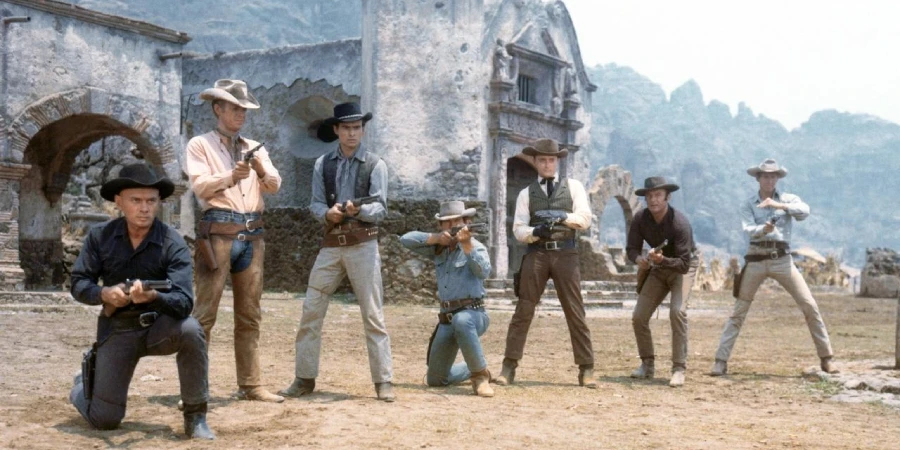
They meet Chris Adams (Yul Brynner), a calm, commanding gunfighter dressed in all black. Impressed by their determination and honesty, Chris agrees to help—despite the low pay. He begins recruiting other skilled (or desperate) gunmen:
- Vin Tanner (Steve McQueen), charming and fearless
- Bernardo O’Reilly (Charles Bronson), a tough but financially broke fighter
- Lee (Robert Vaughn), a psychologically shaken sharpshooter
- Britt (James Coburn), a lightning-fast knife and gun expert
- Harry Luck (Brad Dexter), convinced there’s hidden money in the mission
- Chico (Horst Buchholz), a hot-headed young man eager to prove himself
Each man joins for different reasons, giving the team a fascinating emotional range.
Preparing the Village
Once in Ixcatlan, the Seven begin training the villagers, strengthening defenses, and building trust. The film’s middle act is rich with character moments, including Bernardo bonding with local children and Chico falling for a young villager named Petra.
Calvera Strikes Back
Calvera launches an attack but is repelled. Shocked—because no one has ever fought back—he retreat to regroup. Later, he captures the Seven, claiming he only wants to survive the winter and will leave them alive if they abandon the village. Against better judgment, they’re released… but they choose to return.
This is the turning point where the story becomes not just a Western, but a tale about honor, sacrifice, and moral courage.
Movie Ending
The Seven sneak back into the village only to find it under Calvera’s full control. A chaotic, emotional final gunfight erupts through the village streets.
Key outcomes of the climax:
- Britt is shot while trying to draw Calvera’s men away.
- Harry dies protecting Chris, still clinging to the belief there was treasure somewhere.
- Bernardo, while defending the children who idolize him, is fatally wounded.
- Lee, shaken but courageous in his final moments, also falls in battle.
- Chico, thought dead for a moment, reappears and kills Calvera as the bandit leader’s last words question why the Seven would fight for a people not their own.
When the dust settles, only Chris, Vin, and Chico survive.
Chris utters one of the film’s most memorable truths: “Only the farmers won. We lost. We always lose.”
Chico chooses to stay behind, having found love and purpose in the village. Chris and Vin ride away, a remarkably understated ending that emphasizes the film’s bittersweet, almost elegiac tone.
Are There Post-Credits Scenes?
No. The film has no post-credits scenes—a reflection of its era, long before modern franchise-building.
Type of Movie
The film is a classic Western action-adventure drama, blending rugged gunfighting, moral dilemmas, and character-driven storytelling built around themes such as sacrifice, courage, and solidarity.
Cast
- Yul Brynner – Chris Adams
- Steve McQueen – Vin Tanner
- Charles Bronson – Bernardo O’Reilly
- James Coburn – Britt
- Robert Vaughn – Lee
- Brad Dexter – Harry Luck
- Horst Buchholz – Chico
- Eli Wallach – Calvera
Film Music and Composer
The legendary Elmer Bernstein composed the score, including the instantly recognizable main theme, one of the most famous pieces of Western film music ever written. Its stirring, heroic sound helped define the genre.
Filming Locations
Primary Locations
- Mexico (Cuernavaca, Tepoztlán, and the state of Morelos)
The rugged mountains and rural landscapes created an authentic frontier atmosphere. The real Mexican villages gave the story a sense of grounded realism.
Why These Locations Mattered
The dusty terrain, isolated farms, and harsh natural surroundings visually reinforce the villagers’ vulnerability and the Seven’s outsider nature. The environment itself becomes a silent character, shaping the tone of the film.
Awards and Nominations
Although not heavily awarded at the time, the film later earned iconic status. Its major recognition includes:
- Oscar nomination for Best Original Score (Elmer Bernstein)
- Selected for numerous “greatest Westerns” lists
- Preserved in countless retrospectives and academic analyses
Its influence—not trophies—is what immortalized it.
Behind the Scenes Insights
- Yul Brynner insisted on hiring Steve McQueen, only to regret it when McQueen constantly tried to upstage him with scene-stealing gestures.
- Eli Wallach considered Calvera one of his favorite roles, improvising several lines and mannerisms.
- James Coburn accepted the role after seeing the knife-throwing scene in Seven Samurai and wanting to recreate it.
- The cast often competed to look “cooler” on horseback; Brynner had the crew shorten his stirrups to appear taller.
- McQueen and Brynner had a famous rivalry that added tension—but also chemistry—to the film.
Inspirations and References
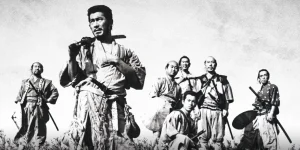
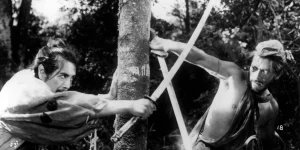
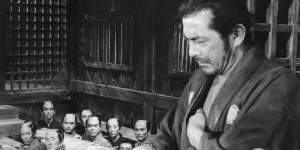
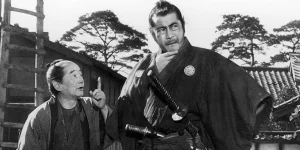
The film is a direct adaptation of Akira Kurosawa’s Seven Samurai (1954). Kurosawa reportedly loved the adaptation and even gifted John Sturges a ceremonial sword in admiration. The core themes—honor, community, and sacrifice—are preserved while being culturally translated into a Western setting.
Alternate Endings and Deleted Scenes
While no major alternate ending was shot, early script drafts included:
- A version where more of the Seven survived, considered too optimistic.
- A longer romantic subplot for Chico and Petra, trimmed for pacing.
- Extended village-training scenes that were removed to tighten the middle act.
Book Adaptations and Differences
Though the film is not based on a novel, it inspired later novelizations. These typically:
- Provide deeper backstory for the Seven
- Expand on Chico’s internal struggles
- Explore Calvera’s motivations in more detail
They add color but don’t significantly alter the core story.
Memorable Scenes and Quotes
Key Scenes
- The funeral procession shootout that introduces Chris and Vin’s bravery.
- The Seven’s recruitment montage—each man’s entrance is iconic.
- Bernardo teaching the village children about courage and responsibility.
- Chico spying on Calvera’s camp, discovering the bandits’ desperate situation.
- The final battle, a masterclass in classic Western staging.
Iconic Quotes
- “We deal in lead, friend.” – Vin
- “If God didn’t want them sheared, he would not have made them sheep.” – Calvera
- “Only the farmers won. We lost. We always lose.” – Chris
- “It’s not a question of bravery. It’s a question of will.” – Bernardo
Easter Eggs and Hidden Details
- Chris Adams’ all-black outfit subtly references the stoic samurai archetype.
- James Coburn’s character Britt is loosely modeled on Kyūzō from Seven Samurai.
- The village set was later reused in other Westerns and TV shows.
- The film hints at the characters’ pasts without fully explaining them, enhancing mythic mystery.
Trivia
- Steve McQueen faked a medical exemption from his Wanted: Dead or Alive TV contract to join the film.
- Charles Bronson became a major star in Europe partly because of this movie.
- The Seven’s character archetypes became templates for countless later action ensembles.
- The film performed modestly in the U.S. but became a huge global hit.
Why Watch?
Because it’s one of the foundational action ensemble films—a blend of heroism, tragedy, humor, and unforgettable music. Its combination of charismatic performances, moral complexity, and sweeping score creates a timeless cinematic experience. If you care about film history—or just great storytelling—this is essential viewing.
Director’s Other Works (Movies)
- Bad Day at Black Rock (1955)
- Gunfight at the O.K. Corral (1957)
- The Great Escape (1963)
- Hour of the Gun (1967)
- Ice Station Zebra (1968)