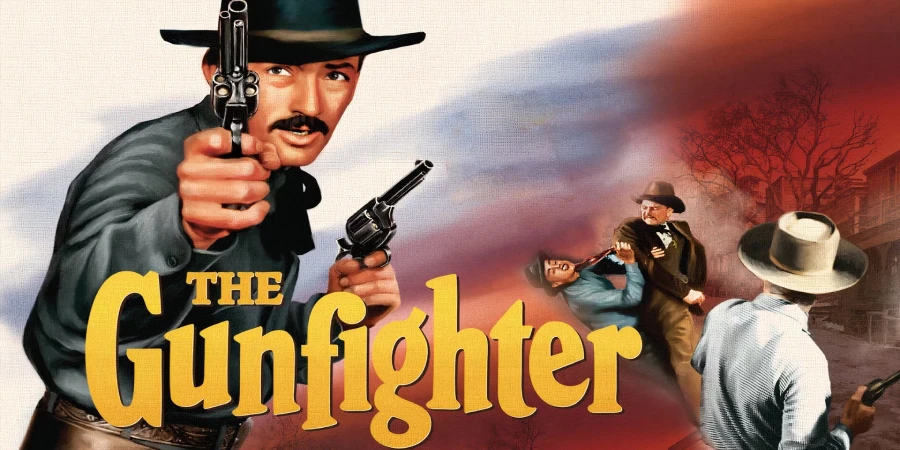
The Gunfighter (1950), directed by Henry King, is often considered one of the earliest and best examples of the psychologically rich, morally complex Western. With a haunting performance by Gregory Peck, the film stands out for its realism, somber tone, and its exploration of reputation, inevitability, and the tragic consequences of past choices.
Detailed Summary
Opening: The Legend of Jimmy Ringo
The film begins by establishing the near-mythical reputation of Jimmy Ringo, a notorious gunfighter whose name alone causes taverns to quiet down and cowboys to tremble. The audience quickly sees the burden of fame: every young gunslinger wants to be the man who kills Jimmy Ringo. In the opening saloon scene, a cocky youngster pushes Ringo too far, leading to a swift gunfight that leaves the boy dead and Ringo forced to flee once again.
Ringo Arrives in Cayenne
Jimmy rides to the town of Cayenne, hoping to finally reunite with his estranged wife Peggy and their son, who now lives under a different name to avoid attention. Ringo’s old friend, now Marshal Mark Strett, warns him that staying in town is dangerous. Despite his desire for peace, Ringo’s reputation draws crowds, troublemakers, and opportunists like a magnet.
The Town Reacts to His Presence
Word spreads that the infamous gunfighter is in town. Schoolchildren gather outside the saloon, women whisper about him, and young men fantasize about facing him. Some townsfolk admire him; others fear him. Ringo, exhausted by the cycle, longs to see his family, but Peggy refuses at first, afraid that reconnecting with him will bring danger to their lives.
A Glimpse of Redemption
After heartfelt persuasion, Peggy finally agrees to see him—but insists that she and their son cannot travel with him yet. She asks Ringo to give her one year to relocate, rebuild her life, and then reconnect. This glimmer of hope becomes Ringo’s emotional anchor, the one thing he holds onto amid the hostility brewing outside.
The Vengeful Pursuers Close In
Meanwhile, the three brothers of the young man Jimmy killed at the beginning of the film are hunting him. They track him to Cayenne but are delayed by Marshal Strett, who buys Jimmy time. Inside the saloon, more trouble is brewing, especially from Hunt Bromley, a local hothead desperate to carve a name for himself.
Movie Ending
Ringo’s reunion with Peggy is heartfelt, understated, and emotionally weighty. He finally sees his son from a distance, imagining the peaceful life he might have had. Just when it seems like Jimmy might truly turn his life around, destiny catches up with him.
As he leaves the saloon, Hunt Bromley shoots Ringo in the back—an act that is both cowardly and tragically predictable. Ringo does not die instantly. He manages to speak with Strett and ensures that Bromley’s future will echo his own past. In a powerful, somber speech, Ringo tells the crowd and Strett to publicly say the killing was a fair fight. He wants Bromley to carry a deadly reputation, so every young gunfighter will come for him—a poetic curse, condemning Bromley to the same lonely, hunted life Jimmy lived.
Ringo dies shortly after, never getting the chance to rebuild his life, but leaving a moral lesson behind.
Peggy learns of his final wishes, and although it devastates her, the movie ends with her and her son living on, free from Jimmy’s shadow. Bromley, meanwhile, stands stunned in the street, unaware of the weight that is about to crush his future.
Are There Post-Credits Scenes?
No. Like most films of its era, there are no post-credits scenes in The Gunfighter.
Type of Movie
This film is a psychological Western focused on reputation, morality, and the inevitability of violence. It is more character-driven than action-heavy, making it one of the earliest “revisionist Westerns.”
Cast
- Gregory Peck as Jimmy Ringo
- Helen Westcott as Peggy
- Millard Mitchell as Marshal Mark Strett
- Jean Parker as Molly
- Karl Malden as Mac
- Skip Homeier as Hunt Bromley
Film Music and Composer
The score was composed by Alfred Newman, known for his sweeping, emotional orchestral style. His music here subtly highlights the melancholy and internal conflict of Jimmy Ringo, rather than overwhelming the story.
Filming Locations
Filming took place primarily on the 20th Century Fox backlot in California, along with some outdoor Western street sets used in multiple Fox productions. These settings help establish the tight, claustrophobic atmosphere of Cayenne, emphasizing how Ringo is cornered both physically and emotionally.
Awards and Nominations
- Nominated for Best Motion Picture Story at the Academy Awards
While it didn’t win, the nomination reflects the strength of the screenplay’s emotional depth and narrative complexity.
Behind the Scenes Insights
- Gregory Peck initially hesitated to take the role, fearing it might tarnish his clean-cut image, but later called it one of his favorite performances.
- The screenplay drew inspiration from the real-life gunfighter John Wesley Hardin, known for being constantly challenged by younger gunslingers.
- Director Henry King pushed for a more somber, realistic Western, going against the trend of heroic, action-oriented cowboy films of the time.
Inspirations and References
The film draws loosely from:
- The life of John Wesley Hardin, who often killed men simply for provoking him because of his reputation.
- Early Western myths that explored the burden of fame and violence.
- Story elements typical of revisionist Western literature, years before the genre became popular.
Alternate Endings and Deleted Scenes
Because the film was tightly scripted and produced during Hollywood’s studio era, no widely known alternate endings exist. However, some early script drafts had Jimmy surviving the final confrontation, a version that was later rejected for being emotionally weaker and less morally impactful.
Memorable Scenes and Quotes
Key Scenes
- Ringo entering the saloon and instantly shifting the atmosphere with his presence.
- The tense moment when children gather to see the “famous gunfighter.”
- Peggy’s emotional conversation with Ringo, where she reveals both her lingering love and her fear.
- Hunt Bromley’s ambush, which becomes the final tragic turn.
Iconic Quotes
- “You don’t wanna get killed. That’s what’ll happen if you keep on trying to get yourself noticed.”
- “I’m tired, Mark… so tired of all of it.”
- “Tell them it was a fair fight.”

Easter Eggs and Hidden Details
- The character of Hunt Bromley was intentionally designed as a mirror image of young Jimmy Ringo, showing the cycle of violence repeating.
- Gregory Peck insisted on performing several dialogue scenes with minimal music to emphasize the emotional weight.
- The film subtly shows townsfolk shifting from fear to curiosity, highlighting how reputation becomes entertainment for observers.
Trivia
- The movie is often cited as an influence on later Westerns like Unforgiven.
- Its realistic portrayal of a gunfighter’s life was considered groundbreaking for 1950.
- The studio initially wanted a more “heroic” ending, which the director strongly opposed.
Why Watch?
Because The Gunfighter is one of the earliest Westerns to challenge the genre’s typical heroism. It is quiet, mature, psychologically rich, and showcases a powerful, understated Gregory Peck performance. If you want a Western that feels ahead of its time, this is essential viewing.
Director’s Other Movies
- Jesse James (1939)
- The Song of Bernadette (1943)
- Twelve O’Clock High (1949)
- David and Bathsheba (1951)
- The Snows of Kilimanjaro (1952)