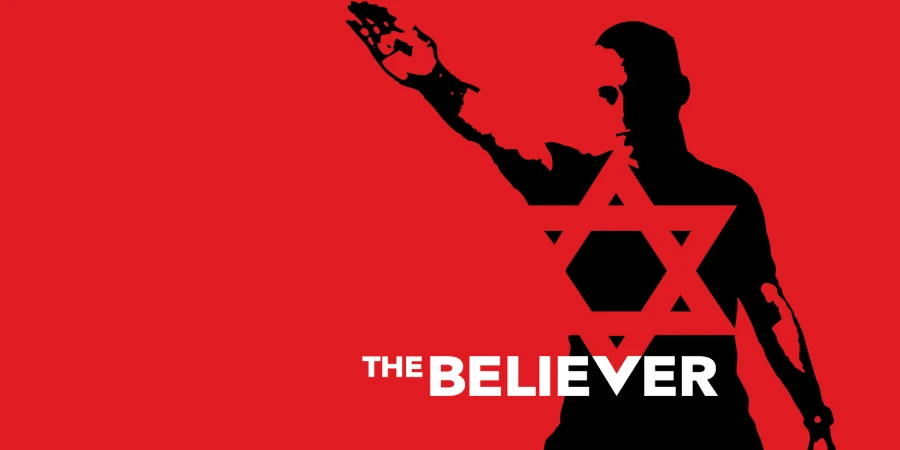

The Believer is an intense psychological drama directed by Henry Bean. It tells the disturbing true-like story of a young Jewish man who becomes a violent neo-Nazi, building one of the most controversial portraits of self-hatred and identity conflict ever put to film. The movie explores the paradox of a man battling against the very heritage he cannot escape.
Detailed Summary
A Jewish Man Turned Neo-Nazi
Danny Balint (Ryan Gosling), once a promising student of the Talmud, has transformed into a militant skinhead. Despite his Jewish identity, he embraces anti-Semitic ideology and joins violent street groups. The divide between who he is and what he claims to hate becomes the core of the film’s psychological conflict.
The Duality Behind His Hatred
Danny’s hatred is built on obsession. He doesn’t reject Judaism because he ignores it; he rejects it because he knows it intimately. His arguments against Judaism are delivered with rabbinic precision. This knowledge impresses far-right leaders, who invite him to participate in radical ideologies and recruitment.
Rising Among Extremists
Danny becomes a public face of the movement, gaining both admiration and suspicion. He grows closer to the neo-Nazi group’s supporters, including Carla (Summer Phoenix). Ironically, his influence pushes him deeper into extremist planning, including plots to bomb a synagogue.
Struggling with Identity
Despite his violent life, Danny secretly prays in Hebrew, studies Talmud texts, and experiences emotional reactions to Jewish traditions. His identity breaks him, becoming an internal war more violent than his external actions.
Movie Ending
In the climax, Danny is part of a bombing attempt at a synagogue that hosts a group of young Jewish students. Instead of leaving after planting the bomb, he stays and listens to the rabbi’s sermon about the binding of Isaac, interpreting it as a metaphor for faith requiring struggle, not obedience. Danny becomes emotional.
Realizing the bomb is still active and will kill the children, Danny tries to save them. He warns the group and rushes up the stairs. The explosion occurs, and it’s implied that Danny dies in the blast. Yet, in the final sequence, we see him alive in a dream-like afterlife or imagined future. He stands in a Jewish school classroom, confronted by a teacher who repeats a single phrase: “There is no way out.”
The ambiguous ending suggests that Danny can neither escape his heritage nor his guilt. Whether dead or alive, he is trapped within his inner conflict forever.
Are There Post-Credits Scenes?
There are no post-credits scenes in The Believer. The film ends abruptly, intentionally leaving viewers with an unsettling unresolved feeling.
Type of Movie
This is a psychological drama rooted in extremist ideology, identity conflict, and inner turmoil. It is based on real cases of Jewish men who became neo-Nazis, giving the film a disturbing emotional authenticity.
Cast
- Ryan Gosling as Danny Balint
- Summer Phoenix as Carla Moebius
- Billy Zane as Curtis Zampf
- Theresa Russell as Lina Moebius
- Garret Dillahunt as Billings
- Glenn Fitzgerald as Drake
Film Music and Composer
The score is composed by Joel Diamond, emphasizing tense, minimalistic tones that reflect Danny’s fractured psychology rather than dramatic orchestral emotion.



Filming Locations
The Believer was filmed primarily in New York City, using real urban locations such as abandoned buildings and Jewish neighborhoods to create authenticity. These settings reinforce the tension between Danny’s two worlds: the immigrant Jewish community and violent street radicalism.
Awards and Nominations
- Grand Jury Prize, Sundance Film Festival (2001) – Winner
- Golden St. George Nomination, Moscow International Film Festival
- Independent Spirit Award Nomination for Best Screenplay
The film was highly praised but also controversial, which limited wider awards recognition.
Behind the Scenes Insights
- Ryan Gosling studied real neo-Nazi behavior and Jewish theology to portray Danny’s inner conflict convincingly.
- The film’s release was delayed due to sensitivity concerns, as it arrived shortly after serious hate crimes in the U.S.
- Henry Bean based Danny on real people he observed during research into extremist groups.
- Some Jewish organizations protested the film, fearing it would be misunderstood, while others praised it for confronting identity conflict.
Inspirations and References
The movie was inspired by the real story of neo-Nazi Daniel Burros, a Jewish member of the National Socialist Movement who committed suicide after his identity was revealed publicly. The film also draws from Jewish philosophical debates and extremist case studies.
Alternate Endings and Deleted Scenes
A longer version of Danny’s synagogue collapse scene was filmed, showing more explicit aftermath, but it was cut to maintain ambiguity. Some scenes exploring Danny’s relationship with Jewish rituals were shortened, to make the pacing more intense and uncomfortable.
Book Adaptations and Differences
The film is not directly adapted from a book, but its story parallels real historical accounts and psychological studies of Jewish self-hatred, including themes discussed in Theodor Lessing’s “Jewish Self-Hatred”.

Memorable Scenes and Quotes
Key Scenes
- Danny debating theology in a Hebrew study group while simultaneously planning violent acts.
- The synagogue bombing sequence and his emotional response to the rabbi’s sermon.
- Danny praying secretly in Hebrew after leading a hate rally.
Iconic Quotes
- “If you hate the Jews so much, why do you study them like a rabbi?”
- Danny: “A Jew worships his God by arguing with him.”
- Rabbi: “There is no way out.”
Easter Eggs and Hidden Details
- Danny repeatedly touches his head during rage moments, mirroring Jewish prayer motions.
- He criticizes Jewish law using Talmudic logic, exposing his inability to escape knowledge.
- His hidden prayer scenes use authentic Hebrew liturgy, showing subconscious devotion.
Trivia
- Ryan Gosling was only 19 when he filmed this, marking his breakout dramatic role.
- Initially rated NC-17 due to violent ideology content, it was edited for limited release.
- The real Daniel Burros’ name is never mentioned, avoiding direct biography claims.
Why Watch?
The Believer is a powerful examination of identity, ideology, and psychological conflict. It forces viewers to confront uncomfortable truths about belief, heritage, and the paradox of self-hatred. It’s disturbing but intellectually compelling, especially for those interested in philosophical drama.
Director’s Other Works
- Death Wish (1974) – screenplay
- Basic Instinct 2 (2006) – screenplay