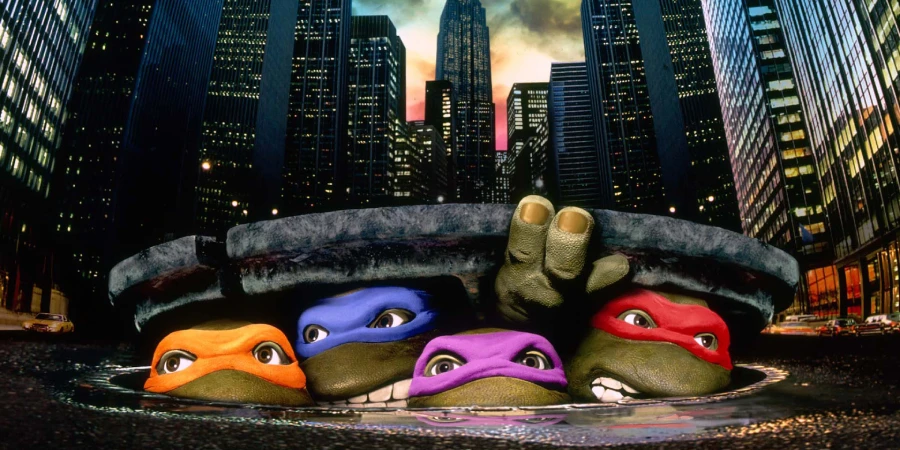

The 1990 live-action Teenage Mutant Ninja Turtles film is darker, grittier, and surprisingly emotional compared to many adaptations that followed. Directed by Steve Barron and based on the original Mirage comics by Kevin Eastman and Peter Laird, the film became a cult classic and one of the highest-grossing independent films ever made at the time.
It balances martial arts action, family drama, comic relief, and surprisingly heavy themes like fatherhood, identity, and loss. Yes, beneath the pizza jokes, there’s actual emotional weight.
Detailed Summary
The Crime Wave and the Rise of the Foot Clan
New York City is in chaos. A mysterious organization called the Foot Clan is behind a wave of thefts. Teenagers are being recruited into what looks like a rebellious street gang but is actually a criminal ninja network led by the shadowy Shredder.
TV reporter April O’Neil (Judith Hoag) begins investigating the crimes. One night, she is attacked by Foot ninjas in a subway station. Suddenly, unseen warriors defeat the attackers. April only catches a glimpse of something… green.
The Turtles Revealed
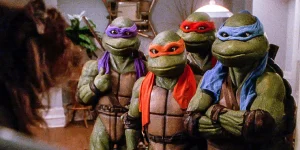
April eventually encounters her rescuers: Leonardo, Donatello, Michelangelo, and Raphael — four mutated turtles trained in ninjutsu by their rat sensei, Splinter. The turtles were mutated by the same ooze that transformed Splinter and have been raised in the sewers, hidden from the human world.
Their personalities are distinct:
- Leonardo – disciplined leader
- Donatello – tech genius
- Michelangelo – comic relief and pizza enthusiast
- Raphael – hot-headed and rebellious
The film spends time developing their brotherly dynamic, especially the tension between Leonardo and Raphael.
Raphael’s Capture and Splinter’s Kidnapping
Raphael’s temper gets the better of him. While brooding alone on a rooftop, he is ambushed by Foot Clan members and severely beaten. The turtles barely manage to rescue him, retreating to April’s apartment — which is then destroyed in a fiery attack.
Even worse, Splinter is captured by the Foot Clan.
This marks a tonal shift. The film becomes more serious, focusing on family bonds and inner conflict.
The Farmhouse Interlude
The turtles, April, and vigilante Casey Jones (Elias Koteas) escape to a rural farmhouse. Here, the film slows down. Raphael heals. Leonardo struggles with leadership. The turtles meditate and attempt to reconnect spiritually with Splinter.
This sequence is surprisingly emotional and reflective. It reinforces that Splinter is not just their master, but their father.
Infiltrating the Foot Headquarters
After regrouping, the turtles return to New York. They infiltrate the Foot Clan’s hideout — a warehouse filled with disaffected teenagers being manipulated by Shredder.
Inside, Splinter is imprisoned and revealed to have a past connection to Shredder, who was once the rival of Splinter’s human master, Hamato Yoshi.
The stage is set for a rooftop showdown.
Movie Ending
The final confrontation takes place on a rooftop in New York.
The turtles fight through waves of Foot ninjas in an extended martial arts sequence. Eventually, they face Shredder himself. Unlike the cartoon versions, this Shredder is intimidating, physically imposing, and deadly serious.
One by one, the turtles are defeated. Shredder proves to be superior in combat, mocking them and declaring himself invincible. The tone is tense — it genuinely feels like they might lose.
Then Splinter intervenes.
Still bound and weakened, Splinter challenges Shredder not with brute strength but with discipline and wisdom. Shredder attacks recklessly. Splinter uses Shredder’s own weapon and momentum against him. Shredder falls from the rooftop into a garbage truck below.
Casey Jones activates the truck’s compactor.
The implication is clear: Shredder is crushed inside. It is shockingly dark for a 1990 “family” film.
The police arrive. Splinter is reunited with his sons. The turtles return to the sewer, celebrating with pizza. Raphael, injured earlier in the film, shouts his iconic line, “Cowabunga!” signaling unity restored and family intact.
The ending fully resolves the central conflict:
- The Foot Clan is dismantled
- Splinter is rescued
- The brothers reconcile
- Shredder is apparently dead
However, in true comic book fashion, a post-credits stinger teases otherwise.
Are There Post-Credits Scenes?
Yes. After the credits begin rolling, there is a brief scene showing Shredder’s armored hand emerging from the rubble inside the garbage truck, suggesting he survived.
This directly sets up the sequel.
Type of Movie
Teenage Mutant Ninja Turtles (1990) is a martial arts action film blended with comic book adaptation and family drama, darker in tone than many expect and surprisingly faithful to its source material.
Cast
- Leonardo – voiced by Brian Tochi
- Donatello – voiced by Corey Feldman
- Michelangelo – voiced by Robbie Rist
- Raphael – voiced by Josh Pais
- Splinter – voiced by Kevin Clash
- April O’Neil – Judith Hoag
- Casey Jones – Elias Koteas
- Shredder – James Saito
Film Music and Composer
The score was composed by John Du Prez, delivering orchestral ninja themes mixed with early ’90s energy. The soundtrack also features “Turtle Power” by Partners in Kryme, which became a pop-culture staple.

Filming Locations
The film was primarily shot in:
- New York City
- Wilmington
New York’s gritty atmosphere plays a huge role in the film’s tone. Unlike later CGI-heavy versions, the city feels grounded and urban. Wilmington studios were used for controlled fight sequences and sewer sets.
The realism of practical effects and physical suits made the world feel tangible.
Awards and Nominations
The film did not receive major Academy recognition but was a massive commercial success. It won several kids’ choice awards and became the highest-grossing independent film at the time of release.
Its legacy is largely cultural rather than award-driven.
Behind the Scenes Insights
- The turtle suits were created by Jim Henson’s Creature Shop, giving the characters remarkable facial expression for the time.
- The suits were extremely hot and physically exhausting to wear.
- Corey Feldman originally voiced Donatello but was uncredited in the first film due to contractual issues.
- The film’s darker tone was intentional, aiming to reflect the original Mirage comics rather than the cartoon series.
- Fight choreography was heavily influenced by Hong Kong martial arts cinema.
Inspirations and References
The film is based on the original Teenage Mutant Ninja Turtles comics by Kevin Eastman and Peter Laird.
The comics themselves were inspired by:
- Daredevil
- Ronin
The gritty tone of the 1990 film leans heavily into those darker comic influences rather than the animated TV series.
Alternate Endings and Deleted Scenes
There were no widely released alternate endings, but some extended fight choreography and character beats were trimmed for pacing.
Early drafts reportedly considered a more explicit confirmation of Shredder’s death, but filmmakers chose ambiguity — wisely, since it enabled the sequel.
Book Adaptations and Differences
The film adapts elements from early Mirage comics, particularly the origin of Splinter and Shredder.
Key differences:
- The movie softens some of the comic’s violence.
- The Foot Clan is portrayed as a youth gang recruiting runaways, which is more socially grounded than some comic arcs.
- The tone is slightly more accessible for families.
Still, this remains one of the most faithful TMNT adaptations ever made.
Memorable Scenes and Quotes
Key Scenes
- Raphael’s rooftop ambush and brutal beating
- The farmhouse meditation sequence
- Splinter confronting Shredder on the rooftop
- Casey Jones activating the garbage truck compactor
Iconic Quotes
- “I have always liked… cowabunga.” – Splinter
- “Wise man say: forgiveness is divine, but never pay full price for late pizza.” – Michelangelo
- “Tonight, I dine on turtle soup.” – Shredder
Easter Eggs and Hidden Details
- The Foot Clan headquarters resembles a twisted youth center, symbolizing manipulation of vulnerable teens.
- The origin of the ooze subtly mirrors elements from Daredevil comics.
- Shredder’s armor design closely matches the original comic version rather than the cartoon.
- The rooftop fight choreography mirrors traditional samurai duels.
Trivia
- It was the highest-grossing independent film at the time.
- Jim Henson initially worried the film was too violent for children.
- The turtle suits weighed around 70 pounds.
- The farmhouse scenes were inspired by comic issue #11.
- It was released the same year as several major blockbusters but outperformed many of them domestically.
Why Watch?
Because it’s the rare comic book movie that treats its source material seriously while still being fun. The practical effects still hold up, the martial arts are real, and the emotional core about brotherhood and fatherhood gives it surprising depth.
It’s gritty without being cynical and playful without being silly.
Director’s Other Works
- Coneheads (1993)
- The Indian in the Cupboard (1995)
- Rat (2000)