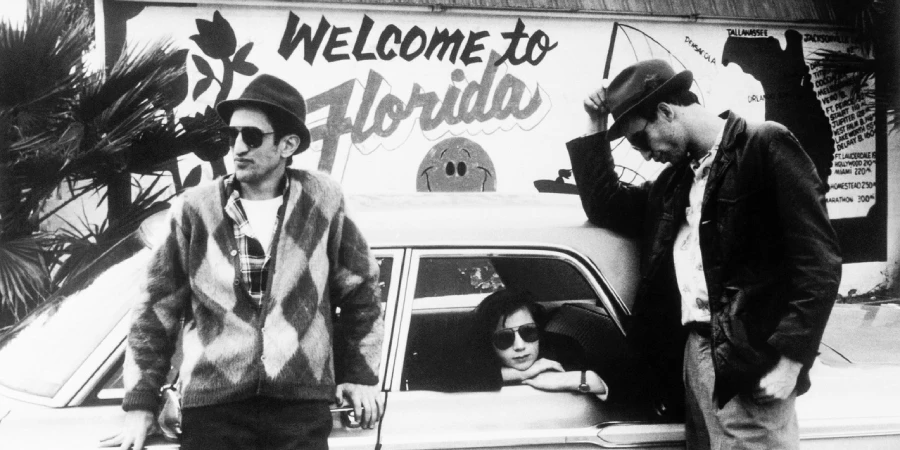

Jim Jarmusch’s Stranger Than Paradise is one of those deceptively simple films that quietly changed American independent cinema. Released in 1984 and shot in stark black-and-white, the film helped define the minimalist, deadpan aesthetic that would later become synonymous with Jarmusch’s name. If you’re expecting plot twists and dramatic crescendos, you’re in the wrong movie. If you’re open to stillness, awkward pauses, and existential drifting, you’re in exactly the right one.
Detailed Summary
Act I: The New World – Willie and Eva in New York
The film begins in New York City, where Willie (John Lurie), a Hungarian immigrant who now insists on being called “Willie” instead of his birth name Béla, lives a detached, aimless life. His teenage cousin Eva (Eszter Balint) arrives from Budapest to stay with him temporarily on her way to Cleveland.
At first, Willie is openly hostile toward Eva. He insists she speak only English and mocks anything that reminds him of Hungary. Yet over the course of ten quietly humorous days, a strange bond forms. They don’t share deep conversations or emotional breakthroughs. Instead, they coexist—watching television, eating TV dinners, wandering the city. The repetition of daily life becomes the rhythm of the film.
Willie’s friend Eddie (Richard Edson) enters the picture, adding to the trio’s low-key dynamic. Their conversations are dry, often absurdly trivial, and filled with awkward silences that somehow feel authentic rather than forced.
Act II: One Year Later – Cleveland
A year passes. Willie and Eddie impulsively decide to visit Eva in Cleveland. They expect something dreary and uneventful—and they’re not wrong. Cleveland is presented as visually indistinguishable from New York: gray, flat, and equally monotonous. This is one of the film’s subtle jokes. No matter where they go, it feels the same.
Eva’s life hasn’t dramatically improved or worsened. She works at a hot dog stand and seems quietly resigned. The trio drifts around town, visits Lake Erie, and does little of consequence. Yet in these small, seemingly meaningless interactions, Jarmusch builds a meditation on alienation and displacement.
Act III: Paradise – Florida
On another whim, they head to Florida, searching for “paradise.” The promise of warmth and escape lingers in the air. Yet when they arrive, Florida feels just as empty as everywhere else. The beach is barren. The atmosphere is anticlimactic.
Eddie wins some money at dog races, injecting a brief moment of excitement into their otherwise static journey. But even luck feels muted in this world. The emotional distance between the characters remains intact, even as they share physical proximity.


Movie Ending
After Eddie wins money at the dog track, Willie impulsively loses his passport and plane ticket during a misunderstanding involving a bag mix-up. Meanwhile, Eva, feeling restless and detached, decides on her own to use the ticket Willie had intended for himself and boards a plane back to Budapest.
Here’s where the film masterfully plays with irony: Willie rushes to the airport intending to stop Eva, but due to confusion and circumstance, he ends up boarding a plane to Budapest instead—without fully realizing what he’s committing to. Eva, on the other hand, has already decided she might not even go through with returning home and may try to come back.
The final twist? Willie ends up flying back to Hungary—the very identity and past he’s spent the entire film rejecting. Eva, who longed for change, may or may not follow through. Eddie is left alone in Florida, confused and abandoned.
The brilliance of the ending lies in its circularity and absurdity. Willie’s denial of his roots collapses in one quiet, accidental decision. Eva’s search for belonging remains unresolved. Nobody gets a grand revelation. Nobody dramatically confesses their feelings. Life simply nudges them into ironic positions.
It’s both funny and melancholic. The characters drift, and fate gently rearranges them.
Are There Post-Credits Scenes?
No, there are no post-credits scenes in Stranger Than Paradise. The film ends definitively with its final airport sequence and closing frame.
Type of Movie
Stranger Than Paradise is an independent art-house film blending minimalist comedy, existential drama, and road movie elements. Its tone is dry, observational, and deliberately restrained.
Cast
- John Lurie as Willie
- Eszter Balint as Eva
- Richard Edson as Eddie
- Cecillia Stark as Aunt Lotte
Film Music and Composer
The score was composed by John Lurie himself, who was also a musician and co-founder of the band The Lounge Lizards. The film famously features Screamin’ Jay Hawkins’ song “I Put a Spell on You,” which Eva repeatedly plays on her cassette tape. The repetition becomes a subtle emotional motif, reinforcing the film’s themes of nostalgia and displacement.

Filming Locations and Their Importance
The film was shot in New York City, Cleveland, and Florida. These locations are intentionally presented in a visually similar, stripped-down way. The black-and-white cinematography flattens distinctions between them, reinforcing the idea that geography doesn’t necessarily change emotional reality.
New York represents supposed opportunity. Cleveland represents stagnation. Florida represents escape or “paradise.” Yet visually and emotionally, they blur into one another. This is not accidental—it’s central to Jarmusch’s commentary.
Awards and Nominations
The film won the prestigious Caméra d’Or at the Cannes Film Festival in 1984, awarded to the best first feature film. It also won the Special Jury Prize at Sundance, solidifying its importance in the American indie movement. Over time, it has been recognized as one of the defining films of 1980s independent cinema.
Behind the Scenes Insights
- The film was shot on a very low budget, roughly $100,000.
- It began as a 30-minute short film before being expanded into a feature.
- Jim Jarmusch insisted on long static takes with no camera movement, giving the film its distinct rhythm.
- Each scene is separated by a fade to black, creating a chapter-like structure.
- The cast members were not traditional Hollywood actors, contributing to the film’s naturalistic performances.
Inspirations and References
Jarmusch drew inspiration from European art cinema, particularly directors like Yasujiro Ozu and Robert Bresson. The minimalist framing and deadpan tone echo these influences. The film also reflects the DIY spirit of early 1980s American independent filmmaking.
Alternate Endings and Deleted Scenes
There are no widely known alternate endings. However, because the film originated as a short, some material was expanded rather than cut. The minimal structure means little excess footage exists compared to larger productions.
Book Adaptations and Differences
Stranger Than Paradise is not based on a book. It is an original screenplay written by Jim Jarmusch.
Memorable Scenes and Quotes
Key Scenes
- Eva standing silently in Willie’s apartment while the television flickers in the background
- The trio staring at the frozen landscape of Lake Erie
- The empty Florida beach sequence, which quietly dismantles the idea of “paradise”
- The final airport mix-up that seals everyone’s ironic fate
Iconic Quotes
- “It’s funny, you come someplace new, and everything looks just the same.”
- “You’re nobody special.”
- “I don’t need a new world. I got my own.”
The dialogue is sparse, but that first quote in particular encapsulates the film’s entire philosophy.
Easter Eggs and Hidden Details
- The recurring use of “I Put a Spell on You” subtly mirrors Eva’s emotional pull on Willie.
- Willie’s insistence on Americanizing his identity contrasts with his ultimate return to Hungary.
- The visual similarity between locations is a deliberate stylistic statement, not a budget limitation alone.
- The fade-to-black transitions mimic literary chapter breaks, reinforcing the episodic structure.
Trivia
- The film is preserved in the U.S. National Film Registry for being culturally and historically significant.
- Jim Jarmusch reportedly financed parts of the film through personal loans and favors.
- The movie helped launch the American indie boom of the late 1980s and 1990s.
- Its total shooting schedule was unusually fragmented due to financial constraints.
Why Watch?
Watch this film if you appreciate atmosphere over plot and character presence over action. It’s quietly revolutionary. Its influence on American independent cinema is enormous, and its dry humor lands harder the more you sit with it. It’s the kind of film that feels simple at first glance but lingers long after it ends.
Director’s Other Works (Jim Jarmusch)
- Down by Law (1986)
- Mystery Train (1989)
- Night on Earth (1991)
- Dead Man (1995)
- Ghost Dog: The Way of the Samurai (1999)
- Broken Flowers (2005)
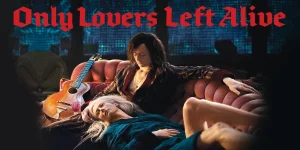
- Only Lovers Left Alive (2013)
- Paterson (2016)
Recommended Films for Fans
- Paris, Texas (1984)
- Down by Law (1986)
- Slacker (1990)
- Clerks (1994)
- Before Sunrise (1995)
- Wendy and Lucy (2008)