
Before he was a legend, Musashi Miyamoto was simply Takezo, a wild young man hungry for glory. Samurai I: Musashi Miyamoto chronicles the chaotic, violent, and transformative birth of Japan’s most famous swordsman. Instead of a straightforward hero’s journey, we get the story of a beast being tamed. Consequently, his path is soaked in both blood and profound self-discovery.
Detailed Summary
The Battle of Sekigahara and Aftermath
The film opens in 1600 as two ambitious young men from Miyamoto village, Takezo Shinmen and his friend Matahachi Hon’iden, abandon their homes to seek fame and fortune in the Battle of Sekigahara. They naively believe they will return as celebrated samurai. The battle, however, proves to be a brutal and crushing defeat for their side. Dazed and wounded, the two friends find themselves among the losing army’s scattered survivors.
Following their escape, they take refuge in a remote house occupied by a lone woman named Oko and her daughter Asemi. The women make a living by looting corpses from the battlefield. Matahachi, recovering from his injuries, quickly falls for the alluring Oko. Takezo, on the other hand, remains hostile and distrustful, focused only on returning home to his beloved Otsu, Matahachi’s spurned fiancée.
Return to the Village
When Takezo decides to leave, Matahachi promises to follow but ultimately stays behind with Oko. As a result, Takezo returns to the village alone, carrying the heavy news of Matahachi’s survival but also his abandonment of Otsu. Matahachi’s mother, Osugi, refuses to believe her son would do such a thing. Instead, she blames Takezo for leading him astray and brands him a criminal.
Osugi then manipulates the local lord into declaring Takezo a wanted fugitive. This forces Takezo to flee into the mountains, living like a wild animal. Meanwhile, Otsu receives a letter from Oko (written by the now-compliant Matahachi) severing their engagement. Heartbroken, Otsu begins to realize her true feelings lie with Takezo. Consequently, she leaves the village to warn him about the manhunt.
The Fugitive
Takezo successfully evades capture for a long time, becoming a notorious and feared figure. He manages to fight off dozens of soldiers and villagers sent after him. Otsu eventually finds him, and they share a tender moment where their mutual affection becomes clear. Nevertheless, their reunion is cut short when soldiers, led by Osugi, close in on them.
In a dramatic confrontation, the cunning priest Takuan Sōhō arrives. Instead of joining the hunt, Takuan psychologically outmaneuvers the exhausted and enraged Takezo. He offers Takezo a drink, which ultimately allows Otsu to bind him while he is distracted. The capture is not one of force but of clever persuasion and emotional leverage, ending Takezo’s rampage.
Capture and Transformation
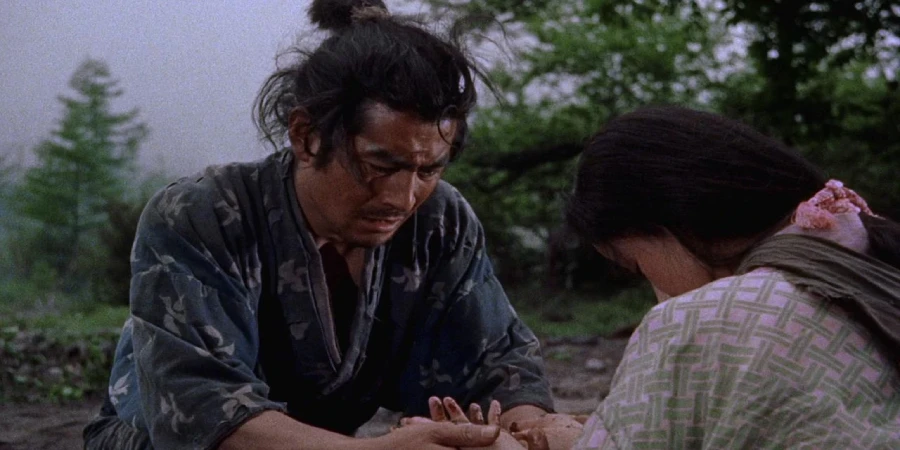
Captured and humiliated, Takezo is suspended from a large tree in the village square by Takuan. The priest’s intention is not to kill him but to break his wild spirit and teach him humility. He leaves Takezo exposed to the elements and the scorn of the villagers for days. Otsu, taking pity on him, secretly cuts him down at night, and they flee together.
Their freedom is short-lived. Takuan finds them at Himeji Castle and separates them once more. He convinces the local lord to pardon Takezo. Then, Takuan locks Takezo in a castle room for three years with nothing but books on the samurai code, philosophy, and strategy. This solitary confinement is meant to transform the feral Takezo into an enlightened warrior. When the doors finally open, Takezo is a changed man. The lord grants him a new name to signify his rebirth: Musashi Miyamoto.
Movie Ending
The film’s ending is poignant and crucial for setting up the sequel. After his three years of solitary study, a refined and thoughtful Musashi Miyamoto emerges from Himeji Castle. He is no longer the wild Takezo. Otsu has been waiting faithfully for him, and they share a tearful reunion on a bridge outside the castle.
However, when Otsu begs Musashi to take her with him, he makes a heartbreaking choice. He gently pushes her away, explaining that he must first dedicate himself fully to the way of the sword. Musashi renounces personal happiness and love to embark on a musha shugyo, a warrior’s pilgrimage to perfect his skills. He leaves a devastated Otsu weeping on the bridge as he walks away, his journey as Japan’s greatest swordsman just beginning.
Are There Post-Credits Scenes?
No, there are no post-credits scenes in Samurai I: Musashi Miyamoto. The film concludes definitively, though its story directly continues in the sequel, Samurai II: Duel at Ichijoji Temple.
Type of Movie
Samurai I: Musashi Miyamoto is a jidaigeki, which is a Japanese period drama set before the Meiji Era. More specifically, it is a samurai action-adventure film with strong romantic and philosophical themes. The tone is epic and sweeping, capturing both the brutish reality of 17th-century Japan and the spiritual journey of its protagonist. Its vibrant Eastmancolor cinematography lends it a grand, almost mythical quality.
Cast
- Toshiro Mifune – Takezo Shinmen / Musashi Miyamoto
- Rentarō Mikuni – Matahachi Hon’iden
- Kaoru Yachigusa – Otsu
- Kuroemon Onoe – Takuan Sōhō
- Mariko Okada – Akemi
- Mitsuko Mito – Oko
- Eiko Miyoshi – Osugi Hon’iden
Film Music and Composer
The powerful and evocative score for Samurai I was composed by Ikuma Dan. The music skillfully blends traditional Japanese instrumentation and melodies with grand, Western-style orchestral arrangements. This fusion reflects the film’s own blend of historical specificity and universal human drama. For instance, tense battle sequences are underscored with booming percussion and urgent strings, while moments of quiet introspection feature woodwinds and traditional Japanese flutes. The main theme, in particular, becomes a recurring motif for Musashi’s journey of self-discovery.

Filming Locations
Director Hiroshi Inagaki shot the film on location throughout Japan, which adds to its immense scale and authenticity. Key scenes were filmed in areas that evoke the historical period, such as the scenic landscapes of the Gotemba region near Mount Fuji and the iconic Himeji Castle in Hyōgo Prefecture. The use of real castles and sprawling natural environments, beautifully captured in Eastmancolor, was a deliberate choice. It grounds the epic tale in a tangible, breathtaking reality, making the setting a character in itself.
Awards and Nominations
Samurai I: Musashi Miyamoto achieved significant international acclaim. Its most notable achievement was winning the Academy Award for Best Foreign Language Film at the 28th Academy Awards in 1956. This award cemented its place in world cinema and brought widespread attention to both director Hiroshi Inagaki and star Toshiro Mifune.
Behind the Scenes Insights
- Actor Toshiro Mifune fully committed to embodying the wild nature of Takezo. He reportedly studied the movements of lions at the zoo to perfect Takezo’s feral, animalistic posture and energy in the first half of the film.
- The film was one of the first Japanese productions to be shot in Eastmancolor. This choice was significant, as most Japanese color films at the time used domestic processes like Fujicolor. Consequently, the vibrant, rich palette gave it a visual advantage for international distribution.
- This film is the first installment of Inagaki’s celebrated Samurai Trilogy. The production was planned as a multi-film epic from the beginning, allowing for a more faithful and expansive adaptation of the source material.
Inspirations and References
The film is directly based on the epic historical novel Musashi by Eiji Yoshikawa. Yoshikawa’s novel, first serialized in a newspaper in the 1930s, is a fictionalized account of the life of the real Miyamoto Musashi. It remains one of Japan’s most famous and beloved literary works.
Alternate Endings and Deleted Scenes
There are no known officially released alternate endings or significant deleted scenes for Samurai I: Musashi Miyamoto. The film’s narrative is a tightly condensed version of the first part of its source novel, and the theatrical cut is considered the definitive version. Any material left out was likely trimmed during the adaptation phase rather than being filmed and later cut.
Book Adaptations and Differences
While the film is a faithful adaptation of Eiji Yoshikawa’s novel Musashi, it necessarily condenses the story. The film primarily adapts the “Earth” scroll, the first major section of the book. Even so, it streamlines many events. For instance, the novel delves much deeper into the political climate following the Battle of Sekigahara and features a wider array of supporting characters and subplots. The film, in contrast, sharpens its focus on the central love triangle between Takezo, Otsu, and Matahachi, using it as the primary engine for the plot. Ultimately, the film sacrifices the novel’s sprawling scope for narrative punch and cinematic pacing.
Memorable Scenes and Quotes
Key Scenes
- The Fugitive Hunt: Takezo, living as a wild man in the mountains, single-handedly fends off waves of villagers and soldiers. This sequence perfectly showcases his raw, untamed power and desperation before his transformation.
- The Capture by Takuan: Instead of being bested in a duel, Takezo is trapped by the priest Takuan’s cunning wit and Otsu’s intervention. His subsequent suspension from the tree is a powerful image of public humiliation designed to break his pride.
- The Farewell on the Bridge: The final scene where Musashi leaves Otsu is emotionally devastating. It powerfully establishes the central conflict of his character: the path of the sword versus a life of personal happiness.
Iconic Quotes
- Takuan Sōhō: “To be a samurai, you must learn more than the art of killing. To be a great samurai, you must know how to live.”
- Takuan Sōhō: (To Takezo) “You’re too strong. You have no weakness. Therefore, you are a slave to your own strength.”
- Takezo: (Regarding his sword) “This is the only thing that separates me from the beast.”
Easter Eggs and Hidden Details
- Color Symbolism: Director Hiroshi Inagaki uses color to reflect character psychology. Otsu is often dressed in lighter, softer colors like white and pale blue to symbolize her purity and innocence. In contrast, Oko and Akemi wear bolder, earthier reds and oranges, hinting at their more carnal and opportunistic natures.
- The Name Change: The granting of the name “Musashi Miyamoto” is historically significant. “Miyamoto” is the name of his home village, signifying he now carries its identity. “Musashi” is a different reading of the characters in his given name, Takezo, symbolizing his rebirth into a new person.
- Himeji Castle as a Metaphor: Musashi’s confinement and rebirth take place inside the famous Himeji Castle, also known as the “White Heron Castle.” Its beautiful, imposing structure serves as a physical metaphor for the disciplined, refined framework being imposed on Takezo’s chaotic spirit.
Trivia
- The film’s Academy Award win was for a special “Honorary Award,” as the competitive “Best Foreign Language Film” category was not formally established until 1956. This film was one of several foreign pictures to receive such an honor in the years prior.
- Star Toshiro Mifune worked with director Hiroshi Inagaki on numerous films, but the Samurai Trilogy remains their most famous collaboration on the world stage.
- The real Miyamoto Musashi was an undefeated swordsman, philosopher, and author of The Book of Five Rings, a seminal text on strategy and martial arts that is still studied today.
Why Watch?
For Toshiro Mifune’s ferocious, star-making performance alone, this film demands attention. Moreover, its stunning color cinematography and epic story of transformation make it an essential classic. It is the perfect entry point into the world of samurai cinema.
Director’s Other Movies
- The Rickshaw Man (1958)
- Samurai II: Duel at Ichijoji Temple (1955)
- Samurai III: Duel at Ganryu Island (1956)
- Chushingura: Hana no Maki, Yuki no Maki (1962)
Recommended Films for Fans
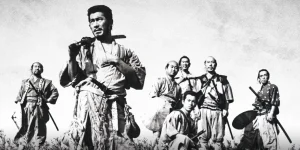
- Seven Samurai (1954)
- Yojimbo (1961)
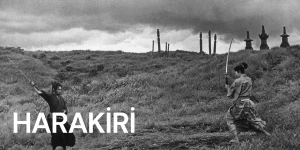
- Harakiri (1962)
- The Sword of Doom (1966)
- 13 Assassins (2010)