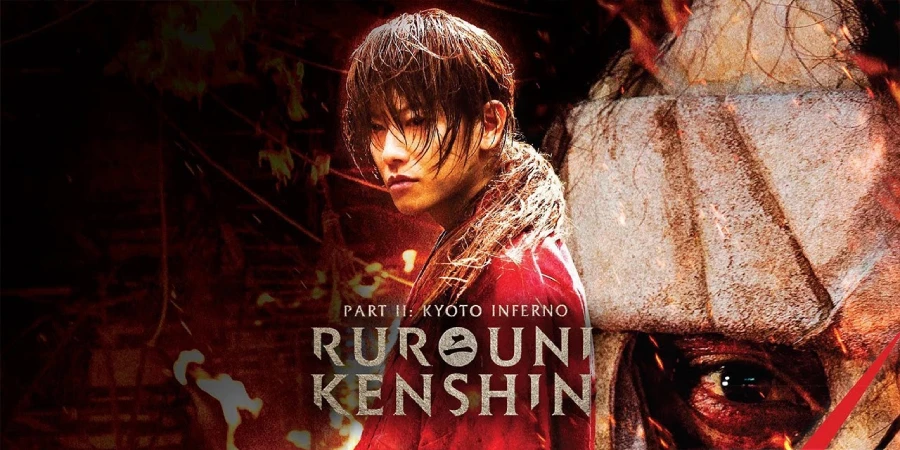

Rurouni Kenshin Part II: Kyoto Inferno is the intense middle chapter of the live-action Kenshin trilogy, raising the stakes dramatically after the first film. Darker, angrier, and far more political, this installment pushes Kenshin Himura to his physical and moral limits while setting up one of the most iconic final showdowns in modern samurai cinema.
Detailed Summary
The Aftermath of the First Film
Following the fall of the old regime, Japan is attempting to modernize, but peace is fragile. Kenshin Himura (Takeru Satoh) continues to wander as a rurouni, determined to uphold his vow never to kill again. However, rumors spread of a new revolutionary threat far more dangerous than anything before.
The Rise of Makoto Shishio
The film introduces Makoto Shishio, a former assassin betrayed and burned alive by the Meiji government. Surviving with horrific scars, Shishio has become a symbol of resentment against the new era. He plans to overthrow the government by force, believing only the strong deserve to rule.
Shishio’s ideology directly challenges Kenshin’s belief in protecting life, even that of one’s enemies.
Kenshin vs. the Government
The Meiji government secretly recruits Kenshin to stop Shishio, despite previously attempting to erase all traces of their assassins. Kenshin reluctantly accepts, understanding that Shishio’s rebellion would plunge Japan into chaos and mass bloodshed.
This uneasy alliance highlights one of the film’s central themes: the hypocrisy of power and the cost of peace.
Kaoru’s Departure and Kenshin’s Isolation
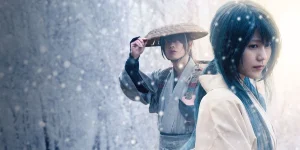
Kaoru (Emi Takei), realizing that she has become a weakness for Kenshin, leaves him behind. This emotional separation forces Kenshin to confront his past alone, stripping him of emotional support and reinforcing his internal struggle between atonement and survival.
Battles in Kyoto
As Kenshin arrives in Kyoto, he faces Shishio’s elite lieutenants in brutal, fast-paced fights. Each battle escalates the tension and showcases distinct fighting styles, emphasizing that Shishio’s forces are not mere criminals but hardened warriors.
Meanwhile, Shishio prepares his ultimate weapon: a massive ironclad warship designed to annihilate Kyoto and ignite a nationwide revolution.
Movie Ending
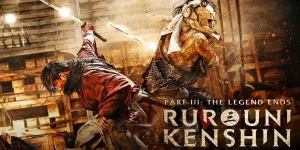
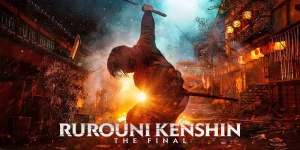
The film’s final act is deliberately unresolved and devastating. Kenshin confronts Shishio aboard the ironclad ship. Their clash is brief but explosive, making it clear that Kenshin is not yet strong enough to defeat him. Shishio, calm and terrifyingly confident, completely dominates the encounter.
Shishio detonates the ship, intending to escape amid the chaos. Kenshin, severely injured, falls into the sea and is presumed dead. The government believes its worst fears have come true, while Kaoru mourns Kenshin’s apparent death.
The final scenes reveal that Kenshin has survived but is gravely wounded and drifting unconscious, rescued by an unknown figure. Shishio, unharmed, watches Kyoto burn from afar, fully committed to his plan to destroy the Meiji government.
The film ends on a somber note: evil has not been stopped, the hero has fallen, and the war is just beginning, setting the stage directly for the final chapter.
Are There Post-Credits Scenes?
There is no traditional post-credits scene. However, the ending itself functions as a cliffhanger, intentionally designed to flow directly into Rurouni Kenshin: The Legend Ends (2014).
Type of Movie
This film is a historical action drama with strong elements of samurai cinema and political thriller. It balances intense sword combat with emotional and ideological conflict rather than focusing solely on spectacle.
Cast
- Takeru Satoh – Kenshin Himura
- Tatsuya Fujiwara – Makoto Shishio
- Emi Takei – Kaoru Kamiya
- Yūsuke Iseya – Aoshi Shinomori
- Munetaka Aoki – Sanosuke Sagara
- Ryunosuke Kamiki – Seta Sōjirō
Film Music and Composer
The score is composed by Naoki Satō, whose music blends traditional Japanese instrumentation with modern orchestral tension. The soundtrack emphasizes dread and inevitability, particularly during Shishio’s scenes, reinforcing his role as an unstoppable force.

Filming Locations
The film was shot across multiple locations in Japan, including Kyoto, Shiga, and studio sets in Tokyo. Kyoto’s historical streets play a crucial role, grounding the story in real locations tied to Japan’s turbulent transition from feudalism to modernization. These settings add authenticity and thematic weight to the conflict over Japan’s future.
Awards and Nominations
- Winner: Japan Academy Prize – Outstanding Achievement in Cinematography
- Nominated: Best Actor (Takeru Satoh)
- Nominated: Best Music Score
The film was widely praised for its choreography, production design, and faithfulness to the source material.
Behind the Scenes Insights
- Takeru Satoh performed most of his own sword stunts, resulting in several minor injuries.
- Makoto Shishio’s makeup required over three hours of daily application.
- Director Keishi Ōtomo insisted on minimal CGI, favoring practical effects and real locations.
- The ironclad ship set was partially built at full scale to enhance realism during fight scenes.
Inspirations and References
The film is based on the manga Rurouni Kenshin by Nobuhiro Watsuki, particularly the Kyoto Arc. It also draws inspiration from classic jidaigeki (period dramas) and modern samurai films that explore moral ambiguity rather than clear heroism.
Alternate Endings and Deleted Scenes
Early drafts included a longer Kenshin–Shishio duel at the film’s end, but it was removed to preserve Shishio’s overwhelming dominance and maintain narrative tension for the final installment. Several character moments involving Aoshi were also shortened for pacing.
Book Adaptations and Differences
Compared to the manga, the film condenses multiple subplots and simplifies Shishio’s organization. While the manga spends more time on Kenshin’s training and inner monologue, the film focuses on visual storytelling and emotional impact over exposition.
Memorable Scenes and Quotes
Key Scenes
- Kenshin’s defeat aboard the ironclad ship
- Shishio’s calm explanation of his worldview
- Kaoru’s silent farewell to Kenshin
- Kyoto burning as Shishio watches from afar
Iconic Quotes
- Makoto Shishio: “The weak are food for the strong. That is the law of nature.”
- Kenshin Himura: “I will protect this era… without taking a life.”
Easter Eggs and Hidden Details
- Kenshin’s fighting stance subtly shifts as his injuries worsen.
- Shishio’s followers mirror real historical rebel groups from the Meiji era.
- Several background characters resemble designs from the original manga panels.
Trivia
- The film and its sequel were shot back-to-back.
- Tatsuya Fujiwara lost weight intentionally to emphasize Shishio’s burned physique.
- The Kyoto Inferno title is symbolic rather than literal, representing ideological destruction.
Why Watch?
If you enjoy serious, character-driven action films with emotional weight and philosophical depth, this movie delivers. It’s not just about sword fights; it’s about what kind of future is worth fighting for.
Director’s Other Works (Movies)
- Rurouni Kenshin (2012)
- Rurouni Kenshin: The Legend Ends (2014)
- Museum (2016)
- March Comes In Like a Lion (2017)
Recommended Films for Fans
- Rurouni Kenshin: The Legend Ends (2014)
- 13 Assassins (2010)
- Blade of the Immortal (2017)
- Twilight Samurai (2002)
- Zatoichi (2003)