
Detailed Summary
Introduction: Veteran Detectives
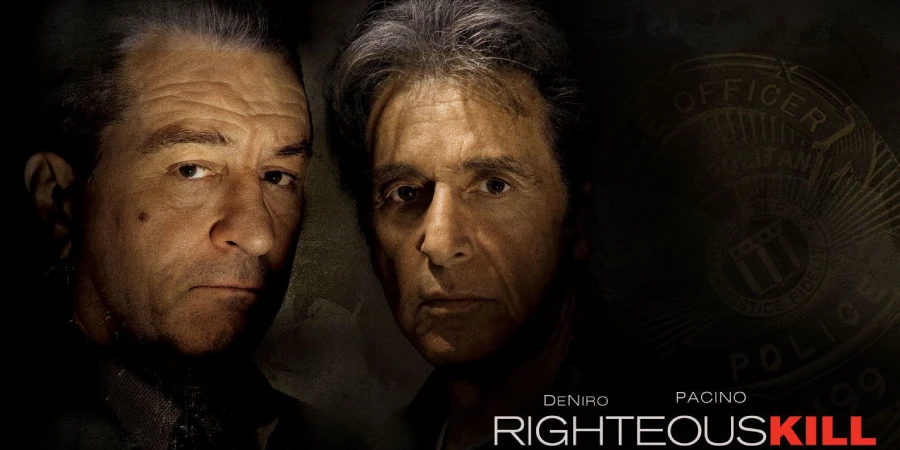
“Righteous Kill” follows two veteran New York City detectives, Turk (Robert De Niro) and Rooster (Al Pacino), as they investigate a series of vigilante murders. The film opens with a videotaped confession by Turk, admitting to multiple killings.
The Serial Killer Emerges
The murders are of criminals who have escaped justice, leading the detectives to believe they are dealing with a vigilante killer. The victims all have a poem left at the crime scene, signed by someone who calls themselves “Poetry Boy.”
Tension Between Partners
As the investigation progresses, tensions rise between Turk and Rooster. The two detectives have been partners for many years, but the case begins to test their trust in each other.
New Leads and Suspicions
A pair of younger detectives, Perez (John Leguizamo) and Riley (Donnie Wahlberg), suspect Turk might be the vigilante due to his temper and proximity to many of the crime scenes. As evidence mounts against Turk, Rooster tries to defend his partner.
The Unraveling Mystery
As the investigation deepens, it becomes clear that the real vigilante killer is trying to frame Turk. The tension reaches a boiling point when Rooster confronts Turk, revealing a twist in their partnership and the true nature of the killer.

Movie Ending
In the climax, it is revealed that Rooster is the actual vigilante killer, not Turk. Rooster’s sense of justice led him to take the law into his own hands, killing criminals he believed deserved punishment. In a final confrontation, Turk is forced to confront his partner, leading to a dramatic and tragic resolution.
Are There Post-Credits Scenes?
No, “Righteous Kill” does not have any post-credits scenes.
Type of Movie
This film is a crime thriller with elements of a psychological drama, focusing on themes of justice, morality, and friendship.
Cast
- Robert De Niro as Detective Tom “Turk” Cowan
- Al Pacino as Detective David “Rooster” Fisk
- Carla Gugino as Karen Corelli
- John Leguizamo as Detective Simon Perez
- Donnie Wahlberg as Detective Ted Riley
- Curtis “50 Cent” Jackson as Spider
Film Music and Composer
The film’s music is composed by Ed Shearmur, featuring a suspenseful score that enhances the thriller atmosphere.


Filming Locations
- New York City: The film was shot in various locations across NYC, capturing the gritty and bustling urban environment crucial to the story.
- Staten Island: Some scenes were filmed here, contributing to the authentic New York backdrop.
These locations help ground the film in the city’s vibrant and diverse atmosphere, reflecting the film’s gritty narrative.
Awards and Nominations
“Righteous Kill” did not receive significant awards or nominations but was notable for reuniting De Niro and Pacino in starring roles.
Behind the Scenes Insights
- The film was marketed heavily on the reunion of De Niro and Pacino, who had not shared significant screen time together since “Heat” (1995).
- De Niro and Pacino’s on-screen chemistry and history as iconic actors were pivotal to the film’s appeal.
Inspirations and References
The film explores themes common in crime thrillers, such as vigilante justice and the moral ambiguity of law enforcement, drawing inspiration from classic detective narratives.
Alternate Endings and Deleted Scenes
There are no widely known alternate endings or deleted scenes. The film’s narrative is straightforward, focusing on the twist involving the main characters.
Memorable Scenes and Quotes
Key Scenes
- Turk’s Confession: The film opens with Turk’s videotaped confession, setting the tone for the unfolding mystery.
- Final Confrontation: The dramatic reveal of Rooster as the true killer, leading to a tense and emotional showdown.
Iconic Quotes
- “Most people respect the badge. Everybody respects the gun.” – Rooster
- “You’re my partner, my best friend.” – Turk
Easter Eggs and Hidden Details
- The dynamic between Turk and Rooster parallels the real-life friendship between De Niro and Pacino, adding depth to their performances.
- The film pays homage to classic cop dramas with its focus on moral ambiguity and the personal lives of detectives.
Trivia
- De Niro and Pacino Reunion: This film marks one of the few occasions where De Niro and Pacino share significant screen time, a major draw for audiences.
- 50 Cent’s Role: Curtis Jackson (50 Cent) appears as a nightclub owner, adding to the film’s star-studded cast.
- Box Office Performance: Despite its star power, the film received mixed reviews and had moderate box office success.
Why Watch?
“Righteous Kill” offers a compelling crime thriller experience, driven by the legendary performances of De Niro and Pacino. Their on-screen chemistry and the film’s intriguing plot twists make it a worthwhile watch for fans of the genre.
Director’s Other Movies
- 88 Minutes (2007)
- The Poison Rose (2019)
- Two for the Money (2005)