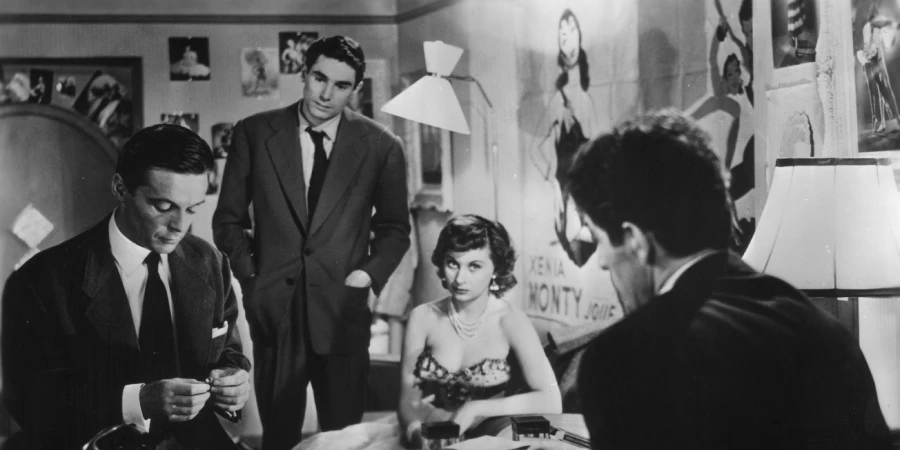

Jules Dassin’s Rififi is not just a crime movie; it is the blueprint of the modern heist film. Shot in stark black and white on the streets of Paris, this French noir classic turns a simple jewelry robbery into a study of tension, honor among thieves, and the slow, inevitable collapse that follows crime.
Dassin, an American director exiled from Hollywood during the McCarthy era, poured his frustration, grit, and realism into this film. The result is a movie that feels cold, methodical, and brutally honest.
Detailed Summary
Tony’s Return from Prison
Tony le Stéphanois is released from prison after serving five years. He is older, worn down, and out of touch with the underworld that has moved on without him. His girlfriend Mado has left him for a gangster named Pierre, and Tony’s pride is deeply wounded. This humiliation fuels much of his later decision-making.
Tony reconnects with his old friend Jo and meets Mario and César, two skilled criminals. Together, they begin planning what seems impossible: breaking into a high-end jewelry store safe located behind thick concrete and alarm systems.
Planning the Heist
Unlike many crime films, Rififi spends significant time on preparation. We see detailed discussions about tools, timing, escape routes, and risks. César, an Italian safecracker, becomes essential to the plan.
What stands out is how professional and disciplined these men are. There’s no bravado here, only calculation.
The Legendary Silent Heist Sequence
The heist itself lasts nearly 30 minutes with no dialogue and no music. Every sound matters: a creaking floorboard, a falling piece of plaster, the tapping of tools.
They enter through the roof, drill through concrete, disable the alarm using an umbrella to catch debris, and crack the safe with surgical precision. It is one of the most famous sequences in cinema history because of how it builds unbearable tension without traditional cinematic tricks.
They succeed. The jewels are theirs.
The Beginning of the Collapse
The trouble begins when César secretly steals a diamond for himself and gives it to his lover. This betrayal exposes the crew to Pierre’s gang, who realize who pulled off the robbery.
Pierre kidnaps Jo’s young son to force the gang to hand over the loot.
From this point, the film shifts from a clever crime story to a tragic downfall.

Movie Ending
Tony takes it upon himself to rescue Jo’s kidnapped son. He tracks down Pierre’s gang in a desperate attempt to undo the damage.
In a series of violent confrontations, Tony kills Pierre and retrieves the boy. However, he is mortally wounded in the process. Bleeding heavily, barely conscious, he drives through Paris with the child in the back seat, trying to return him safely to his family.
This final drive is haunting. Tony is fading, his vision blurring, yet his only concern is delivering the boy home.
He manages to reach Jo’s apartment building. With his last strength, he gets the child out of the car. Tony collapses and dies on the street, unnoticed, as the boy runs back to safety.
The jewels, the plan, the precision, the brilliance of the heist — all of it ends in death and loss.
The film makes it painfully clear: crime does not pay, even for the most skilled professionals.
Are There Post-Credits Scenes?
No. The film ends definitively with Tony’s death and does not include any post-credits material.
Type of Movie
Rififi is a French film noir crime thriller that blends meticulous procedural storytelling with tragic fatalism, focusing as much on psychology and honor as on the mechanics of the robbery.
Cast
- Jean Servais as Tony le Stéphanois
- Carl Möhner as Jo le Suédois
- Robert Manuel as Mario Ferrati
- Jules Dassin as César le Milanais
- Marie Sabouret as Mado
- Pierre Grasset as Pierre
Film Music and Composer
Music is used very sparingly. Composer Georges Auric provides a restrained score, but the film is most famous for its deliberate use of silence, especially during the heist, which amplifies tension more effectively than music ever could.

Filming Locations
The film was shot on location in Paris, giving it an authentic, lived-in feel. The narrow streets, apartments, and storefronts contribute to the raw realism. Paris is not romanticized here; it is presented as a gray, unforgiving urban maze that mirrors the characters’ moral landscape.
Awards and Nominations
- Best Director — Cannes Film Festival (Jules Dassin)
- Nominated for BAFTA Award for Best Film
The film was critically acclaimed internationally and became a reference point for future crime cinema.
Behind the Scenes Insights
- Jules Dassin acted in the film because he could not afford another actor for César’s role.
- Dassin was blacklisted in Hollywood and made this film in France as a form of artistic rebirth.
- The silent heist scene was considered extremely risky at the time, but it became the film’s defining feature.
- The film was made on a very tight budget and schedule.
Inspirations and References
The movie is based on the novel Du rififi chez les hommes by Auguste Le Breton. However, Dassin changed much of the tone and structure, making the story darker and more tragic than the book.
Alternate Endings and Deleted Scenes
There are no known alternate endings, but early drafts of the script had a less tragic conclusion. Dassin intentionally chose the fatalistic ending to emphasize the moral consequences of crime.
Book Adaptations and Differences
In the novel, the story is more pulp-oriented and less psychological. The film adds emotional depth, particularly in Tony’s character, and invents the famous silent heist sequence, which is not as prominent in the book.


Memorable Scenes and Quotes
Key Scenes
- The 30-minute silent heist sequence
- Tony confronting Mado after prison
- The kidnapping of Jo’s son
- Tony’s final drive through Paris, dying but determined
Iconic Quotes
- “Rififi” itself, slang for trouble, becomes symbolic of the chaos that follows the robbery.
- Tony’s quiet, restrained dialogue reflecting his old-school criminal code.
Easter Eggs and Hidden Details
- The film avoids glamorizing crime through lighting and framing that make characters look tired and aged.
- Many background extras were real Parisians, enhancing authenticity.
- The safecracking techniques shown were so realistic that the film was reportedly banned in some countries for fear of inspiring criminals.
Trivia
- The word “rififi” became internationally known after this film.
- The heist scene influenced almost every major heist film that followed.
- Jules Dassin later married Melina Mercouri, a major Greek actress and politician.
Why Watch?
Because this is the heist film that taught cinema how to build tension. If you enjoy crime movies, this is essential viewing to understand where the genre’s greatest ideas were born.
Director’s Other Works (Movies)
- Brute Force (1947)
- The Naked City (1948)
- Night and the City (1950)
- Never on Sunday (1960)
- Topkapi (1964)
Recommended Films for Fans
- The Asphalt Jungle (1950)
- Le Cercle Rouge (1970)
- Heat (1995)
- The Killing (1956)
- Ocean’s Eleven (2001)