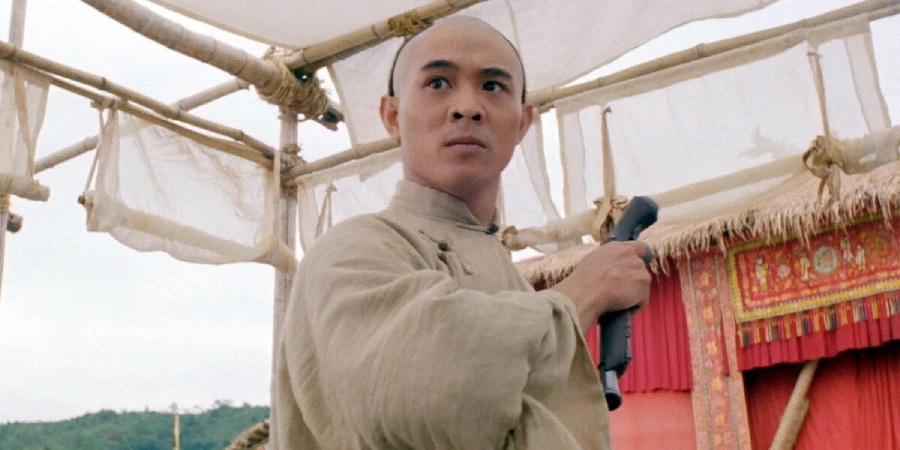

Once Upon a Time in China (1991) is one of the most influential martial arts films ever made. Directed by Tsui Hark and starring Jet Li, the film redefined the kung fu genre by blending national identity, history, and action into a grand cinematic experience. This is not just a fighting movie; it is a cultural statement wrapped in spectacular choreography.
Detailed Summary
The World of Wong Fei-hung
The story takes place in late 19th-century China, a time when the Qing Dynasty is weakening and foreign powers are aggressively expanding their influence. Chinese traditions are under threat from Western imperialism, corruption, and internal chaos.
Wong Fei-hung, a respected martial artist and physician, runs the Po Chi Lam medical clinic. He believes in discipline, morality, and protecting Chinese culture, even as society rapidly changes around him.
Conflict with Foreign Influence
Foreign missionaries and businessmen arrive, bringing firearms, Christianity, and political pressure. While some foreigners claim to help China, others exploit its instability.
A human trafficking ring secretly sells Chinese citizens to America as cheap labor. These criminals operate under the protection of foreign powers, making justice nearly impossible.
Wong Fei-hung opposes violence but refuses to submit to injustice. His calm philosophy often clashes with the hot-headed nature of his students, especially Leung Foon (Yee).
Romance and Moral Tension
Wong Fei-hung develops feelings for Aunt Yee, a modern, Western-educated woman. Their relationship remains restrained due to traditional values, creating emotional tension rather than overt romance.
This subplot reinforces one of the film’s main themes: the struggle between tradition and modernity.
Escalation Toward Violence
As corruption worsens, Wong Fei-hung becomes a target. Foreign soldiers mock Chinese customs, criminals use guns to overpower martial artists, and innocent people are killed.
Despite his belief in restraint, Wong realizes that peace without resistance leads to destruction. The film gradually shifts from philosophical debate to unavoidable confrontation.
Movie Ending
The final act takes place at the harbor, where the human trafficking operation is exposed. Wong Fei-hung confronts the smugglers and foreign-backed criminals who profit from selling Chinese citizens overseas.
The climactic battle is brutal and symbolic. Wong faces enemies armed with guns and modern weapons, emphasizing how traditional kung fu is becoming obsolete in a changing world. Despite his incredible skill, Wong is ultimately shot, a shocking moment that reinforces the film’s realism and political message.
However, Wong does not die. He survives, but the message is clear: martial arts alone cannot protect China anymore.
Leung Foon, once impulsive and reckless, matures through the conflict. He helps stop the traffickers and stands beside Wong, representing the next generation.
The film ends with Wong Fei-hung accepting that China must adapt without abandoning its identity. The victory is partial, the cost is high, and the future remains uncertain. This bittersweet ending is intentional and deeply thematic.
Are There Post-Credits Scenes?
No. Once Upon a Time in China does not include any post-credits or mid-credits scenes. The story concludes fully before the credits roll, following traditional Hong Kong cinema conventions of the era.
Type of Movie
This film is a historical martial arts drama that blends action with political commentary. It goes beyond genre entertainment by addressing colonialism, nationalism, and cultural identity.
Cast
- Jet Li as Wong Fei-hung
- Rosamund Kwan as Aunt Yee
- Yuen Biao as Leung Foon (Yee)
- Jacky Cheung as Bucktooth So
- Yuen Wah as Iron Vest Yim
Jet Li’s portrayal of Wong Fei-hung became the definitive version of the character for an entire generation.
Film Music and Composer
The iconic theme “Under the General’s Orders”, adapted by James Wong Jim, became inseparable from Wong Fei-hung’s legacy. Its patriotic tone reinforces the film’s emotional weight and has been reused in later sequels and adaptations.
Filming Locations
- Foshan, Guangdong – the historical home of Wong Fei-hung, adding authenticity
- Hong Kong studio sets – used for controlled fight choreography
- Harbor and dock locations – central to the film’s climax and symbolism
These locations emphasize China’s vulnerability during foreign expansion and internal decay.
Awards and Nominations
- Hong Kong Film Awards
- Best Action Choreography (Won)
- Best Film (Nominated)
- Best Director (Nominated)
The film was later recognized internationally as a martial arts classic.
Behind the Scenes Insights
- Jet Li performed most of his own stunts with minimal wire work
- Tsui Hark insisted on historical accuracy in costume and setting
- The film revived interest in traditional kung fu cinema during a declining period
- Fight choreography was designed to look realistic rather than exaggerated
Inspirations and References
The film is inspired by the real-life folk hero Wong Fei-hung, a legendary martial artist and physician. It also draws from Chinese historical records, Cantonese opera, and traditional folklore.
Alternate Endings and Deleted Scenes
No official alternate endings exist, but early drafts reportedly included a darker ending where Wong Fei-hung permanently retires after being shot. This was changed to allow continuation in sequels.
Several extended dialogue scenes about Western politics were removed to maintain pacing.
Book Adaptations and Differences
This film is not adapted from a book, but from historical legend. Unlike earlier Wong Fei-hung films, this version portrays him as philosophical and conflicted, rather than purely heroic.
Memorable Scenes and Quotes
Key Scenes
- The ladder fight showcasing balance, precision, and discipline
- Wong Fei-hung being shot during the final battle
- Aunt Yee photographing Wong, symbolizing modernity observing tradition
Iconic Quotes
- “Chinese people are not sick men of Asia.”
- “Kung fu is not for violence, but for discipline.”
Easter Eggs and Hidden Details
- Traditional lion dance movements mirror combat techniques
- Western villains often stand on higher ground, symbolizing power imbalance
- The theme music subtly changes tempo during moments of doubt
Trivia
- This film launched a six-film franchise
- Jet Li was only 28 years old during filming
- Tsui Hark reshaped Wong Fei-hung from myth into human figure
Why Watch?
If you want a martial arts film that respects history, challenges nationalism, and delivers unforgettable action, this is essential viewing. It is smart, emotional, and influential without being preachy.
Director’s Other Works (Movies)
- Zu: Warriors from the Magic Mountain (1983)
- A Chinese Ghost Story (1987)
- Once Upon a Time in China II (1992)
- Once Upon a Time in China III (1993)
- Time and Tide (2000)
- Seven Swords (2005)