
Nanny McPhee arrives as a monstrous hag but leaves as a beautiful woman. This transformation, however, is not for her; it is a reflection of the family she mends. The 2005 film consequently uses this magical visual to tell a poignant story about grief, chaos, and the difficult path to finding order. Ultimately, the ugliness was never truly Nanny McPhee’s to begin with.
Detailed Summary
The Reign of Terror
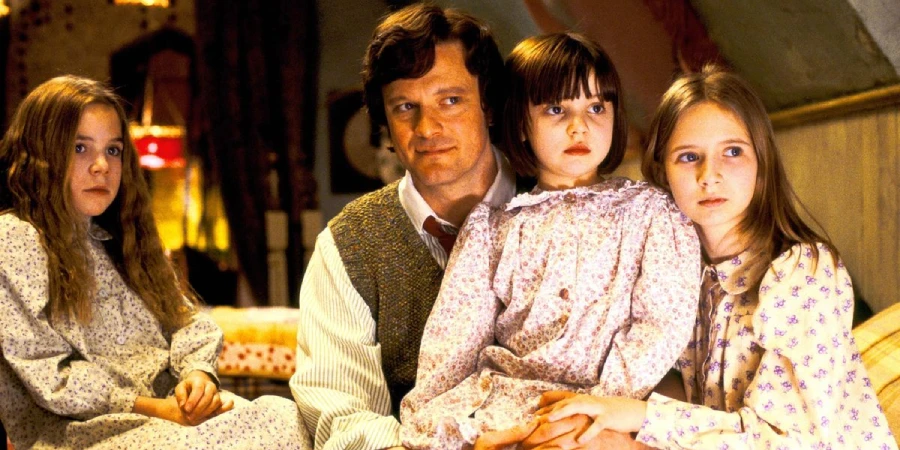
The film introduces the recently widowed Mr. Cedric Brown and his seven unruly children. Following their mother’s death, the children, led by the clever Simon, have systemically driven away seventeen nannies. Their latest act of terror involves faking the consumption of their baby sister, Aggie, which sends the newest nanny fleeing in horror. As a result, Mr. Brown is at his wit’s end, unable to control his children or his precarious financial situation as an undertaker.
The Arrival of Nanny McPhee
A mysterious voice guides Mr. Brown to “Nanny McPhee.” That stormy night, a grotesquely featured woman with a snaggletooth, warts, and a unibrow appears at their door. This is Nanny McPhee. The children immediately try their usual tricks, but her magical cane thwarts them at every turn. For instance, when they refuse to go to bed, she makes them take their own medicine, causing a chaotic kitchen explosion. They are powerless against her magical authority.
The Five Lessons
Nanny McPhee informs the family that she will teach the children five lessons. First, they must learn to go to bed when told. When the children fall ill with measles, she forces them to stay in bed, teaching them the second lesson: to get up when they are told. With each lesson learned, one of Nanny McPhee’s unpleasant facial features magically disappears. Meanwhile, the family’s wealthy and imposing Lady Adelaide Stitch declares she will cut off their allowance unless Mr. Brown remarries within the month, adding immense pressure.
The Threat of Mrs. Quickly
Desperate, Mr. Brown begins courting the garish and manipulative Mrs. Selma Quickly. The children, however, detest her and see her for the gold-digger she is. In addition, they discover that Mrs. Quickly intends to send them away to a workhouse after the wedding. They attempt to sabotage the courtship, but Nanny McPhee uses her magic to make them behave, teaching them the third lesson: to get dressed when told. They later cooperate with their father to formally propose to Mrs. Quickly, thus learning the fourth lesson: to listen.
The Chaotic Wedding
On the wedding day, the children decide to disrupt the ceremony to save themselves and their father from a miserable future. They create a massive food fight using bees, pies, and other chaotic elements. Mrs. Quickly, horrified by the children’s behavior, calls off the wedding and storms out. Following this event, the children realize their father will lose everything. They confess their scheme to him, and he forgives them. He then realizes his love for the scullery maid, Evangeline, who has always cared for the children. Consequently, the fifth and final lesson is learned: to do as they are told, but this time out of love and understanding, not obedience.

Movie Ending
The ending of Nanny McPhee provides a complete and heartwarming resolution. With Mrs. Quickly gone, Lady Adelaide is about to disinherit the family. However, Simon speaks up and asks his father to marry Evangeline, whom everyone loves. Lady Adelaide is initially appalled by the idea of her nephew marrying a servant. Nonetheless, Evangeline reveals she is educated and well-read, impressing Lady Adelaide, who gives her blessing.
Cedric and Evangeline marry right there, securing the family’s future. As they say their vows, magic snow begins to fall inside the church, a final magical gift from Nanny McPhee. This fulfills the last of her conditions. With all five lessons learned, Nanny McPhee’s final wart and her large nose disappear, revealing her true, beautiful face.
Her work is done. As she says, “When you need me but do not want me, then I must stay. When you want me but no longer need me, then I have to go.” The Brown family now wants her, but they no longer need her guidance. Therefore, she quietly walks away into the snow, her purpose fulfilled.
Are There Post-Credits Scenes?
No, there are no post-credits scenes in Nanny McPhee.
Type of Movie
Nanny McPhee is a fantasy family comedy-drama. Its tone is whimsical and magical, yet it is grounded in the real-world emotions of grief and family dysfunction. The film balances slapstick humor with genuinely touching moments. In addition, there is a slightly dark, almost gothic undertone, especially in the film’s initial visual design and the children’s macabre behavior, which sets it apart from more saccharine family films.
Cast
- Emma Thompson – Nanny McPhee
- Colin Firth – Cedric Brown
- Kelly Macdonald – Evangeline
- Angela Lansbury – Lady Adelaide Stitch
- Celia Imrie – Mrs. Selma Quickly
- Thomas Brodie-Sangster – Simon Brown
- Eliza Bennett – Tora Brown
- Jennifer Rae Daykin – Lily Brown
- Raphaël Coleman – Eric Brown
- Samuel Honywood – Sebastian Brown
- Holly Gibbs – Christianna Brown
- Hebe and Zinnia Barnes – Agatha “Aggie” Brown
Film Music and Composer
The enchanting score for Nanny McPhee was composed by Patrick Doyle, a frequent collaborator with Kenneth Branagh and a veteran of fantasy and period film scores. His music masterfully swings between ominous, mischievous, and heartwarming. Notably, the main theme for Nanny McPhee is both mysterious and reassuring, evolving as her character does. The track “The Snow in August,” which plays during the film’s climax, is a particularly beautiful piece that captures the magic and emotional resolution of the story.


Filming Locations
The film was shot primarily in the United Kingdom, creating its quintessentially British, fairy-tale atmosphere. The vibrant, fantastical Brown family house was a purpose-built set constructed in Penn Street, Buckinghamshire. Rural scenes were filmed in the picturesque county of Dorset, including the village of Studland. These locations were specifically chosen for their timeless, storybook quality, which perfectly complements the film’s magical realism and Victorian-era setting.
Awards and Nominations
While not a major awards contender, Nanny McPhee received recognition for its family-friendly appeal and artistic design. Specifically, Emma Thompson won Best Actress at the Women Film Critics Circle Awards. The film also garnered several nominations, including a Young Artist Award for Best International Family Feature Film and an Empire Award for Best British Film.
Behind the Scenes Insights
- Emma Thompson spent nine years writing the screenplay. She found adapting the episodic nature of the books into a cohesive three-act structure to be a significant challenge.
- The makeup for Nanny McPhee took about an hour and a half to apply each day. Furthermore, Thompson insisted on keeping the uncomfortable prosthetics on all day to stay in character.
- Director Kirk Jones wanted the film’s color palette to reflect the family’s emotional journey. The movie therefore starts with muted, drab colors and gradually becomes more vibrant and saturated as the family heals.
- The seven child actors spent weeks together before filming began to build a believable sibling dynamic. They even had lessons together to foster a sense of a real family unit.
Inspirations and References
The most obvious inspiration for Nanny McPhee is the Mary Poppins series of books and the famous Disney film. Both feature a magical nanny who arrives to fix a dysfunctional family and departs when her work is done. However, Nanny McPhee is presented as an inverse of Mary Poppins; she is initially ugly and stern, whereas Mary is “practically perfect in every way.” The film’s aesthetic also draws from Victorian-era fairy tales and the darkly humorous stories of authors like Roald Dahl.
Alternate Endings and Deleted Scenes
No official alternate endings for Nanny McPhee have been released. However, some minor scenes were trimmed for pacing. For example, there were reportedly extensions of the children’s pranks and more interactions between Mr. Brown and his colleagues at the funeral parlor. Nevertheless, the final cut largely represents the intended story envisioned by Emma Thompson and Kirk Jones.
Book Adaptations and Differences
Yes, Nanny McPhee is based on the Nurse Matilda book series written by Christianna Brand in the 1960s. Emma Thompson adapted the stories for the screen, making several key changes.
In the books, the family is much larger, and the setting is more ambiguously old-fashioned. The film, in contrast, creates a specific Victorian-era world. A significant addition for the movie is the entire subplot involving Mr. Brown’s widowhood, his financial desperation, and the ultimatum from Lady Adelaide to remarry. This cinematic invention provides the story with a strong narrative drive and a ticking clock that are absent from the episodic books. Moreover, the character of Evangeline and her romance with Mr. Brown were created specifically for the film.


Memorable Scenes and Quotes
Key Scenes
- The Kitchen Chaos: Nanny McPhee’s first major display of power, where she uses her magical staff to make the children wreak havoc on the kitchen against their will until they say “please.”
- The Measles Trick: The children fake having measles to get out of lessons, but Nanny McPhee magically makes them truly sick, forcing them to endure a disgusting remedy until they learn their lesson.
- The Food Fight Wedding: The film’s climax, where the children orchestrate a massive food fight to sabotage their father’s wedding to the awful Mrs. Quickly, causing utter pandemonium.
- The Snow in August: The beautiful, magical moment when snow falls inside the church after Cedric marries Evangeline, signifying that all is finally right with the family.
Iconic Quotes
- “I did knock. I find it’s best to knock.” – Nanny McPhee
- “When you need me but do not want me, then I must stay. When you want me but no longer need me, then I have to go.” – Nanny McPhee
- “The person you need is Nanny McPhee.” – The mysterious voice
- “It’s the nits! She’s given us all nits!” – Mrs. Quickly (mistaking rice for lice)
- “Please, Nanny McPhee.” – Simon Brown
Easter Eggs and Hidden Details
- Nanny McPhee’s Transformation: The most prominent detail is that one of Nanny McPhee’s ugly features vanishes each time the children learn one of her five lessons. This is a visual representation of the family’s inner beauty growing.
- Christianna’s Name: The baby of the family, Aggie, is given the middle name of Christianna in a deleted christening scene, a clear nod to Christianna Brand, the author of the source novels. The fifth child is also named Christianna.
- The Rattle: The baby’s silver rattle, a gift from her late mother, plays a key role. It’s the one thing the children won’t destroy, and it’s what Mrs. Quickly breaks, revealing her true nature.
Trivia
- Nanny McPhee features two actors who would later star in the massively popular series Game of Thrones: Thomas Brodie-Sangster (Simon) and Patrick Malahide (Vicar).
- Christianna Brand, the author of the Nurse Matilda books, was reportedly told the stories by her grandfather.
- The film’s bright, almost surreal color palette was inspired by the classic movie The Wizard of Oz.
- Imelda Staunton, who plays the cook Mrs. Blatherwick, is married to Jim Carter, who appears in the sequel, Nanny McPhee and the Big Bang.
Why Watch?
This film is a must-see for its clever subversion of the classic “magical nanny” trope. It brilliantly mixes dark humor with genuine heart. Ultimately, its story about healing from grief is both timeless and deeply satisfying, making it perfect for viewers of all ages.
Director’s Other Movies
- Waking Ned (1998)
- What to Expect When You’re Expecting (2012)
- Bill (2015)
Recommended Films for Fans
- Mary Poppins (1964)
- Lemony Snicket’s A Series of Unfortunate Events (2004)
- Matilda (1996)
- Paddington (2014)
- Bedknobs and Broomsticks (1971)