
Kung Fu Panda 3 (2016) continues Po’s journey in an energetic, heartfelt, and visually rich martial-arts fantasy adventure created by DreamWorks Animation.
Detailed Summary
Po Meets His Biological Father
The story opens with Master Oogway in the Spirit Realm, where he is confronted by Kai, a powerful ancient warrior who has defeated many kung fu masters and stolen their chi. Meanwhile, in the mortal world, Po is trying (and failing) to become a teacher under Master Shifu’s guidance. This leads to Po meeting his long-lost biological father, Li Shan, who arrives at the Jade Palace after sensing that his son is alive.
The Return of Kai
Back in the Spirit Realm, Kai defeats Oogway and steals his chi, gaining the power to return to the mortal world. Once there, Kai begins turning kung fu masters into jade warriors, creating a terrifying army. This is where the stakes truly rise, as every defeat strengthens Kai further.
Po Learns About Chi
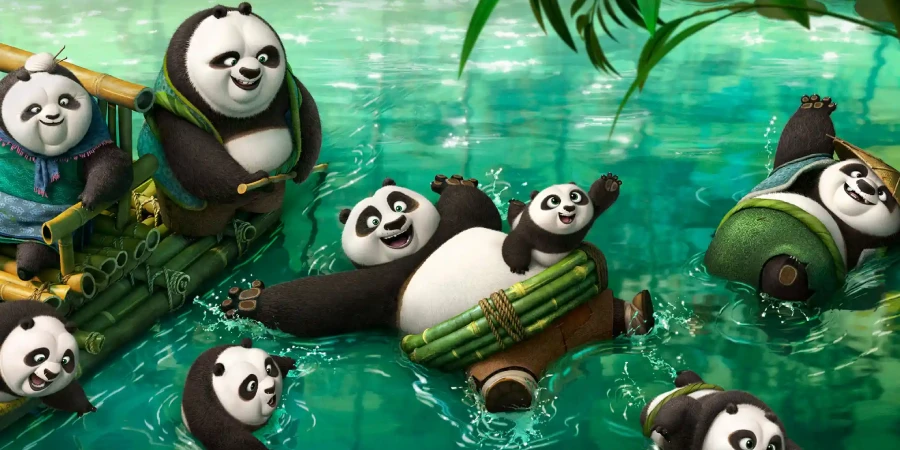
Li Shan takes Po to the hidden Panda Village to teach him about panda traditions and the mystical power of chi. The pandas reveal their culture of peace, playfulness, and rolling-based martial arts. However, Po struggles to master chi, especially since the pandas themselves no longer remember how to harness it.
The Attack on the Panda Village
Kai eventually discovers Po’s location. Despite Po’s attempts to evacuate the village, he realizes he must train the pandas to fight using their unique talents: ribbon dancing, dumpling making, hugging, rolling, and more. This part of the film blends humor with meaningful character growth as Po steps into the role of teacher.
Movie Ending
The final battle is the emotional and thematic heart of the movie. When Kai attacks the Panda Village, Po decides he isn’t ready to defeat Kai using traditional kung fu or chi mastery. Instead, he remembers Oogway’s teaching: being yourself is your greatest strength. Po embraces his identity as the Dragon Warrior, a panda, a teacher, and a friend.
Po sacrifices himself by using the Wuxi Finger Hold on himself, sending both him and Kai into the Spirit Realm. There, a visually stunning showdown unfolds. Po cannot defeat Kai physically, but the pandas and his friends—led by Li Shan, Shifu, and Mr. Ping—learn to channel chi together. They send a massive surge of golden energy into the Spirit Realm.
Empowered with this collective chi, Po transforms into a radiant, chi-infused Dragon Warrior. In his final clash with Kai, Po overpowers him and releases the stolen chi of all the masters Kai had captured.
After Kai is destroyed, Po momentarily remains in the Spirit Realm. Oogway appears and offers Po the chance to stay, but also gives him the freedom to return. Po chooses life, waking up back in the mortal world surrounded by everyone he loves.
The film closes with Po training the entire Panda Village and his friends, merging the teachings of all three worlds: kung fu, chi, and the panda way.
Are There Post-Credits Scenes?
There is no post-credits scene in Kung Fu Panda 3. The movie ends cleanly with its final scene before the credits roll.
Type of Movie
Kung Fu Panda 3 is an animated martial-arts comedy adventure film blending heartfelt emotional themes with stylized action and fantasy elements.
Cast
- Jack Black as Po
- Bryan Cranston as Li Shan
- Dustin Hoffman as Master Shifu
- Angelina Jolie as Tigress
- Jackie Chan as Monkey
- Lucy Liu as Viper
- Seth Rogen as Mantis
- David Cross as Crane
- J.K. Simmons as Kai
- James Hong as Mr. Ping
- Randall Duk Kim as Oogway
Film Music and Composer
The score was composed by Hans Zimmer, known for his sweeping orchestral sound combined with cultural instrumentation. The music enhances both the emotional depth and the energetic fight scenes, using traditional Chinese influences to anchor the world-building.
Filming Locations
Though an animated film, Kung Fu Panda 3’s visual design was heavily inspired by:
- Mount Qingcheng
- Jiuzhaigou Valley
- Mount Emei
- Traditional Chinese architecture and bamboo forests
These real-world inspirations were crucial for creating an authentic, culturally rich aesthetic. The Panda Village, for instance, reflects the serene mountain landscapes of Sichuan.
Awards and Nominations
- Nominated for Annie Awards, including Best Animated Feature
- Won Art Directors Guild Award for Excellence in Production Design
- Received several nominations for its animation, music, and voice acting across different ceremonies
Behind the Scenes Insights
- DreamWorks collaborated with Oriental DreamWorks in China, making it one of the first major Hollywood animated films co-produced in China.
- Jack Black recorded many lines while standing and acting out Po’s movements to capture authentic energy.
- Animators studied real pandas at the Chengdu Research Base to refine body language, weight, and movement.
- The design of Kai was inspired by ancient Chinese statues and mythical beasts.
- Hans Zimmer incorporated traditional Chinese musicians for authenticity.
Inspirations and References
- The movie is heavily inspired by Daoist principles, particularly the balance of inner peace and personal identity.
- Po’s chi journey reflects classic kung fu film tropes of spiritual enlightenment.
- The story references Chinese folklore and ancient martial arts myths involving chi.
Alternate Endings and Deleted Scenes
- Early drafts included a longer subplot about Tigress learning to accept Po’s new panda family.
- Kai originally had a more comedic persona before being rewritten as a more intimidating villain.
- A scene where Po attempts meditation with Shifu for a longer sequence was removed to improve pacing.
Book Adaptations and Differences
The film is not based on a book, but novelizations were released afterwards. These include minor expanded dialogues and internal monologues, but no major plot differences.
Memorable Scenes and Quotes
Key Scenes
- Oogway battling Kai in the Spirit Realm.
- Po awkwardly trying to teach kung fu for the first time.
- The emotional reunion between Po and Li Shan.
- The pandas training with their unique, nontraditional techniques.
- The dazzling final Spirit Realm battle with Po’s Dragon Warrior chi transformation.
Iconic Quotes
- “If you only do what you can do, you will never be more than you are now.” – Master Shifu
- “Your real strength comes from being the best you… you can be.” – Po
- “I have returned… for your chi!” – Kai
Easter Eggs and Hidden Details
- The Spirit Realm’s environment subtly forms the shape of a yin-yang symbol in multiple shots.
- Kai’s jade amulets bear the engraved symbols of each master he captured.
- Po’s Dragon Warrior chi form resembles a Chinese guardian lion statue.
- The training sequences mirror moments from Kung Fu Panda (2008) as callbacks for long-time fans.
Trivia
- Kai is the first supernatural villain in the trilogy.
- The movie was released in both English and Mandarin, with different voice casts.
- This film marked Jack Black’s 3rd time voicing Po across feature films.
- Po’s fur had more than 2.8 million individual hairs rendered.
Why Watch?
Because it blends heart, humor, philosophy, and beautifully choreographed action into a film that appeals to both kids and adults. It provides a satisfying continuation of Po’s journey with visually stunning animation and meaningful character development. If you enjoy movies that mix laughter with emotional depth, this is a must-watch.
Directors’ Other Movies
Co-directed by Jennifer Yuh Nelson and Alessandro Carloni.
- Kung Fu Panda 2 (2011)
- The Darkest Minds (2018)
- Kung Fu Panda (2008) – supervising animator
- How to Train Your Dragon (2010) – story artist