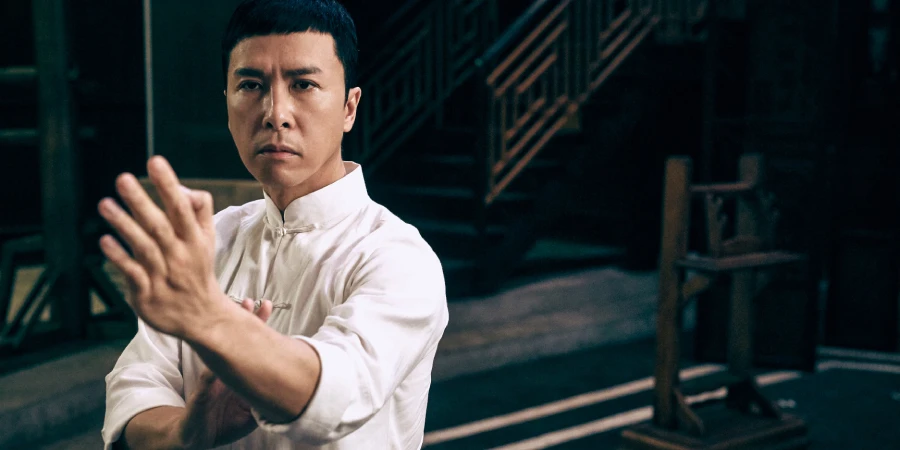

Ip Man 3 is a martial arts drama that balances emotional depth, philosophical themes, and intense hand-to-hand combat. Directed by Wilson Yip and starring Donnie Yen, the film shifts its focus slightly from large-scale political conflict to personal struggle, legacy, and mortality, making it one of the most intimate entries in the Ip Man series.
Detailed Summary
Life in Hong Kong and a Fragile Peace
The story takes place in 1959 Hong Kong. Ip Man lives a relatively peaceful life, teaching Wing Chun and spending time with his wife, Cheung Wing-sing. However, trouble arrives when a powerful American-backed gangster, Frank, begins forcibly acquiring land to build a new school. This disrupts the local community and drags Ip Man into conflict.
The School Conflict and Master Ma
Ip Man and other martial arts masters unite to protect a local school from Frank’s enforcers. During this conflict, Master Ma becomes a key figure. While initially appearing honorable, his motivations are complicated by pride and ambition. This subplot introduces the film’s recurring theme: the danger of ego in martial arts.
Bruce Lee’s Arrival
A young Bruce Lee arrives, eager to learn from Ip Man. Although his role is brief, it symbolizes the passing of knowledge to the next generation. Ip Man’s guidance is less about techniques and more about discipline, humility, and restraint.
The Inner Battle: Illness and Time
Parallel to the physical conflicts, Ip Man faces a devastating personal challenge: his wife is diagnosed with terminal cancer. The film slows down here, focusing on quiet moments, conversations, and shared meals. These scenes emphasize that the greatest fights are not always fought with fists.
Ip Man vs Frank
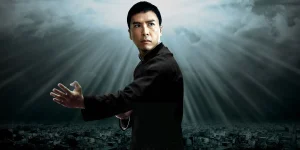
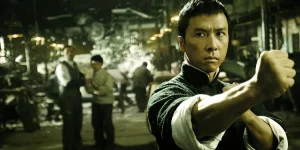
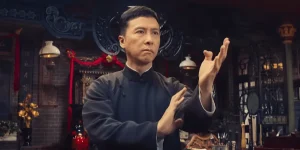
Frank challenges Ip Man directly, leading to a brutal showdown between Wing Chun and Western boxing. Unlike previous antagonists, Frank is not portrayed as purely evil but as someone driven by dominance and reputation.
Movie Ending
The final act intertwines physical resolution and emotional closure. Ip Man confronts Frank in a highly anticipated duel. The fight is raw, exhausting, and grounded, with neither fighter gaining a decisive upper hand. Ultimately, the match ends in a draw, symbolizing mutual respect rather than victory. Frank acknowledges Ip Man’s strength and abandons his violent pursuit of the school.
However, the true emotional climax comes afterward. Ip Man’s wife’s condition worsens. Knowing her time is limited, Ip Man spends his remaining moments with her instead of focusing on martial arts or public recognition. In a deeply moving sequence, they share their final days together, walking, talking, and reminiscing.
Cheung Wing-sing eventually passes away peacefully. Ip Man, devastated but composed, honors her memory by continuing to live with dignity and humility. The film closes with Ip Man returning to teaching, while Bruce Lee departs to forge his own path. The ending underscores that legacy is not about fame or undefeated records, but about how one lives and loves.
Are There Post-Credits Scenes?
No. Ip Man 3 does not include a post-credits or mid-credits scene. The story concludes definitively, allowing the emotional weight of the ending to settle without teasing future events.
Type of Movie
Ip Man 3 is a martial arts drama that blends biographical elements with action cinema. Unlike typical fight-driven kung fu films, it places strong emphasis on family, honor, and mortality.
Cast
- Donnie Yen as Ip Man
- Lynn Hung as Cheung Wing-sing
- Mike Tyson as Frank
- Zhang Jin as Cheung Tin-chi
- Patrick Tam as Ma King-sang
- Danny Chan as Bruce Lee
Film Music and Composer
The score was composed by Kenji Kawai, known for his ability to blend traditional Eastern instruments with modern orchestration. The music reinforces the film’s emotional gravity, especially during scenes involving Ip Man’s wife, using restrained melodies rather than bombastic themes.

Filming Locations
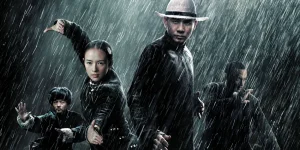
The movie was primarily filmed in Hong Kong, using studio-built sets to recreate 1950s neighborhoods. These locations are important because they ground the story in realism, emphasizing Ip Man’s role as a community figure rather than a mythic hero. The intimate environments contrast with the larger-than-life combat scenes.
Awards and Nominations
- Nominated for Best Action Choreography at the Hong Kong Film Awards
- Zhang Jin won Best Supporting Actor at several regional Asian film awards
- Widely praised by critics for its fight choreography and emotional storytelling
Behind the Scenes Insights
- Donnie Yen was heavily involved in designing the fight choreography.
- The fight between Ip Man and Mike Tyson was filmed over several days due to its physical intensity.
- Mike Tyson trained specifically to adapt his boxing style to cinematic martial arts.
- Wilson Yip intentionally reduced large crowd fights to focus on personal combat and emotional storytelling.
- The illness storyline was inspired by real historical accounts of Ip Man’s later life.
Inspirations and References
The film is loosely inspired by the real life of Ip Man, particularly his later years in Hong Kong. It also draws from traditional Chinese martial philosophy, emphasizing restraint, balance, and moral responsibility over aggression.
Alternate Endings and Deleted Scenes
Some deleted scenes reportedly expanded on Bruce Lee’s training, but they were removed to keep the focus on Ip Man’s personal journey. No alternate ending was filmed, as the director was committed to a somber, definitive conclusion.
Book Adaptations and Differences
The film is not directly adapted from a book, but it diverges from historical reality in several areas, particularly the portrayal of villains and specific fights. The emotional core, however, aligns closely with accounts of Ip Man’s devotion to his wife.
Memorable Scenes and Quotes
Key Scenes
- Ip Man and Frank’s one-on-one duel.
- Ip Man spending quiet moments walking with his wife.
- The final farewell between Ip Man and Cheung Wing-sing.
- Bruce Lee’s respectful departure.
Iconic Quotes
- “Martial arts are for self-defense, not aggression.”
- “Time is the one opponent we can never defeat.”
Easter Eggs and Hidden Details
- Bruce Lee’s posture and movements subtly mirror his later real-life fighting style.
- Wing Chun wooden dummy scenes foreshadow techniques used in later fights.
- The school setting mirrors locations from Ip Man (2008), creating visual continuity.
Trivia
- This was the first Ip Man film to focus heavily on romance and illness.
- Mike Tyson reportedly called Donnie Yen one of the fastest fighters he had ever worked with.
- The film was originally planned as the final entry in the series.
Why Watch?
Watch Ip Man 3 if you want more than just martial arts. It delivers action, but also asks deeper questions about aging, love, pride, and what truly matters when strength begins to fade.
Director’s Other Works
- Ip Man (2008)
- Ip Man 2 (2010)
- Ip Man 4: The Finale (2019)
- Flash Point (2007)
- SPL: Sha Po Lang (2005)