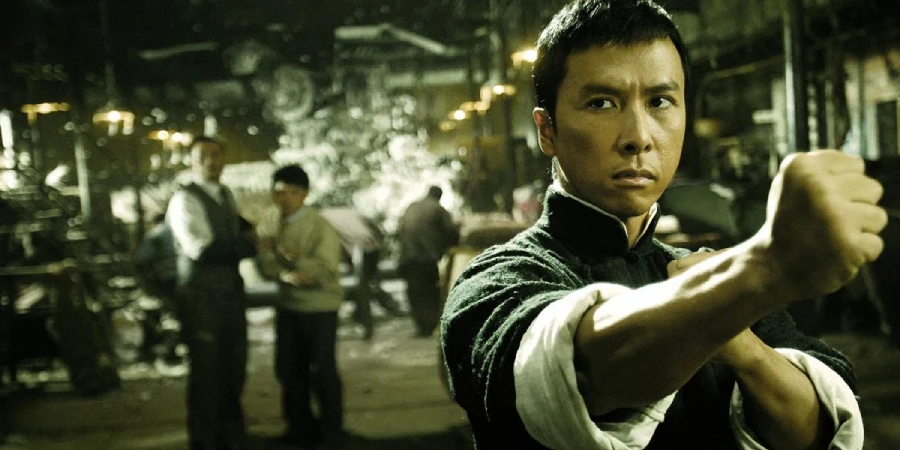

Ip Man (2008) is a landmark martial arts film that redefined modern kung fu cinema. Directed by Wilson Yip and starring Donnie Yen, the movie blends historical drama, martial arts philosophy, and emotional storytelling into a powerful and influential work.
Detailed Summary
Foshan Before the Storm
The film opens in 1930s Foshan, a prosperous Chinese city known for its martial arts schools. Ip Man lives a quiet, wealthy life with his wife and son. Although he is a master of Wing Chun, he does not run a school and prefers friendly sparring matches at home. His character is portrayed as calm, humble, and deeply principled.
Martial Arts as Honor, Not Ego
Various fighters challenge Ip Man to test their skills. He defeats them effortlessly, but without arrogance. These early scenes establish a key theme: true martial arts mastery lies in discipline and character, not dominance. His reputation grows, even though he avoids public attention.
Japanese Occupation and Collapse of Normal Life
Everything changes when the Japanese army occupies Foshan during the Second Sino-Japanese War. Food becomes scarce, wealth disappears, and dignity is stripped away. Ip Man’s family loses their home and struggles to survive. Martial artists are humiliated, and many are forced to fight for food.
This section is emotionally heavy and marks the film’s shift from elegant martial arts to survival, resistance, and moral endurance.
The Rise of Oppression Through Martial Arts
Japanese General Miura establishes a brutal system where Chinese martial artists must fight Japanese soldiers for bags of rice. Many are killed. Ip Man initially refuses to fight, holding onto his moral stance, but witnessing the death of a close friend pushes him toward action.
Ip Man Takes a Stand
Ip Man challenges the Japanese soldiers, defeating ten black belts in a single fight. This moment becomes one of the most iconic scenes in martial arts cinema. It is not just about strength, but about restoring dignity to an oppressed people.
His actions inspire hope but also make him a target.
Movie Ending
In the final act, Ip Man is forced into a public fight against General Miura, who wishes to prove Japanese superiority through martial arts. The match takes place in front of Chinese civilians and Japanese officers, turning it into a symbolic confrontation between occupier and oppressed.
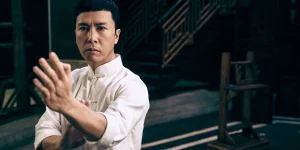
Miura uses aggressive karate techniques, relying on brute force. Ip Man counters with pure Wing Chun, emphasizing speed, efficiency, and control. Despite being beaten and exhausted, Ip Man refuses to fall. His resilience fuels the crowd’s quiet but powerful support.
Ip Man ultimately defeats Miura in a brutal and decisive final exchange. However, before the outcome can lead to freedom, Japanese soldiers open fire on the crowd. Chaos erupts. Ip Man is shot but survives, rescued by allies.
The film ends with Ip Man and his family escaping Foshan, leaving behind their homeland. The closing text reveals that Ip Man later moves to Hong Kong, where he opens a Wing Chun school and eventually becomes the teacher of Bruce Lee. The ending is bittersweet: justice is briefly achieved, but true peace remains distant.
Are There Post-Credits Scenes?
No. Ip Man (2008) does not include any post-credits or mid-credits scenes.
Type of Movie
Ip Man is a martial arts biographical drama that combines historical fiction with intense action and emotional realism. It focuses as much on moral strength as physical combat.
Cast
- Donnie Yen as Ip Man
- Simon Yam as Zhou Qingquan
- Lynn Hung as Cheung Wing-sing
- Hiroyuki Ikeuchi as General Miura
- Fan Siu-wong as Jin Shanzhao
- Gordon Lam as Li Zhao
Film Music and Composer
The score was composed by Kenji Kawai, known for blending traditional Asian instruments with dramatic orchestration. The music reinforces the film’s emotional weight, particularly during moments of loss, resistance, and triumph.


Filming Locations
The movie was primarily shot in Foshan, China, and various locations across Shanghai.
These locations are significant because:
- Foshan is Ip Man’s real hometown, grounding the film in authenticity.
- Traditional architecture enhances the historical atmosphere.
- War-damaged sets visually reinforce the collapse of order and peace.
Awards and Nominations
- Won Best Film at the Hong Kong Film Awards
- Donnie Yen won Best Actor at multiple Asian film awards
- Nominated for Best Action Choreography, Best Director, and Best Cinematography
Behind the Scenes Insights
- Donnie Yen trained intensively in Wing Chun to ensure authenticity.
- The ten-black-belt fight took several days to shoot and required extreme physical endurance.
- Wilson Yip deliberately minimized wire work to keep fights grounded and realistic.
- Ip Man’s family approved the respectful portrayal of his character.
Inspirations and References
- Based on the real-life Ip Man, though heavily dramatized.
- Inspired by classic kung fu films of the 1970s.
- Themes reflect traditional Chinese philosophy: humility, perseverance, and honor.
Alternate Endings and Deleted Scenes
- A longer ending showing Ip Man’s early days teaching in Hong Kong was filmed but cut.
- Several domestic family scenes were removed to improve pacing.
- No officially released alternate ending exists.
Book Adaptations and Differences
There is no direct book adaptation. Historical liberties include:
- Exaggerated conflicts with Japanese officers.
- Simplified timelines for dramatic impact.
- Fictionalized supporting characters.
Memorable Scenes and Quotes
Key Scenes
- Ip Man defeating ten black belts alone
- The silent crowd supporting Ip Man during the final fight
- Ip Man refusing food earned through humiliation
Iconic Quotes
- “Martial arts are for strengthening the body and soul.”
- “I don’t fight because I want to win. I fight because I have no choice.”
Easter Eggs and Hidden Details
- Bruce Lee is subtly referenced in the ending text.
- Wing Chun techniques are performed exactly as taught in real schools.
- Miura’s dojo symbols reference real Imperial Japanese military insignia.
Trivia
- Donnie Yen suffered minor injuries during filming but refused to stop.
- The film sparked a global resurgence of Wing Chun.
- It became one of the highest-grossing martial arts films in Asia.
Why Watch?
You should watch Ip Man if you value meaningful action, historical drama, and characters driven by integrity. It is not just about fighting, but about standing firm when everything else is taken away.
Director’s Other Works (Movies)
- SPL: Sha Po Lang (2005)
- Flash Point (2007)
- Ip Man 2 (2010)
- Ip Man 3 (2015)
- Ip Man 4: The Finale (2019)
- The White Storm 2 (2019)
Recommended Films for Fans
- Fearless (2006)
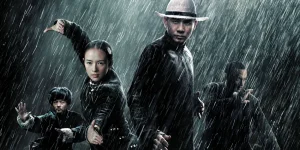
- The Grandmaster (2013)
- Once Upon a Time in China (1991)
- Legend of the Fist: The Return of Chen Zhen (2010)
- Kung Fu Hustle (2004)