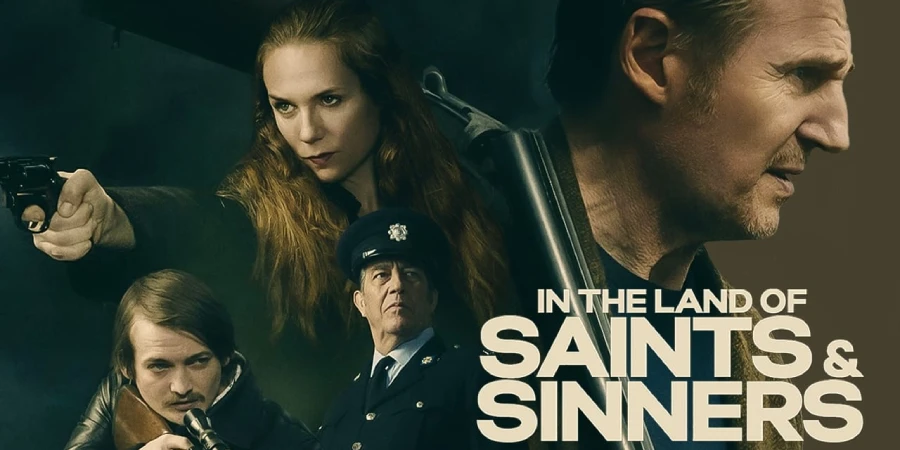

In the Land of Saints and Sinners (2023) is a somber, atmospheric crime thriller set in rural Ireland during one of the country’s darkest political periods. Anchored by a restrained but powerful performance from Liam Neeson, the film explores morality, redemption, and whether violence can ever truly be left behind.
Detailed Summary
A Quiet Life in a Violent Land
The story takes place in 1974 Ireland, during the height of The Troubles. In the remote coastal village of Glen Colm Cille, Finbar Murphy lives a seemingly peaceful life. He is a soft-spoken book salesman who helps elderly neighbors, fixes small problems in town, and keeps to himself.
What no one knows is that Finbar once lived a very different life. He was a professional assassin, long retired, having sworn never to kill again.
The town itself reflects Ireland at the time. Catholic values, community loyalty, and fear of political violence exist side by side. The calm is fragile, and everyone senses that it could break at any moment.
The Arrival of the IRA Cell
Peace shatters when a small IRA splinter group arrives in town after a bombing goes wrong in Belfast. Among them is Doireann McCann, a ruthless and ideologically driven woman who shows little hesitation toward violence.
The group hides in the countryside while waiting for transportation out of the region. Although they claim to be freedom fighters, their behavior reveals something darker: intimidation, cruelty, and complete disregard for innocent lives.
Their presence alone creates tension, but matters become personal when Finbar begins to see how far they are willing to go.
When Violence Comes Home
The turning point occurs when one of the IRA members brutally assaults a local girl. The community is terrified and unwilling to act, fearing retaliation.
Finbar, who has spent years trying to escape his past, is confronted with a painful truth: inaction is also a choice, and one that allows evil to flourish.
This moment reignites the man he tried to bury.
Reluctantly, Finbar reconnects with an old associate, Kevin, a former fixer who knows exactly who Finbar used to be. Together they confirm the identities of the IRA members and realize how dangerous the situation has become.
The Line Between Justice and Revenge
Finbar does not want revenge. He wants the violence to stop.
However, the IRA cell continues to escalate. Threats become murders. Locals are silenced. The group begins planning another attack that could cost innocent lives.
As Finbar observes the suffering around him, the film slowly strips away his calm exterior. He is haunted by memories of those he killed long ago, and yet he knows that his skills may be the only thing standing between the village and further bloodshed.
The moral tension of the film lies here: can a man seeking redemption use violence to achieve it?
The Hunt Begins
When negotiations and warnings fail, Finbar makes his decision.
One by one, the IRA members begin to disappear under mysterious circumstances. The killings are not glamorous or heroic. They are quiet, brutal, and deeply personal.
Unlike typical action films, the violence is restrained and heavy. Every death weighs on Finbar, reinforcing that this is not triumph but necessity in his mind.
Doireann quickly realizes that someone in the village is hunting them.
She identifies Finbar as the threat.
What follows is a psychological cat-and-mouse game between two people who believe they are fighting for justice, but through very different moral lenses.

Movie Ending
The final act is bleak, intimate, and emotionally devastating.
Doireann kidnaps a local woman to force Finbar out of hiding. The confrontation takes place in the harsh Irish landscape, stripped of heroics and spectacle.
Finbar and Doireann finally face each other.
She accuses him of hypocrisy, arguing that he hides behind morality while committing the same acts of violence she does. In her eyes, ideology justifies bloodshed.
Finbar responds not with politics, but with exhaustion. He admits he is not proud of his past and never will be. But unlike her, he does not kill for belief or glory. He kills to stop further harm.
The confrontation ends with Finbar killing Doireann, saving the hostage but fully accepting that his hands will never be clean.
Afterward, there is no celebration.
The town is safe, but the cost is heavy.
In the final scenes, Finbar returns to his quiet routines. He sells books. He helps neighbors. Life continues.
Yet the film makes something painfully clear: redemption is not the absence of sin, but the burden of living with it.
Finbar does not walk into the sunset as a hero. He remains a man shaped by violence, choosing to protect others even if it damns him.
The ending is deliberately subdued, emphasizing moral consequence rather than victory.
Are There Post-Credits Scenes?
No. There are no post-credits scenes or hidden epilogues. The film ends definitively with Finbar’s quiet return to anonymity.
Type of Movie
In the Land of Saints and Sinners is a slow-burn crime thriller blended with a political drama and western-style moral reckoning. Rather than focusing on action, the film emphasizes atmosphere, character psychology, and ethical ambiguity.
Cast
- Liam Neeson as Finbar Murphy
- Kerry Condon as Doireann McCann
- Jack Gleeson as Curtis June
- Colm Meaney as Robert McQue
- Ciarán Hinds as Vincent
- Desmond Eastwood as Kevin Lynch
- Sarah Greene as Sinead Dougan
Film Music and Composer
The score was composed by Diego Baldenweg, Nora Baldenweg, and Lionel Baldenweg.
The music is minimalistic and somber, relying heavily on low strings and ambient tones. It reinforces the isolation of the setting and avoids romanticizing violence.
Silence is used as often as music, making key moments feel uncomfortably real.

Filming Locations
The film was shot entirely in County Donegal, Ireland, particularly around:
- Glen Colm Cille
- Ardara
- The Donegal coastline
These locations are essential to the movie’s tone. The rugged cliffs, gray skies, and empty roads reflect Finbar’s internal emptiness and Ireland’s political fatigue during the 1970s.
The landscape becomes a silent witness to violence, beauty, and regret.
Awards and Nominations
The film did not pursue major awards campaigns but received:
- Nominations at Irish Film and Television Awards for acting and cinematography
- Strong recognition at international film festivals for Liam Neeson’s performance
Critical response praised its maturity and restraint rather than spectacle.
Behind the Scenes Insights
- Liam Neeson described the role as one of his most personal late-career performances
- Director Robert Lorenz intentionally avoided stylized action choreography
- Many scenes were filmed with natural light to maintain realism
- The cast spent weeks living in rural Donegal to absorb local dialects and behavior
- Jack Gleeson returned to acting after a long hiatus following Game of Thrones
Inspirations and References
- Real historical context of The Troubles in Ireland
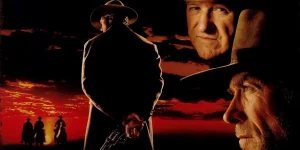
- Classic western films like Unforgiven (1992)
- Irish crime dramas focused on moral ambiguity
- Themes drawn from Catholic guilt and redemption narratives
The film functions almost like a western disguised as an Irish political thriller.
Alternate Endings and Deleted Scenes
No alternate endings were filmed.
Several deleted scenes reportedly expanded Finbar’s earlier life as an assassin, but they were removed to preserve mystery and avoid glamorizing his past.
The filmmakers wanted viewers to judge Finbar by his choices, not his history.
Book Adaptations and Differences
The film is not based on a novel or book. It is an original screenplay written by Mark Michael McNally.

Memorable Scenes and Quotes
Key Scenes
- The IRA cell’s arrival disrupting village calm
- Finbar silently watching the town from afar
- The assault that forces Finbar’s moral awakening
- The first quiet assassination
- The final confrontation on the coastal cliffs
Iconic Quotes
- “I made promises once. They don’t leave you.”
- “Violence doesn’t disappear. It just waits.”
- “Some sins don’t forgive themselves.”
Easter Eggs and Hidden Details
- Finbar’s books often reference themes of guilt and absolution
- Church bells subtly mark moments of death
- Several background radio broadcasts reference real 1970s IRA attacks
- Finbar’s house contains no mirrors, symbolizing self-denial
- Doireann’s costume color palette grows darker as the film progresses
Trivia
- Liam Neeson grew up in Northern Ireland during The Troubles
- This is one of his least action-driven roles in over a decade
- The film was shot in under eight weeks
- Many villagers were played by real local residents
- The title references Ireland’s historic nickname: The Land of Saints and Scholars
Why Watch?
You should watch In the Land of Saints and Sinners if you enjoy:
- Morally complex thrillers
- Slow, atmospheric storytelling
- Realistic portrayals of violence and consequence
- Liam Neeson in a deeply dramatic role rather than an action one
- Films that ask difficult ethical questions instead of giving easy answers
This is not a revenge fantasy. It is a meditation on whether peace can ever grow from bloodshed.
Director’s Other Works (Movies)
- Trouble with the Curve (2012)
- The Marksman (2021)
Robert Lorenz often focuses on aging protagonists confronting past choices, a theme that reaches its peak here.
Recommended Films for Fans
- Unforgiven (1992)
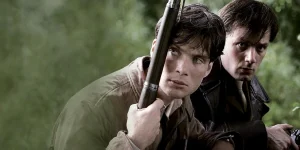
- Calvary (2014)
- The Guard (2011)
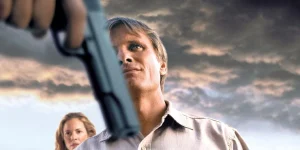
- A History of Violence (2005)
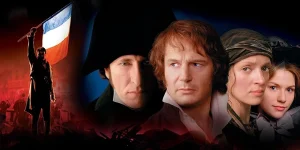
- Michael Collins (1996)
- The Dry (2020)