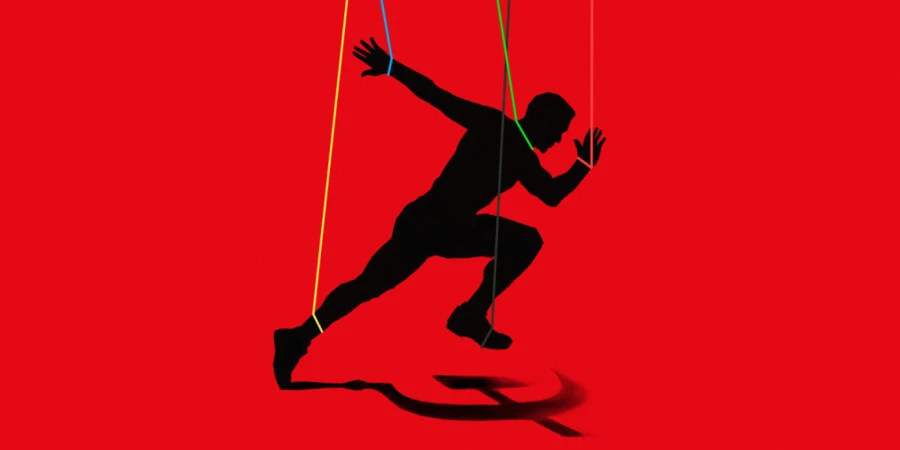

What begins as one man’s quest to expose flaws in sports anti-doping tests quickly spirals into a geopolitical thriller of the highest order. Filmmaker Bryan Fogel accidentally stumbles upon the biggest sports scandal in history. Consequently, his documentary transforms from a personal experiment into a chilling portrait of a state-sponsored conspiracy and the man who dared to reveal it.
Detailed Summary
Icarus follows a twisting, unpredictable path far from its original destination. Ultimately, the film chronicles the unmasking of Russia’s massive Olympic doping program through the eyes of its chief architect.
Bryan’s Initial Experiment
The film starts with amateur cyclist and filmmaker Bryan Fogel. He decides to undertake a personal experiment inspired by the Lance Armstrong scandal. Fogel’s goal is to use performance-enhancing drugs (PEDs), compete in the grueling Haute Route cycling race, and evade detection. By doing so, he hopes to prove that the current anti-doping system is fundamentally broken. Therefore, he seeks expert guidance to properly administer the drugs and pass the tests.
Enter Grigory Rodchenkov
Fogel’s search for an expert leads him, surprisingly, to Dr. Grigory Rodchenkov, the eccentric and charismatic head of Russia’s national anti-doping laboratory in Moscow. Despite his official position, Rodchenkov enthusiastically agrees to help Fogel with his doping regimen over Skype. He provides detailed instructions on which substances to take and, more importantly, how to mask their use. In addition, their relationship blossoms into a genuine friendship, filled with humor and candid conversation.
The Scandal Breaks
The narrative takes a dramatic turn when the World Anti-Doping Agency (WADA) releases a damning report in late 2015. The report, prompted by a German documentary, accuses Russia of a widespread, state-sponsored doping program. As a result, Rodchenkov is named as a key figure in the conspiracy, accused of destroying thousands of positive samples to protect Russian athletes. His world immediately implodes, and he faces immense pressure and danger from the Russian state he once served.
Escape to America
Fearing for his life, particularly after two of his colleagues die suddenly under mysterious circumstances, Rodchenkov contacts Fogel for help. Fogel arranges for Rodchenkov to flee Moscow and come to the United States. Once safely in Los Angeles, Rodchenkov becomes a whistleblower. He decides to tell the full, unvarnished truth about a system far more complex and sinister than anyone imagined. For instance, he reveals that the WADA report only scratched the surface.
Unveiling the Sochi Conspiracy
With Fogel’s camera rolling, Rodchenkov confesses everything. He provides hard drives, emails, and a meticulous diary detailing his work. Furthermore, he explains the “Sochi Disappearing Positive Methodology,” an elaborate scheme to swap tainted urine samples from Russian athletes for clean, pre-collected urine during the 2014 Sochi Winter Olympics. This involved passing bottles through a small hole in the wall of the Sochi lab, collaborating directly with agents from Russia’s Federal Security Service (FSB). His testimony provides the irrefutable evidence international bodies needed.
The Aftermath
Fogel and Rodchenkov take their evidence to The New York Times, which publishes a bombshell exposé in May 2016. This prompts a new investigation led by Canadian law professor Richard McLaren. The subsequent McLaren Report confirms every detail of Rodchenkov’s account, leading to the partial ban of Russian athletes from the 2016 Rio Olympics. Meanwhile, Rodchenkov is placed into the U.S. witness protection program as Russia issues an international warrant for his arrest, branding him a traitor.

Movie Ending
The ending of Icarus is both triumphant and deeply tragic. Grigory Rodchenkov successfully exposes the vast Russian doping conspiracy to the world. However, this victory comes at an immense personal cost. The final scenes show Rodchenkov living in an undisclosed location in the United States, his appearance altered and his life consumed by paranoia. He is separated from his family and lives in constant fear of assassination by Russian agents.
The film concludes with text on screen detailing the fallout. It notes the International Olympic Committee’s (IOC) controversially lenient response, which allowed many Russian athletes to compete in subsequent games. Despite providing the truth, Rodchenkov’s life is forever shattered. Consequently, the film leaves the audience to ponder the heavy price of whistleblowing and whether justice was truly served.
Are There Post-Credits Scenes?
No, there are no post-credits scenes in Icarus. The film ends with textual updates before the credits roll, providing the final word on the events portrayed.
Type of Movie
Icarus is a documentary that masterfully blends genres. It begins as a sports documentary and a piece of participatory journalism, in the vein of Morgan Spurlock’s Super Size Me. However, it quickly morphs into a tense, high-stakes geopolitical thriller. The tone shifts from lighthearted and investigative to dark, paranoid, and urgent, mirroring the real-life danger the subjects find themselves in.
Cast
- Bryan Fogel – Himself
- Grigory Rodchenkov – Himself
- Don Catlin – Himself (Founder of the UCLA Olympic Analytical Laboratory)
- Richard McLaren – Himself (Author of the McLaren Report)
Film Music and Composer
The score for Icarus was composed by Adam Peters. Peters is known for his work with the band Echo & the Bunnymen and on films like Savages. His music for Icarus is crucial in establishing the film’s evolving tone. Initially, the score is fairly neutral, but as the conspiracy unfolds, it becomes a pulsing, electronic soundtrack reminiscent of a spy thriller. The music effectively amplifies the tension and paranoia, especially during scenes depicting Rodchenkov’s escape and his life in hiding.



Filming Locations
The film’s locations chart the story’s dramatic escalation. Key locations include:
- Boulder, Colorado, USA: Bryan Fogel’s home base, where he conducts his initial experiment and communicates with Rodchenkov via Skype.
- Moscow, Russia: The location of Rodchenkov’s anti-doping laboratory and his home before he fled the country.
- Undisclosed Locations in the USA: After Rodchenkov flees Russia, filming takes place in various safe houses and anonymous locations to protect his identity as he enters witness protection. This shift underscores the life-or-death stakes of the story.
Awards and Nominations
Icarus received widespread critical acclaim and numerous accolades. Most notably, it won the Academy Award for Best Documentary Feature in 2018. In addition, it won a Special Jury Prize at the Sundance Film Festival, known as “The Orwell Award,” for its significance in revealing inconvenient truths.
Behind the Scenes Insights
- The film’s entire narrative shifted during production. Director Bryan Fogel has stated he had no idea his project about personal doping would lead him to a massive international conspiracy.
- Fogel’s first choice for a scientific advisor, Don Catlin, was the one who inadvertently connected him with Grigory Rodchenkov, setting the entire chain of events in motion.
- During Rodchenkov’s escape and subsequent hiding, Fogel and his team used encrypted communication and burner phones to avoid detection by Russian authorities.
- The bond between Fogel and Rodchenkov became intensely personal. Fogel felt a deep responsibility for Rodchenkov’s safety, transforming his role from documentary filmmaker to protector.
Inspirations and References
The primary inspiration for Fogel’s initial experiment was the career-destroying doping scandal surrounding cyclist Lance Armstrong. Fogel wanted to see if he could replicate Armstrong’s ability to dope and go undetected. The film also exists in conversation with a 2014 documentary by German journalist Hajo Seppelt for the ARD network, which first brought major allegations against the Russian track and field federation and prompted the initial WADA investigation.
Alternate Endings and Deleted Scenes
As a documentary chronicling events in real time, Icarus does not have scripted “alternate endings.” The ending was dictated by the real-world status of Grigory Rodchenkov’s situation at the time of the film’s release. No official deleted scenes have been made public. However, Fogel captured hundreds of hours of footage, particularly of Rodchenkov’s testimony, much of which was condensed or used to corroborate his claims with investigators.
Book Adaptations and Differences
Icarus is not based on a book. It is an original documentary project. However, after the events of the film, Grigory Rodchenkov published a memoir titled The Rodchenkov Affair: How I Brought Down Putin’s Secret Doping Empire. The book provides even greater detail about his life, his role in the doping system from its early days, and his experiences after entering witness protection. While the film captures the events as they unfold, the book offers a more reflective and comprehensive account from his perspective.



Memorable Scenes and Quotes
Key Scenes
- The Urine Test Tutorial: In a shockingly candid Skype call, Rodchenkov demonstrates for Fogel how to pass a doping test by using a friend’s clean urine, even advising on which type of container to use.
- The Race Results: After months of doping, Fogel competes in the Haute Route race and ironically performs worse than he did the previous year when he was clean, highlighting the complexities of athletic performance.
- The Sochi Lab Recreation: Rodchenkov, in an empty room, physically walks through the entire process of how he and FSB agents swapped urine samples through a hole in the wall at the Sochi lab.
- The Final Goodbye: A deeply emotional Skype call between Rodchenkov and his wife, where they discuss the fact that they may never see each other again.
Iconic Quotes
- “We are a top-level fraud.” – Grigory Rodchenkov, summarizing the entire Russian anti-doping system.
- “I am not a traitor. I came to the United States to tell the truth.” – Grigory Rodchenkov, on how he views his actions.
- “This is a story that, I guess since the beginning of time, people have been fascinated by: the ability to get away with it.” – Bryan Fogel, on the initial premise of his film.
Easter Eggs and Hidden Details
- The Film’s Title: Icarus is a direct reference to the Greek myth of the man who flew too close to the sun with wax wings and fell to his death. This serves as a powerful metaphor for Rodchenkov, whose ambition and proximity to power (Putin) led to his dramatic fall from grace.
- Rodchenkov’s Dog: Throughout their early Skype calls, Rodchenkov’s small dog is often present. Its disappearance in the later, more frantic scenes subtly underscores the loss of his normal life in Moscow.
- Changing Demeanor: Watching the film a second time allows viewers to notice the gradual but distinct shift in Rodchenkov’s behavior. He goes from a jovial, almost cartoonish character to a deeply haunted and frightened man.
Trivia
- Bryan Fogel continued to fear for Rodchenkov’s safety long after the film’s release. The Russian government has made several public statements condemning Rodchenkov, and Fogel believes he remains a high-value target.
- Two of Rodchenkov’s former colleagues at the Russian anti-doping agency, Nikita Kamayev and Vyacheslav Sinev, died within two weeks of each other in February 2016, shortly after the initial scandal broke. Their deaths were officially attributed to heart attacks but are widely considered suspicious.
- The evidence provided by Rodchenkov in the film was used by WADA and the IOC in their official proceedings against Russia. The film itself became a crucial piece of public evidence.
Why Watch?
This film is an essential, must-see documentary. It is a real-life thriller that accidentally captured one of the most explosive scandals in modern sports. More than a story about doping, it’s a profound look at truth, consequences, and personal courage.
Director’s Other Movies
- Jewtopia (2012)
- The Dissident (2020)
Recommended Films for Fans
- The Dissident (2020)
- Citizenfour (2014)
- The Armstrong Lie (2013)
- Inside Job (2010)
- Welcome to Chechnya (2020)