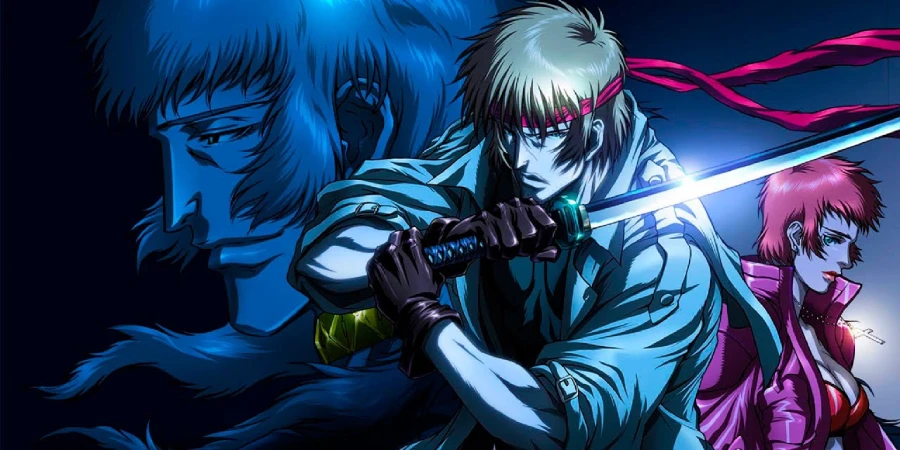

Vengeance is a dish served cold, and over two thousand years. Highlander: The Search for Vengeance brutally animates this old adage, trading Scottish castles for a dystopian future. The film follows Colin MacLeod on a relentless quest that spans civilizations. His single-minded hunt for his nemesis, Marcus Octavius, redefines the very meaning of an Immortal’s eternal life.
Detailed Summary
Ancient Betrayal
Our story begins in 125 AD Roman Britain. Colin MacLeod, a chieftain of his clan, leads a doomed rebellion against Roman forces. Defeated in battle by the general Marcus Octavius, Colin is left for dead on the battlefield. He awakens days later, miraculously healed, discovering his own immortality.
Marcus, however, also reveals himself to be an Immortal. Instead of offering guidance, he callously crucifies Colin’s wife, Moya, to punish the rebel. Before a heartbroken Colin, Marcus tells him that an Immortal can only truly die by decapitation. This cruel act ignites a quest for revenge that will last millennia.
A Vow of Vengeance
Colin dedicates his eternal life to hunting Marcus. He tracks his foe across history, from ancient battlefields to feudal Japan. In one notable confrontation, Colin, now a skilled samurai, duels Marcus. The fight ends in a stalemate, with both Immortals surviving to fight another day.
This pursuit consumes Colin entirely. He becomes a grim, solitary warrior. His humanity erodes with each century he spends fixated on his singular goal. Meanwhile, Marcus adapts and thrives, accumulating power and influence in every era.
The New York Fortress
In the year 2187, Colin finally tracks Marcus to a flooded, post-apocalyptic New York City. Marcus has become a technological despot, ruling the city from his heavily fortified citadel. He has also unleashed a deadly virus to control the surviving population.
Colin allies with a small band of rebels led by a woman named Dahlia. He learns Marcus is searching for a “chosen one” among the city’s inhabitants. Colin, believing this is part of some grand scheme for total domination, agrees to help the rebels infiltrate Marcus’s fortress to end his reign.
Final Confrontation
Colin fights his way through Marcus’s tower, ultimately reaching his ancient enemy. The resulting swordfight is brutal and climactic, moving through the high-tech structure. Dahlia and her rebels are killed in the chaos. Colin discovers Dahlia was a reincarnation of his long-dead wife, Moya.
During the duel, Marcus reveals his true motive. Tired of an eternal life filled with loss, he engineered the entire scenario. He sought an Immortal warrior worthy enough to finally kill him. Marcus wanted to die at the hands of the greatest foe he ever created: Colin.
Movie Ending
In the final moments, Colin MacLeod stands over a defeated Marcus Octavius. Marcus begs for death, admitting his own eternal suffering and weariness. He confesses that his cruelty was a two-thousand-year gambit to forge a warrior strong enough to give him the release of a final death.
However, Colin realizes that killing Marcus would make him no better than his rival. Revenge has consumed his life, and taking Marcus’s head would only complete his own descent into monstrosity. He denies Marcus the satisfaction of death and walks away.
Colin leaves Marcus to live on in his self-made prison of misery. Choosing mercy over vengeance, Colin finally breaks his ancient cycle of hatred. As he leaves the collapsing tower, the spirit of Moya appears and tells him he is finally free. He walks off into the desolate wasteland, his purpose now his own to decide.
Are There Post-Credits Scenes?
No, there are no post-credits scenes in Highlander: The Search for Vengeance.
Type of Movie
Highlander: The Search for Vengeance is a dystopian science-fiction action anime. Its tone is grim, violent, and melancholic, with a strong focus on themes of revenge, loss, and the philosophical burdens of immortality. The film retains the core mythology of the Highlander franchise but pushes it into a much darker, more visceral direction.
Cast
- Alistair Abell – Colin MacLeod
- Justin Gross – Marcus Octavius
- Debi Mae West – Dahlia
- Nolan North – Gallan / Militia
- Scott McNeil – Amergan
Film Music and Composer
The score for the film was composed by Jussi Tegelman and Nathan Wang. Their music combines orchestral arrangements with electronic and industrial sounds. This hybrid style effectively enhances both the historical flashbacks and the futuristic dystopian setting.
Notably, the soundtrack does not feature any music from the band Queen, a departure from the iconic sound of the original Highlander film. The score is instead a moodier, more atmospheric piece tailored specifically to the anime’s dark tone.
Filming Locations
As an animated feature, Highlander: The Search for Vengeance was not filmed on location. The film’s settings are instead artistically rendered representations of different historical and future eras. These include a visually stylized Roman-era Britain, feudal Japan, and a war-torn 22nd-century New York City.
The animation, produced by the acclaimed Japanese studio Madhouse, creates distinct visual palettes for each time period. The bleak, rain-soaked future of New York, for example, serves as a powerful backdrop for the story’s grim finale.
Awards and Nominations
Highlander: The Search for Vengeance did not receive any major film awards or nominations upon its release. Nonetheless, it gained a strong cult following among fans of anime and the Highlander franchise for its excellent animation and mature storytelling.
Behind the Scenes Insights
- The film was directed by Yoshiaki Kawajiri, a legendary figure in anime known for his work on Ninja Scroll and Vampire Hunter D: Bloodlust. His signature style of fluid, high-impact action is present throughout the film.
- David Abramowitz, who was a creative consultant and writer for the live-action Highlander: The Series, wrote the screenplay. This provided a strong link to the established lore of the franchise.
- Producer Peter Davis, a key figure behind the entire Highlander franchise, stated this film was intended to be a reboot for the series, potentially leading to more animated sequels that never materialized.
- The character of Colin MacLeod was deliberately given the famous clan name to connect him to protagonists Connor and Duncan MacLeod, though he is not from their direct lineage.
Inspirations and References
The film’s primary inspiration is, of course, the Highlander universe created by Gregory Widen. It adheres to the core rules: Immortals live forever unless beheaded, they can sense each other, and “there can be only one.”
Director Yoshiaki Kawajiri’s established body of work is also a clear influence. The film shares its brutal action choreography and dark, gothic aesthetic with his acclaimed prior films, injecting a distinctly Japanese anime sensibility into the traditionally Western fantasy franchise.
Alternate Endings and Deleted Scenes
No official alternate endings have been released for the film. However, director Yoshiaki Kawajiri has mentioned that the original script was much longer. Several scenes depicting Colin’s journey through other historical periods, including World War II and ancient China, were cut for budgetary and pacing reasons.
Book Adaptations and Differences
Highlander: The Search for Vengeance is not based on a book. It is an original story created specifically for this film, set within the pre-existing Highlander universe.

Memorable Scenes and Quotes
Key Scenes
- The Crucifixion: Marcus Octavius crucifies Colin’s wife, Moya. This intensely cruel and personal act sets the stage for a two-thousand-year-long vendetta, defining Colin’s entire existence.
- Samurai Duel: The beautifully animated sword fight in feudal Japan showcases the skills both Immortals have acquired over the centuries. It establishes their rivalry as a dance of equally matched opponents.
- The Final Choice: Colin stands over a defeated Marcus, who begs for the blade. Colin’s decision to deny him death and walk away represents a major character breakthrough, freeing him from his long-held burden of hate.
Iconic Quotes
- Marcus Octavius: “Rome is an idea. You can’t kill an idea.”
- Colin MacLeod: “Vengeance is all I have left.”
- Marcus Octavius: “Eternity without a purpose is a prison. You were my purpose.”
Easter Eggs and Hidden Details
- The MacLeod Name: Colin’s surname, a deliberate choice by the writer, immediately connects him to the franchise’s most famous Immortals, Connor and Duncan MacLeod of the Clan MacLeod.
- Quickening Animation: The visual effect of the Quickening—the energy released when an Immortal is beheaded—is animated as a dragon-like spirit, reminiscent of similar effects in Kawajiri’s other films.
- New York Ruins: Sharp-eyed viewers can spot the dilapidated remains of landmarks like the Statue of Liberty and the Empire State Building in the flooded landscape of 22nd-century New York.
Trivia
- This was the first-ever feature-length animated production in the Highlander franchise.
- The working title for the film was simply Highlander. The subtitle “The Search for Vengeance” was added later in production.
- Initial plans for the film involved Connor MacLeod, but the producers decided an original story with a new protagonist offered more creative freedom.
Why Watch?
This film is a spectacular fusion of Western fantasy and Japanese animation. With gorgeously fluid action and a mature, philosophical core, it offers a fresh, brutal take on the classic Highlander mythos. It is a must-see for anime fans and franchise devotees.
Director’s Other Movies
- Wicked City (1987)
- Ninja Scroll (1993)
- Vampire Hunter D: Bloodlust (2000)
- The Animatrix (2003) – “Program” and “World Record” segments
Recommended Films for Fans
- Akira (1988)
- Ghost in the Shell (1995)
- Vampire Hunter D: Bloodlust (2000)
- Sword of the Stranger (2007)