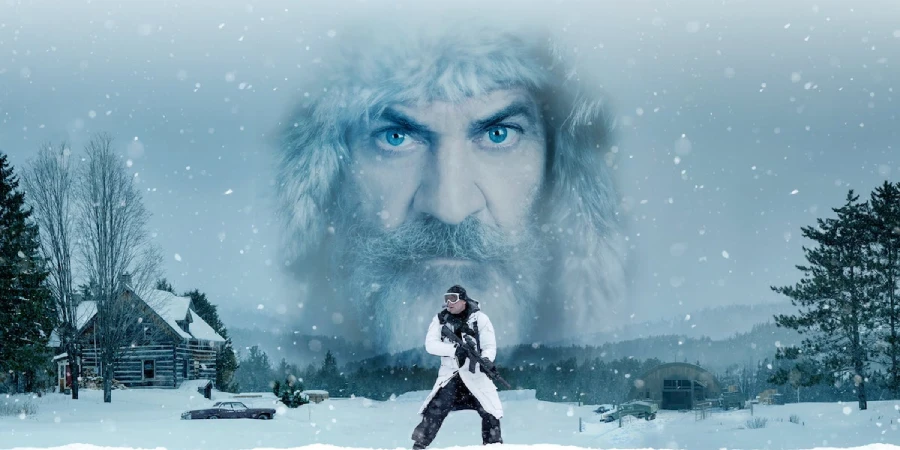

Fatman (2020) is not your typical holiday film. Directed by the Eshom brothers, this movie asks a bold question: What if Santa Claus were real, broke, depressed, and forced to fight back? The result is a strange but fascinating blend of Christmas mythology, brutal violence, and dry dark humor—one that either completely works for you or absolutely doesn’t.
Detailed Summary
A Failing Santa in a Failing World
The movie introduces us to Chris Cringle, a weary, aging Santa Claus played by Mel Gibson. Unlike the jolly icon we know, this Santa is struggling financially and emotionally. Fewer children are behaving well, toy production is declining, and Christmas magic is fading. To survive, Santa makes a controversial deal with the U.S. government, accepting a military contract to keep his workshop running.
This immediately establishes the film’s core theme: even myths aren’t immune to capitalism and moral decay.
A Very Bad Kid with a Very Expensive Grudge
Meanwhile, we meet Billy Wenan, an extremely wealthy but deeply disturbed child who receives a lump of coal for Christmas. Enraged and humiliated, Billy uses his fortune to hire a professional assassin named Skinny Man to kill Santa Claus.
Billy isn’t just a “bad kid” joke—he represents entitlement, moral rot, and power without accountability. His cruelty to classmates and family mirrors the wider decay Santa keeps referencing.
The Skinny Man’s Mission
The Skinny Man, played with chilling calm by Walton Goggins, accepts the job. We learn he has a long-standing personal grudge against Santa, rooted in childhood trauma and abuse. His hatred is obsessive, philosophical, and deeply personal.
As he tracks Santa to his snowy compound, the movie shifts into a slow-burn revenge thriller, punctuated by bursts of shocking violence.
Mrs. Claus Is Not Just Baking Cookies
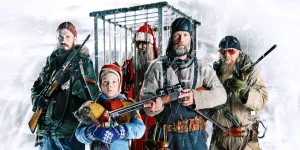
One of the film’s biggest surprises is Mrs. Claus, who is revealed to be a skilled and ruthless protector of Santa. When the Skinny Man infiltrates the workshop, elves die, bullets fly, and the myth of Santa becomes fully militarized.
This section leans heavily into action-film territory while maintaining its grim fairy-tale tone.

Movie Ending
The final act delivers a bloody and morally complex showdown. Santa and Mrs. Claus confront the Skinny Man after he slaughters several elves and nearly completes his mission. During the fight, Santa is severely wounded, reinforcing the idea that he is mortal—or at least far more vulnerable than legend suggests.
In a tense and emotional confrontation, the Skinny Man explains his hatred: as a child, he was abused and neglected, and Santa’s gift of coal symbolized judgment rather than help. Santa, for the first time, openly acknowledges his failure—not as a man, but as a symbol who judged without understanding.
Santa ultimately kills the Skinny Man, but the victory feels hollow. Christmas magic is not restored instantly, and there’s no triumphant musical swell. Santa survives, but remains deeply shaken.
The film closes with Billy, the child who ordered the hit, being visited by Santa. Instead of violence, Santa delivers a quiet but terrifying warning: he sees Billy, knows what he did, and will be watching him for the rest of his life. Billy is left alive, but psychologically destroyed—suggesting that judgment, not death, is Santa’s final punishment.
The ending reinforces the film’s central idea: justice is messy, imperfect, and deeply human.
Are There Post-Credits Scenes?
No. Fatman does not include mid-credits or post-credits scenes. Once the story ends, it ends—no sequel teases, no jokes, no extra closure.
Type of Movie
Fatman is a dark fantasy thriller that blends Christmas mythology with violent action and bleak satire. It deliberately subverts holiday movie expectations, leaning more toward moral allegory than festive comfort.
Cast
- Mel Gibson – Chris Cringle (Santa Claus)
- Walton Goggins – Skinny Man
- Marianne Jean-Baptiste – Mrs. Claus
- Chance Hurstfield – Billy Wenan
- Michael Dyson – Lieutenant General
Film Music and Composer
The score was composed by Steve London, whose music emphasizes tension and melancholy rather than holiday cheer. The soundtrack avoids traditional Christmas warmth, reinforcing the film’s bleak and grounded tone.

Filming Locations
The movie was filmed primarily in Canada, using snowy rural landscapes to ground Santa’s world in realism rather than fantasy. The isolated setting supports the film’s themes of decline, loneliness, and survival, making the North Pole feel more like a struggling frontier than a magical wonderland.
Awards and Nominations
Fatman did not receive major awards or nominations. However, it gained a cult following for its originality and Walton Goggins’ performance, often praised by critics despite mixed overall reviews.
Behind the Scenes Insights
- The Eshom brothers aimed to make Santa feel “mythically real, not magical.”
- Mel Gibson was cast specifically to subvert audience expectations of Santa.
- Walton Goggins has stated this is one of his favorite villain roles.
- The filmmakers avoided CGI-heavy visuals to keep the tone grounded and brutal.
- The script intentionally minimizes humor to prevent the film from becoming parody.
Inspirations and References
- Dark reinterpretations of folklore and myth
- Revisionist Westerns and revenge thrillers
- Films that deconstruct symbols of moral authority
- Elements of No Country for Old Men–style villain philosophy
Alternate Endings and Deleted Scenes
No officially released alternate endings exist. Some deleted scenes reportedly expanded Billy’s home life and the government’s involvement with Santa, but these were cut to maintain pacing and ambiguity.
Book Adaptations and Differences
Fatman is not based on a book. It is an original screenplay, though it feels heavily influenced by mythological reinterpretation rather than direct literary adaptation.

Memorable Scenes and Quotes
Key Scenes
- Santa negotiating a military contract with the U.S. government
- Billy calmly ordering Santa’s assassination
- Mrs. Claus defending the workshop with deadly efficiency
- Santa’s final confrontation and moral reckoning with the Skinny Man
- The chilling final visit to Billy
Iconic Quotes
- “You think you’re the first bad kid?”
- “I’m not the one who decides who deserves what.”
- “Christmas isn’t broken. People are.”
Easter Eggs and Hidden Details
- The coal motif appears repeatedly as a symbol of judgment and neglect
- Elves are portrayed more like hardened workers than magical beings
- Military-grade weapons subtly replace traditional Christmas imagery
- Santa’s workshop resembles a frontier outpost rather than a factory
Trivia
- Walton Goggins lost weight to give the Skinny Man a predatory appearance
- The film was shot in under two months
- The budget was relatively low for an action film
- The movie gained popularity through streaming rather than theaters
- Critics were sharply divided, but audience reactions skewed more positive
Why Watch?
If you’re tired of safe, sentimental Christmas movies, Fatman offers something bold and unsettling. It’s a film that asks uncomfortable questions about judgment, responsibility, and moral decay, wrapped in a violent holiday package. It’s not cozy—but it’s memorable.
Director’s Other Works
- The Bygone (2019)
- Little Fish (2020) – producers