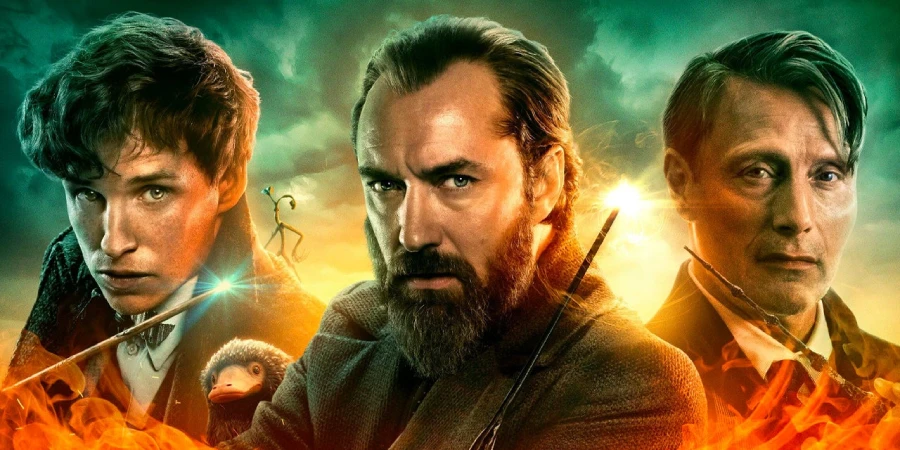
Fantastic Beasts: The Secrets of Dumbledore is the third film in the Fantastic Beasts series and a direct continuation of the Wizarding World saga created by J.K. Rowling. Released in 2022, the film shifts focus more clearly toward Albus Dumbledore, his past, and the growing threat of Gellert Grindelwald, while still expanding the magical lore established in previous films.
Detailed Summary
The Blood Pact and Dumbledore’s Limitation
The film opens by explaining one of the most important obstacles in the story: Dumbledore and Grindelwald cannot fight each other due to a magical blood pact they made in their youth. This pact physically prevents either wizard from harming the other, forcing Dumbledore to act indirectly.
This revelation reframes the entire conflict and explains why Dumbledore relies on others rather than confronting Grindelwald himself.
Grindelwald’s Political Rise
Grindelwald is revealed to be pursuing power not only through magic, but through wizarding politics. He aims to become the Supreme Mugwump of the International Confederation of Wizards, using fear of Muggles and selective visions of the future to justify his ideology.
This is a critical shift: Grindelwald is no longer just a dark wizard, but a charismatic extremist leader.
The Qilin and the Election Plot
A magical creature called the Qilin, known for its ability to see purity of heart and bow to true leaders, becomes central to the plot. Grindelwald murders a baby Qilin and reanimates it using dark magic, planning to manipulate the upcoming wizarding election.
Dumbledore assembles a deliberately confusing and divided team, including Newt Scamander, Theseus Scamander, Lally Hicks, Bunty, Yusuf Kama, and Jacob Kowalski. The chaos is intentional, designed to prevent Grindelwald from reading their plans.
Credence’s True Identity
Credence Barebone is revealed to be Aurelius Dumbledore, Aberforth Dumbledore’s son. His obscurial condition is killing him, and Grindelwald has been using him as a weapon against Albus.
This revelation adds emotional depth to Dumbledore’s guilt and explains his personal investment in stopping Grindelwald without destroying Credence.
Newt, Jacob, and the Power of Choice
Jacob Kowalski, the only Muggle in the group, is given a wand, not because he can use magic, but because belief and courage matter. His role emphasizes one of the film’s recurring themes: morality is not defined by magical ability.

Movie Ending
The final act takes place during the wizarding election in Bhutan.
Grindelwald successfully frames himself as a legitimate candidate and uses the resurrected Qilin to appear pure of heart. The creature bows to him, seemingly confirming his worthiness and pushing the wizarding world dangerously close to accepting him as their leader.
However, this moment is exposed as a lie.
Bunty reveals the real Qilin, which bows not to Grindelwald or Dumbledore, but to Albus Dumbledore himself. Dumbledore humbly refuses the position, proving that true leadership is not about seeking power.
The blood pact between Dumbledore and Grindelwald is unintentionally destroyed during a confrontation involving Credence. This moment is subtle but crucial: the pact breaks not through violence, but through emotional resolution and shifting loyalty.
Credence reconciles with Aberforth and chooses life over hatred, weakening Grindelwald’s hold over him. Grindelwald is publicly exposed, politically defeated, and forced to flee, marking the beginning of his downfall that will eventually lead to his imprisonment decades later.
The film ends quietly. Dumbledore watches Newt, Jacob, and Queenie celebrate Jacob and Queenie’s wedding from afar. He chooses solitude, fully accepting the burden of what is yet to come.
This ending deliberately avoids a large-scale battle, focusing instead on truth, choice, and moral victory, setting the stage for the future conflict hinted at in the Harry Potter timeline.
Are There Post-Credits Scenes?
No. Fantastic Beasts: The Secrets of Dumbledore does not include any mid-credits or post-credits scenes. The story ends definitively with its final moments.
Type of Movie
This is a fantasy adventure film with strong political and dramatic elements, blending magical spectacle with themes of power, manipulation, and moral responsibility. Compared to earlier entries, it leans more toward character-driven drama than pure adventure.
Cast
- Eddie Redmayne – Newt Scamander
- Jude Law – Albus Dumbledore
- Mads Mikkelsen – Gellert Grindelwald
- Ezra Miller – Credence Barebone / Aurelius Dumbledore
- Dan Fogler – Jacob Kowalski
- Alison Sudol – Queenie Goldstein
- Katherine Waterston – Tina Goldstein
- Callum Turner – Theseus Scamander
- Jessica Williams – Professor Lally Hicks
Film Music and Composer
The score was composed by James Newton Howard, continuing his work from the previous Fantastic Beasts films. The music is more restrained and melancholic this time, reflecting Dumbledore’s internal conflict and the looming threat of war rather than constant wonder.
Filming Locations
- United Kingdom – Studio filming and exterior wizarding environments
- Germany – Berlin scenes representing wizarding political centers
- Bhutan – Inspiration for the election setting, symbolizing neutrality and spiritual authority
These locations emphasize the film’s global scope and the idea that the wizarding world’s future affects everyone.
Awards and Nominations
The film received several technical nominations, particularly for visual effects and production design, but did not achieve major awards success. Reception was mixed, with praise for performances and visuals, and criticism for pacing and narrative density.
Behind the Scenes Insights
- Mads Mikkelsen replaced Johnny Depp as Grindelwald, bringing a colder and more restrained interpretation of the character.
- The script was rewritten after The Crimes of Grindelwald due to audience feedback about complexity.
- Jude Law worked closely with the original Harry Potter films to align his Dumbledore with Richard Harris and Michael Gambon’s portrayals.
- Several scenes involving Tina Goldstein were reduced due to scheduling conflicts.
Inspirations and References
The film draws heavily from wizarding world history, particularly themes introduced in Harry Potter and the Deathly Hallows. Grindelwald’s ideology mirrors real-world authoritarian movements, making the story more grounded and political.
Alternate Endings and Deleted Scenes
No alternate ending has been officially released. However, deleted scenes reportedly included:
- Additional interactions between Dumbledore and Grindelwald
- More background on the wizarding election process
These were removed to reduce runtime and simplify the narrative.
Book Adaptations and Differences
Unlike Harry Potter, this film is not adapted from a novel. It is an original screenplay set within the Wizarding World. As a result, its canon is defined entirely by the films rather than books, giving it more flexibility but also less narrative clarity.
Memorable Scenes and Quotes
Key Scenes
- The blood pact explanation between Dumbledore and Grindelwald
- The Qilin bowing to Dumbledore
- Credence meeting Aberforth
- Jacob confronting Grindelwald despite being a Muggle
Iconic Quotes
- “The world as we know it is coming undone.” – Dumbledore
- “Even if we disagree, you still matter.” – Newt Scamander
- “Who will love you now?” – Grindelwald
Easter Eggs and Hidden Details
- Dumbledore’s wardrobe subtly mirrors his future Hogwarts style.
- The Bhutan setting foreshadows the peaceful ideology Dumbledore ultimately represents.
- Musical motifs from the original Harry Potter films appear during emotional scenes.
Trivia
- This is the first Wizarding World film not written solely by J.K. Rowling.
- It features the fewest magical creature showcases in the Fantastic Beasts series.
- The film deliberately avoids showing Grindelwald’s full defeat to align with established canon.
Why Watch?
If you care about Dumbledore’s past, the moral complexity of power, and the slow-burning rise of one of fantasy’s most dangerous villains, this film offers important lore and emotional depth, even if it sacrifices some spectacle.
Director’s Other Works
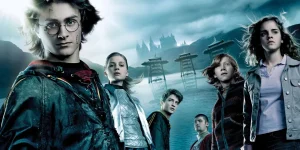
- Harry Potter and the Goblet of Fire (2005)
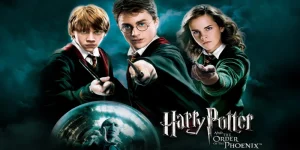
- Harry Potter and the Order of the Phoenix (2007)
- The Legend of Tarzan (2016)