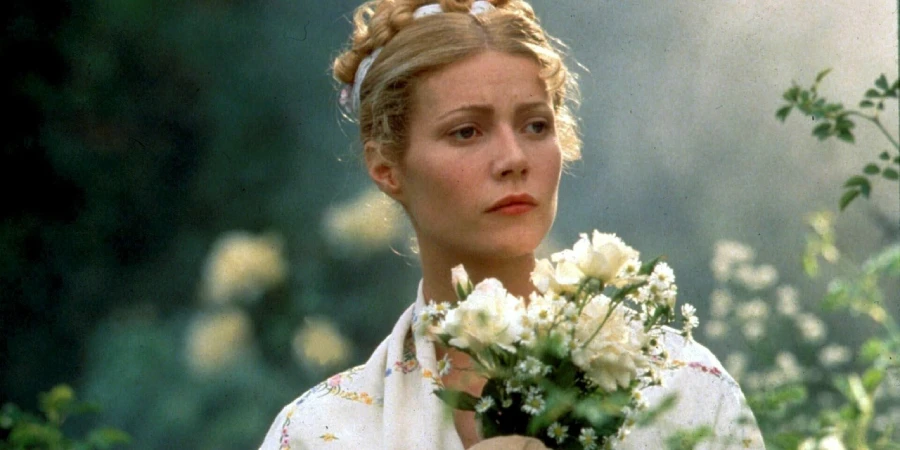

Emma (1996) is a bright, elegant, and witty adaptation of Jane Austen’s 1815 novel, directed by Douglas McGrath. Often remembered for launching Gwyneth Paltrow into period-drama stardom, the film balances romance, social satire, and emotional growth with warmth and charm.
Detailed Summary
Life in Highbury and Emma’s Worldview
Emma Woodhouse is introduced as wealthy, intelligent, and utterly convinced she knows what’s best for everyone else. Living in the village of Highbury with her hypochondriac father, she enjoys comfort, social status, and independence. Emma prides herself on being a successful matchmaker, though she confidently declares she has no intention of marrying herself.
The Matchmaking Begins: Harriet Smith
Emma befriends Harriet Smith, a sweet but naive young woman of uncertain parentage. Believing Harriet deserves a better social standing, Emma discourages her from accepting a marriage proposal from farmer Robert Martin, convinced she can find her a more “suitable” match. This decision becomes the first major crack in Emma’s self-assured worldview.
Mr. Elton and a Major Miscalculation
Emma wrongly assumes that Mr. Elton, the village vicar, is interested in Harriet. In reality, Mr. Elton is pursuing Emma herself, a fact revealed during an awkward and memorable carriage scene. Emma is shocked and offended, realizing her matchmaking has caused confusion and hurt rather than happiness.
Enter Frank Churchill and Jane Fairfax
Frank Churchill arrives in Highbury and immediately charms everyone, especially Emma. Their flirtation fuels gossip and misinterpretation. Meanwhile, Jane Fairfax, reserved and accomplished, becomes a quiet counterpoint to Emma—everything Emma could be, but without arrogance. Emma misjudges Jane repeatedly, assuming her to be cold or secretive.
Mr. Knightley: The Voice of Reason
Throughout the story, Mr. Knightley acts as Emma’s moral compass, gently but firmly criticizing her behavior when necessary. Their conversations reveal deep mutual respect, though Emma remains blind to her own feelings and dismisses the idea of loving him romantically.
Social Consequences and Emotional Growth
Emma’s thoughtless remark about Miss Bates during a picnic becomes a turning point. Mr. Knightley openly rebukes her, and Emma finally begins to see the harm caused by her pride and careless judgments. This moment marks Emma’s emotional awakening and genuine self-reflection.
Movie Ending
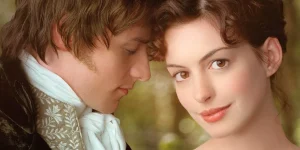
The final act resolves all misunderstandings and emotional tensions with clarity and emotional payoff. Frank Churchill’s secret engagement to Jane Fairfax is revealed, shocking Emma and the entire village. Emma realizes that she was never truly in love with Frank and confronts the painful truth that she herself is in love with Mr. Knightley.
At the same time, Harriet confesses that she believes Mr. Knightley is interested in her. This revelation devastates Emma, forcing her to acknowledge her feelings openly and confront the consequences of her earlier manipulation. When Harriet eventually reconciles with Robert Martin, Emma is relieved and freed from guilt.
Mr. Knightley, believing Emma may care for Frank, prepares to leave Highbury. In a heartfelt and honest conversation, both finally confess their love, realizing that their bond has been built on years of respect, friendship, and moral understanding.
The film ends with Emma and Mr. Knightley’s wedding, symbolizing Emma’s full maturation. She has learned humility, empathy, and self-awareness, completing her journey from confident meddler to thoughtful partner.
Are There Post-Credits Scenes?
No. Emma (1996) does not include any post-credits or mid-credits scenes. The story concludes definitively with the wedding and closing credits.
Type of Movie
Emma is a romantic comedy-drama and literary period adaptation, blending social satire with emotional character development and gentle humor rooted in manners and class dynamics.
Cast
- Gwyneth Paltrow as Emma Woodhouse
- Jeremy Northam as Mr. Knightley
- Toni Collette as Harriet Smith
- Alan Cumming as Mr. Elton
- Ewan McGregor as Frank Churchill
- Juliet Stevenson as Mrs. Elton
- Sophie Thompson as Miss Bates
Film Music and Composer
The score was composed by Rachel Portman, whose elegant and emotionally resonant music plays a key role in setting the film’s tone. Her work on Emma won the Academy Award for Best Original Score, making her the first woman to win in this category.

Filming Locations
The film was shot across England, including:
- Sudeley Castle (Gloucestershire) – used for exterior estate scenes
- Lower Slaughter and Broadway (Cotswolds) – representing Highbury village
- Firle Place (East Sussex) – interiors of Hartfield
These locations reinforce the film’s themes of stability, tradition, and social hierarchy, grounding Emma’s personal growth in a visually authentic Regency setting.
Awards and Nominations
- Academy Award (1997) – Best Original Score (Winner)
- Academy Award – Best Costume Design (Nominee)
- Golden Globe Award – Best Actress (Comedy or Musical) for Gwyneth Paltrow (Winner)
Behind the Scenes Insights
- Gwyneth Paltrow studied 19th-century etiquette and posture to prepare for the role.
- The costumes were designed to subtly reflect Emma’s emotional state through color and structure.
- Douglas McGrath also wrote the screenplay, aiming to preserve Austen’s wit while modernizing pacing.
- Many cast members later became major stars, making this film a notable career milestone.
Inspirations and References
The film is directly adapted from Jane Austen’s novel Emma. Austen’s sharp critique of class, gender roles, and self-deception heavily informs the screenplay. The adaptation emphasizes emotional clarity and visual warmth over strict irony.
Alternate Endings and Deleted Scenes
No alternate ending was filmed. However, several dialogue-heavy scenes were trimmed to maintain pacing and keep the tone light. Some secondary character moments, particularly involving Mrs. Elton, were shortened.
Book Adaptations and Differences
While largely faithful, the film:
- Softens Emma’s flaws, making her more immediately likable
- Adds visual romance to moments that are subtler in the novel
- Compresses timelines and reduces narrative ambiguity
The novel’s sharper satire is gently smoothed to appeal to a broader audience.
Memorable Scenes and Quotes
Key Scenes
- Mr. Elton’s unexpected carriage proposal
- Emma’s public humiliation of Miss Bates
- Mr. Knightley’s confession in the garden
- The final wedding celebration
Iconic Quotes
- Emma: “I always deserve the best treatment because I never put up with any other.”
- Mr. Knightley: “If I loved you less, I might be able to talk about it more.”
Easter Eggs and Hidden Details
- Emma’s costumes gradually shift from bold colors to softer tones as her humility grows.
- Mr. Knightley is often framed at eye level with Emma, visually reinforcing equality.
- Background conversations often subtly mirror Emma’s own misunderstandings.
Trivia
- This film was released the same year as another Emma adaptation starring Kate Beckinsale.
- Rachel Portman’s Oscar win marked a historic moment for women in film scoring.
- Jane Austen never described Emma as beautiful; the film consciously embraces her attractiveness.
Why Watch?
Emma (1996) is a comfort film with substance. It offers romance without melodrama, humor without cruelty, and a protagonist who genuinely evolves. If you enjoy character-driven stories with intelligence and heart, this is a must-watch.
Director’s Other Works
- Madeline (1998)
- Nicholas Nickleby (2002)
- Infamous (2006)
Recommended Films for Fans
- Sense and Sensibility (1995)
- Pride & Prejudice (2005)
- Clueless (1995)
- Little Women (2019)
- Love & Friendship (2016)