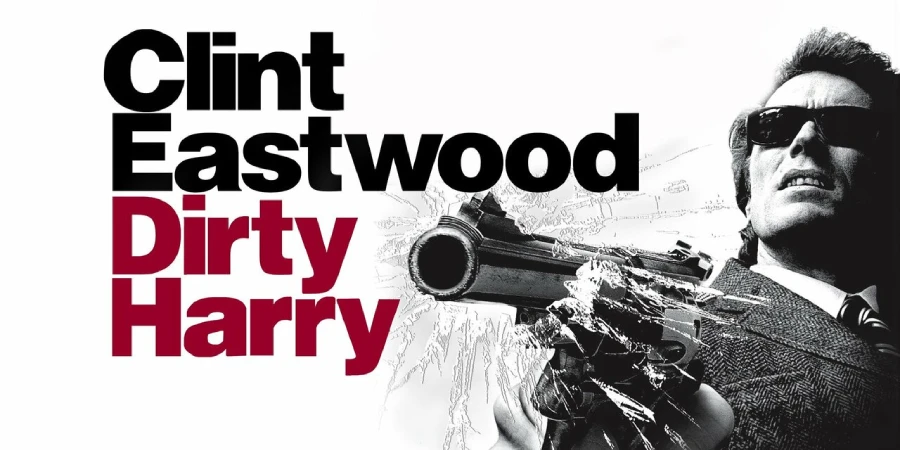

Dirty Harry (1971), directed by Don Siegel and starring Clint Eastwood in one of his most defining roles, is a gritty thriller that reshaped the American crime genre.
Detailed Summary
The Scorpio Killer Emerges
San Francisco is terrorized by a ruthless sniper calling himself “Scorpio.” He kills seemingly random victims and demands ransom from the city. Inspector Harry Callahan, known as “Dirty Harry” because he gets every tough, messy assignment, is put on the case.
Harry’s Investigation Begins
Harry is unconventional, abrasive, and often bends the rules. His partner Chico Gonzalez tries to keep up with him, but Harry’s relentless pursuit of Scorpio pushes the investigation into morally gray territory. Harry begins linking Scorpio’s patterns and gradually corners him using instinct and street knowledge.
The Ransom Exchange
Scorpio demands $200,000 and threatens to kill a kidnapped girl. Harry is ordered to deliver the money, but the exchange turns into a brutal chase across the city. Scorpio ambushes Harry, beats him, and escapes but not for long.
Harry Captures Scorpio… Illegally
Harry finds Scorpio hiding at a stadium and, after a tense confrontation, arrests him. But because Harry didn’t have a warrant and used excessive force, Scorpio is released. This controversial moment is one of the film’s central themes: the conflict between justice and the limitations of legal procedure.
Scorpio Strikes Again
Free and enraged, Scorpio hijacks a school bus, taunting the police and singing along with terrified children. It becomes clear that only Harry can end the rampage.

Movie Ending
The film’s finale takes place in a deserted rock quarry where Harry confronts Scorpio after stopping the hijacked school bus. In a tense standoff, Scorpio takes another child hostage. Harry, steady and cold, delivers his now-iconic monologue, ending with the line “Do you feel lucky? Well, do ya, punk?”
Harry shoots Scorpio when he reaches for his weapon. Scorpio collapses and dies in the dirt.
In the final sequence, Harry removes his police badge and throws it into a nearby quarry pond, symbolizing his disillusionment with the justice system and the political forces that tried to restrain him. His gesture echoes High Noon and signals that Harry no longer wants to play by a system that, in his eyes, protects criminals more than victims.
The film ends with Harry walking away, leaving audiences to consider whether he has abandoned law enforcement or simply needs a moment to reconcile what he’s done. This ambiguous ending became one of the film’s most debated points.
Are There Post-Credits Scenes?
No. Dirty Harry does not have any post-credits scenes, stingers, or hidden sequences. Once the credits roll, the film is completely over.
Type of Movie
Dirty Harry is a crime thriller with strong neo-noir influences. It blends realistic police procedural elements with a morally complex exploration of justice, violence, and vigilantism.
Cast
- Clint Eastwood as Inspector Harry Callahan
- Andrew Robinson as Scorpio
- Reni Santoni as Inspector Chico Gonzalez
- Harry Guardino as Lt. Bressler
- John Vernon as the Mayor
- John Larch as the Chief of Police
Film Music and Composer
The music was composed by Lalo Schifrin, whose jazzy, percussive, and experimental score adds tension and personality to the gritty streets of San Francisco. His soundtrack is considered one of the film’s stylistic hallmarks.
Filming Locations
Dirty Harry was shot on location in San Francisco, which became almost a character in itself.
- Mount Davidson Cross – The site of Scorpio’s first kill, establishing the city’s geography and mood.
- City Hall & Downtown Streets – Used to ground the movie in a believable police environment.
- Kezar Stadium – Where Harry corners Scorpio, symbolizing the cat-and-mouse dynamic.
- Marin Headlands & Quarry Areas – The location of the film’s final confrontation, visually reinforcing isolation and lawlessness.
San Francisco’s diverse, vertical geography allowed the film to stage suspenseful chase scenes and sniper vantage points that significantly shaped the thriller’s style.
Awards and Nominations
While Dirty Harry did not win major mainstream awards at the time, Clint Eastwood received significant praise, and over the decades the film gained recognition as one of the most influential crime thrillers ever made. It frequently appears on lists of the greatest action films of all time.
Behind the Scenes Insights
- The Scorpio Killer was partially inspired by the real-life Zodiac Killer.
- Andrew Robinson was so convincing as Scorpio that he received hate mail after the movie’s release.
- Clint Eastwood insisted on doing most of his own stunts.
- The “Do you feel lucky?” speech was improvised by Eastwood during shooting.
- Don Siegel wanted the film to critique bureaucratic limitations imposed on police officers.
Inspirations and References
- Inspired loosely by the Zodiac Killer cases.
- Partly based on officers who worked in the San Francisco Police Department during the late 1960s.
- Influenced by film noir classics featuring morally ambiguous detectives.
Alternate Endings and Deleted Scenes
The film originally included:
- A slightly extended scene of Harry confronting bureaucracy at City Hall.
- Early drafts featured multiple alternate endings, including Harry remaining on the force without discarding his badge.
- There were additional moments showing Scorpio’s planning and sniping preparation, removed for pacing reasons.
None of these were restored in later releases.
Book Adaptations and Differences
The film is not adapted from a specific novel, but the tie-in novelization released afterward contains:
- More internal monologue from Harry.
- Additional backstory for Scorpio.
- Expanded versions of several investigations that the film condenses.
Memorable Scenes and Quotes
Key Scenes
- The rooftop sniper opening.
- The legendary bank robbery confrontation.
- Harry torturing Scorpio on the football field.
- Scorpio hijacking the school bus.
- Harry throwing away his badge in the final shot.
Iconic Quotes
- “You’ve got to ask yourself one question: ‘Do I feel lucky?’ Well, do ya, punk?”
- “A man’s got to know his limitations.”
- “This is the .44 Magnum, the most powerful handgun in the world.”
Easter Eggs and Hidden Details
- Scorpio’s design (hair, sunglasses, belt buckle) is a deliberate inversion of Harry’s character.
- Harry’s habit of eating hot dogs appears in multiple films in the series, symbolizing his indifference to danger.
- A real San Francisco mayor appears in background shots during crowd scenes.
Trivia
- Eastwood stepped in as director for several scenes when Don Siegel fell ill.
- The film was nearly given to Frank Sinatra before Eastwood was cast.
- Banned or protested in several cities due to alleged “fascist” tones.
- Started a wave of 1970s “vigilante cop” films.
Why Watch?
Because Dirty Harry is one of the most influential crime thrillers ever made. The movie combines sharp tension, unforgettable performances, and morally provocative storytelling. If you enjoy gritty, stylish police dramas that challenge the idea of justice, this film is essential viewing.
Director’s Other Movies
- Invasion of the Body Snatchers (1956)
- Coogan’s Bluff (1968)
- Two Mules for Sister Sara (1970)
- Escape from Alcatraz (1979)