
Cold in July is a slow-burn, neo-noir crime thriller that gradually mutates into something far darker and more unsettling than it first appears. Directed by Jim Mickle and based on a novel by Joe R. Lansdale, the film thrives on moral ambiguity, escalating violence, and the collapse of traditional notions of good and evil.
Detailed Summary
A Home Invasion That Changes Everything
The story begins in small-town Texas, late 1980s. Richard Dane, a quiet, ordinary man, shoots and kills a burglar who breaks into his home at night. The police quickly rule the shooting as self-defense, calling Richard a hero.
However, the emotional fallout is immediate and intense. Richard is deeply shaken, plagued by guilt and nightmares. This is our first signal that the film is not interested in simple hero narratives.
Enter the Father: Ben Russell
Things escalate when Ben Russell, the father of the dead burglar Freddy, is released from prison. Ben begins stalking Richard—slashing tires, leaving threatening messages, and watching his family.
The tension here is psychological rather than explosive. Richard becomes paranoid, fearful not only for himself but for his wife and young son. The movie leans heavily into dread rather than action.
The Shocking Twist: Freddy Was No Innocent
Midway through the film, the story swerves hard. Richard confronts Ben, and instead of violence, the truth comes out: Freddy Russell was a sadistic criminal, responsible for kidnapping, sexual abuse, and murder. Ben wasn’t seeking revenge—he was trying to stop Freddy’s crimes from being forgotten.
This revelation completely reframes the first half of the movie. Richard’s guilt shifts into something even heavier: complicity.
The Missing Tape and the Deeper Horror
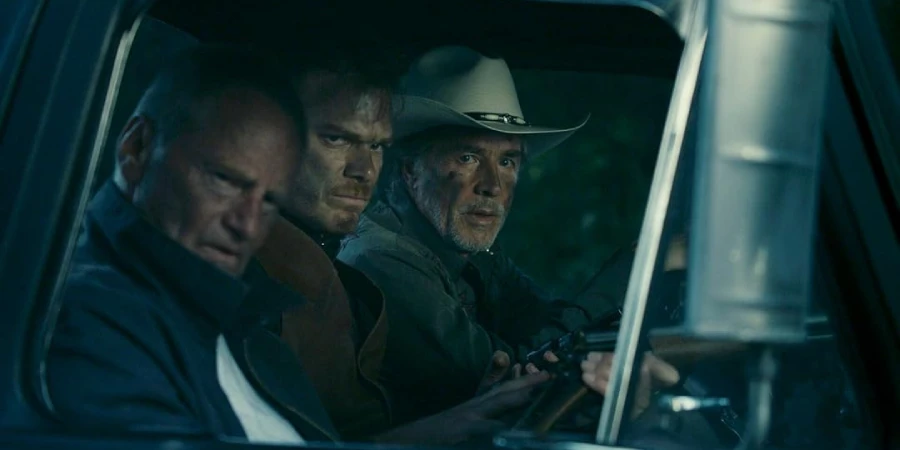
Ben recruits Richard to retrieve a videotape Freddy hid, containing evidence of his crimes. They are joined by Jim Bob Luke, a volatile private investigator with his own agenda.
What they uncover is horrifying: proof of child exploitation and murder, with connections reaching into local law enforcement. The movie transitions from a domestic thriller into a grim conspiracy story.
Corruption, Violence, and No Way Back
As the trio dig deeper, violence erupts. Shootouts, betrayals, and brutal confrontations follow. Jim Bob’s unpredictable nature adds a sense of chaos, while Richard—once passive—begins actively participating in brutality.
By this point, the film has fully dismantled the idea of justice. There are no clean solutions, only damage control.

Movie Ending
The final act reveals that Freddy was part of a larger network of abuse, protected by corrupt officials. The videotape is evidence that could destroy powerful people.
Ben Russell is ultimately killed during the violent unraveling of events. Jim Bob also meets a grim end after pushing the situation past any moral boundary. Richard survives—but survival comes at a cost.
In the final scene, Richard returns home to his family. On the surface, life resumes. But emotionally, he is irrevocably changed. He is no longer the man from the opening scenes. He has killed, covered up crimes, and crossed lines he can never uncross.
The ending offers no catharsis. Evil has been partially contained, not eradicated. Richard’s haunted expression makes it clear: this experience will follow him forever.
Are There Post-Credits Scenes?
No. Cold in July has no post-credits or mid-credits scenes. Once the film ends, it ends—abruptly and deliberately.
Type of Movie
Cold in July is a neo-noir crime thriller with strong elements of psychological horror. It blends Southern Gothic atmosphere with escalating violence and moral decay, evolving significantly in tone as the story progresses.
Cast
- Michael C. Hall as Richard Dane
- Sam Shepard as Ben Russell
- Don Johnson as Jim Bob Luke
- Vinessa Shaw as Ann Dane
- Wyatt Russell as Freddy Russell
Film Music and Composer
The score was composed by Jeff Grace, heavily inspired by John Carpenter–style synth music. The soundtrack reinforces tension with minimalist, pulsing electronic cues that mirror Richard’s psychological unraveling.
Filming Locations
The film was shot primarily in Texas, including rural towns and desolate highways. These locations are essential to the movie’s tone—wide-open spaces emphasize isolation, while small-town settings reinforce the idea that horrific secrets can thrive unnoticed.
Awards and Nominations
While not a major awards contender, the film received strong recognition on the festival circuit:
- Nominated for Best Film at Fantasia International Film Festival
- Won Best Actor (Michael C. Hall) at several regional critics’ awards
Its reputation has grown significantly through critical reappraisal.
Behind the Scenes Insights
- Jim Mickle deliberately structured the film to change genres mid-story.
- Michael C. Hall described Richard as “a man discovering what he’s capable of too late.”
- Sam Shepard helped rewrite some of Ben Russell’s dialogue to make it more authentic.
- Don Johnson improvised several of Jim Bob Luke’s most unsettling lines.
- The videotape scenes were intentionally underplayed to avoid exploitation.
Inspirations and References
- Based on the novel Cold in July by Joe R. Lansdale
- Influenced by 1980s American thrillers and neo-noir cinema
- Strong tonal parallels to Blue Velvet and Blood Simple
Alternate Endings and Deleted Scenes
No alternate ending has been officially released. However, several scenes exploring Richard’s family life were removed to maintain pacing and keep the focus on his psychological descent rather than domestic reconciliation.
Book Adaptation and Differences
The film closely follows Lansdale’s novel but condenses several subplots. The book provides more internal monologue for Richard and greater detail on Freddy’s crimes. The film opts for implication rather than explicit description, making the horror feel more restrained but no less disturbing.
Memorable Scenes and Quotes
Key Scenes
- Richard discovering Freddy’s true nature
- The retrieval of the videotape
- Jim Bob’s introduction and first violent outburst
- The final quiet return home
Iconic Quotes
- “You don’t know who you’re dealing with.”
- “Some things don’t wash off.”
- “You think killing him fixed anything?”
Easter Eggs and Hidden Details
- The year setting (1989) subtly references the decline of analog evidence culture.
- Jim Bob’s car radio plays songs referencing violence and revenge.
- The sheriff’s casual behavior early on foreshadows institutional corruption.
- The videotape label number matches a real FBI evidence classification.
Trivia
- Michael C. Hall shaved weight and changed posture to appear more vulnerable.
- The film was shot in just 24 days.
- Sam Shepard insisted on minimal makeup to enhance realism.
- Don Johnson’s character was expanded significantly from the book.
- The film became a cult favorite after its home-video release.
Why Watch?
If you enjoy slow-burning thrillers that refuse to offer comfort, Cold in July is essential viewing. It challenges the idea of heroism and asks uncomfortable questions about justice, masculinity, and moral responsibility.
Director’s Other Works
- Stake Land (2010)
- We Are What We Are (2013)
- In the Shadow of the Moon (2019)